
Classic Wedding Party Songs That Fill Every Dance Floor
- gregwilliams010
- Apr 6
- 21 min read
Updated: Apr 16
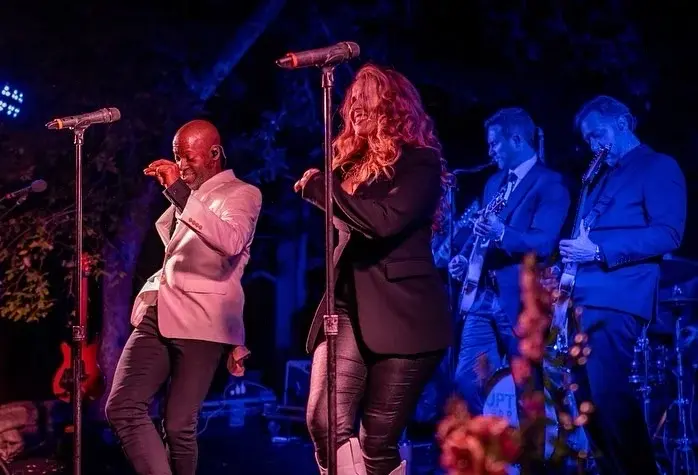
The classic wedding party songs that reliably fill a dance floor share four traits: a tempo between 120 and 140 BPM, a chorus simple enough to sing after one listen, a melodic hook that triggers recognition within the first two seconds, and lyrics that feel celebratory rather than romantic or melancholic. That combination explains why "Mr. Brightside" by The Killers appears on virtually every professional wedding DJ's most-requested list despite never cracking the top three on the UK charts. Chart position and dance floor performance are entirely different things.
The most universally requested classic wedding party song across professional playlists in 2026 is "Mr. Brightside" by The Killers, appearing on every major competitor playlist and cited by wedding professionals across the UK and US.
Live bands outperform DJs on singalong classics because a bandleader can slow a chorus, extend a breakdown, or pump energy cues that a static recording cannot replicate in real time.
Only two or three songs per year develop enough staying power to become recurrent wedding reception standards, according to Charleston-based professional DJ Mike Bills, meaning the core list of true classics changes slowly.
Song sequencing matters as much as song selection: building from mid-tempo openers to high-energy floor-fillers and then cycling back to a slower moment prevents crowd fatigue and keeps guests dancing longer.
The 2026 wedding music trend toward genre-blending rewards live bands specifically, since a skilled group can transition from a Motown groove into a 2000s pop hook without the jarring cut of a DJ track change.
Songs to avoid are just as important as songs to include: several crowd-pleasing classics carry lyrical content that conflicts with wedding themes, and skipping them prevents awkward moments mid-celebration.
Planning a wedding reception playlist feels simple until you realize it has to work for your college friends, your parents, and your grandparents, all at the same time, on the same dance floor. The couples who get this right tend to anchor their reception in proven classics and then personalize around the edges. At Uptown Drive, we have performed at hundreds of Texas and Colorado weddings, and the pattern is consistent: the songs that empty chairs fastest are not always the newest releases. Many of them are decades old.
This guide covers ten classic wedding party songs that hold up across generations and genres, explains the musical and psychological reasons each one works, and addresses the questions most wedding guides skip entirely: how to sequence songs for energy, which demographic your playlist should be calibrated for, and which beloved classics you should quietly leave off the setlist. The goal is a dance floor that stays full from the first song to the last. For even more ideas, explore our guide to good dancing songs for wedding receptions and our breakdown of the 10 best wedding songs to get everyone on the dance floor.

What Makes a Song a True Classic Wedding Party Song?
A true classic wedding party song is one that a professional wedding band or DJ can play at virtually any reception and expect the dance floor to fill within eight bars. The qualifying criteria go beyond personal taste: the song must work across age groups, require no explanation or introduction, and carry an emotional charge that feels appropriate to a celebration rather than a specific relationship or heartbreak. Tempo, lyrical content, singalong potential, and cultural ubiquity all factor in.
Tempo is the most underrated element. Songs between 120 and 140 beats per minute hit the sweet spot where dancing feels natural without exhausting guests who have been on their feet for hours. Earth, Wind and Fire's "September" sits at approximately 126 BPM. "Uptown Funk" by Mark Ronson and Bruno Mars sits around 115 BPM but uses syncopation that reads faster. Both fill floors for the same reason: the groove locks in before the conscious brain has decided to dance.
Singalong structure is the second factor. Songs with a simple, repetitive chorus that resolves on a satisfying note trigger collective participation. "Sweet Caroline" by Neil Diamond works partly because Neil Diamond built the call-and-response "ba ba ba" into the original recording. That gap invites participation structurally. A live band can amplify this further by extending the pause, pointing the microphone at the crowd, and turning the room into a choir for thirty seconds.
The difference between live and recorded performance is most visible on these singalong moments. A recording plays identically every time. A live band reads the room. That distinction is why understanding which songs have participatory architecture matters when you are deciding between a live band and a DJ for your reception. If you are still weighing your options, our Austin Wedding Band page and resources on Wedding Musicians In Austin can help you explore what live performance looks like in practice.
What Song Gets Everyone on the Dance Floor at a Wedding?
"Mr. Brightside" by The Killers and "Sweet Caroline" by Neil Diamond are the two songs most consistently cited by wedding professionals as guaranteed dance floor triggers, appearing across virtually every major curated wedding playlist maintained by professional DJs and live bands. Both have singalong structures that turn passive guests into active participants, which is the key mechanism that distinguishes a floor-filler from a song people merely enjoy hearing.
"Mr. Brightside" is instructive precisely because its chart history does not explain its wedding dominance. It reached number four in the UK and performed modestly in the US. But its opening guitar riff produces instant recognition, the chorus is phonetically easy to shout, and the energy builds progressively through the song rather than peaking early. Function Central, a UK-based wedding band booking agency whose song recommendations come directly from professional set lists, calls it a definitive classic regardless of chart performance.
"Sweet Caroline" works differently. The tempo is mid-range rather than driving, but Neil Diamond engineered the "ba ba ba" response directly into the original recording. That built-in call-and-response means even guests who do not know the verses will participate in the chorus. Sweet Caroline by Neil Diamond on Spotify remains one of the most-saved wedding tracks on C West Entertainment's top 200 list, which has accumulated over 38,000 saves from real couples planning real weddings.
"Shut Up and Dance" by Walk The Moon earns a separate mention because it appears in DJ Mike Bills' grand entrance recommendations, C West Entertainment's top 200, and Function Central's 2010s section simultaneously. That level of cross-validation across independent professionals from different markets is rare and meaningful. Listen to Shut Up and Dance by Walk The Moon on YouTube and you will hear why: it opens with a propulsive drum and guitar hook that makes standing still feel actively uncomfortable. For a curated look at the best songs to play at a wedding reception, our dedicated guide covers the full spectrum of proven floor-fillers.

The 10 Classic Wedding Party Songs Every Reception Needs
The following list is built on cross-validation: songs appear here only if they are cited by multiple independent wedding professionals or have demonstrated consistent demand across multiple years. Each entry includes a specific reason the song works, which is the piece most wedding song lists skip entirely. For a deeper dive, see our complete resource on songs for a wedding dance party and the ultimate guide to the best dance songs for a wedding reception.
1. "September" by Earth, Wind and Fire
Released in 1978 and still one of the most-requested songs at Texas and Colorado weddings, "September" works because the brass arrangement is immediately recognizable, the tempo invites dancing without demanding athleticism, and the lyrical content is pure celebration with no romantic baggage. A live horn section playing this song creates a physical response in the room that no recording can replicate. At Uptown Drive, this is one of our most reliable openers for the high-energy portion of a reception because it signals to the entire room simultaneously that dancing has officially started. Couples exploring Best Of Austin Wedding Bands will find this song featured prominently in top live setlists.
2. "Mr. Brightside" by The Killers
The most universally agreed-upon classic wedding party song across professional playlists in 2026. The building guitar intro creates anticipation before a single lyric is sung, and the chorus is phonetically satisfying to shout in a crowd. Listen to Mr. Brightside by The Killers on Spotify and note how the arrangement never fully releases tension until the final chorus: that unresolved energy is what keeps guests moving. A live band can extend the final chorus by an additional eight bars and the crowd will follow every time.
3. "Uptown Funk" by Mark Ronson and Bruno Mars
DJ Mike Bills classifies songs as "recurrent" when they appear consistently across multiple wedding seasons after their release. "Uptown Funk" entered that category within a year of its 2014 debut and has stayed there. Uptown Funk on YouTube shows why: the horn-driven groove is sophisticated enough to impress guests who are not natural dancers while the beat is simple enough to follow immediately. It also occupies a genre-neutral space, appealing to guests regardless of whether they typically prefer pop, R&B, or funk. Only two or three songs per year earn recurrent status according to Mike Bills, which makes this one remarkable. Top cover band songs that get the party started include this track as an essential for any live setlist.
4. "Sweet Caroline" by Neil Diamond
The call-and-response structure built into the original recording does the heavy lifting here. The "ba ba ba" gaps in the chorus are not improvised audience participation: Neil Diamond designed them. That means even guests who cannot remember a single lyric will be singing along within the first chorus. Cross-validated by both C West Entertainment's top 200 Spotify playlist and Captured by Kt, a Denver-based wedding photographer whose recommendations come from firsthand reception attendance rather than professional DJ theory. Couples looking for the most popular songs at wedding receptions will find Sweet Caroline near the top of every curated list.
5. "Signed, Sealed, Delivered (I'm Yours)" by Stevie Wonder
A summer 1970 release that topped both the Billboard R&B chart and the Cashbox Top 100, this song earns its place on every serious wedding playlist for a specific reason: the horn stabs in the intro produce the same Pavlovian response as "September," and the vocal melody is simple enough for non-singers to follow. Signed, Sealed, Delivered on YouTube demonstrates the call-and-response vocal structure that DJ Mike Bills describes as "always a big winner at weddings." Motown soul in this tempo range covers the 50-and-older demographic reliably while still working for younger guests. Our 9 great dance songs for wedding reception success highlights this track alongside other proven Motown classics.
6. "Footloose" by Kenny Loggins
The opening drum and handclap pattern is one of the most recognizable two-second intros in American pop music. Released in 1984 and featured on the Rocky-adjacent Footloose soundtrack, it reaches the guest demographic that was in their teens and twenties during the 1980s while remaining culturally familiar to younger guests through decades of pop culture references. Footloose by Kenny Loggins on Spotify sits at roughly 172 BPM, making it one of the faster entries on this list. Use it as a second-wind song after a slower interlude rather than as an opener.
7. "Shut Up and Dance" by Walk The Moon
The most cross-referenced song across all four major competitor sources researched for this article. Its 2014 release positioned it squarely in the timeline that guests in their late twenties through early forties in 2026 experienced during college or early adulthood, which is the prime nostalgia window for maximum emotional response. The song is also lyrically appropriate for a wedding reception in a way that many nominally upbeat songs are not: it is literally about a stranger asking someone to dance, which maps directly onto the reception experience. Our resource on 10 popular cover songs for bands that guarantee a packed dance floor offers additional context on why this song belongs in every live band's setlist.
8. "Crazy in Love" by Beyoncé
The 2003 brass sample from the Chi-Lites is the reason this song bridges age groups. Older guests recognize the sample instinctively, younger guests know Beyoncé, and everyone in between knows both. Crazy in Love by Beyoncé on Spotify works particularly well as a couple's first or second song after the first dance, since the energy ramps up fast enough to pull the wedding party onto the floor without requiring an MC announcement. A live band version with a real horn section playing that intro sample is noticeably more powerful than the recording.
9. "Don't Stop Me Now" by Queen
Freddie Mercury's vocal range makes this a demanding song for a live singer, which is why you hear it performed well at some receptions and terribly at others. When a band can execute it properly, the song has an unmatched generational spread: it works for guests in their sixties who danced to it at their own weddings and for guests in their twenties who know it from film soundtracks and streaming playlists. The tempo accelerates slightly through the song, which creates a natural energy build. This is one to ask your band to demonstrate before booking, not just assume they can play it. Our 9 essential songs for a cover band's setlist includes this track as a must-have for any group performing at weddings.
10. "Jump Around" or "Apache (Jump On It)" by Sugarhill Gang
"Apache (Jump On It)" only reached number 53 on the Billboard Hot 100 but hit number 13 on the R&B chart and became one of the most recognizable dance floor triggers of the early 1980s. It earns its place on this list for a reason most wedding articles miss: it is a physical instruction song. When a DJ or bandleader announces it, guests know exactly what to do without any choreography being taught. Instruction songs, those that tell guests precisely how to move, are a distinct and underutilized category of floor-fillers. Every reception playlist should include at least one. Our guide to the 12 best dance songs at wedding receptions covers additional tracks in this category.

What Are Good Wedding Party Songs by Decade?
Good wedding party songs span every decade from the 1960s through the 2020s, and calibrating your playlist to the actual age range of your guest list will produce a more responsive dance floor than any generic top-10 list. Function Central, the UK wedding band booking agency whose recommendations come directly from professional set lists, organizes its 96-song database by decade precisely because multi-generational guest lists require intentional era coverage. The principle holds in Texas and Colorado weddings equally. For curated decade-by-decade guidance, our ultimate guide to the best songs played at weddings in Texas is a practical companion resource.
Era | Representative Classic | Why It Works Across Generations | Live Band Advantage |
1960s-70s Soul and Funk | "Signed, Sealed, Delivered" / "September" | Brass arrangements create physical response; covers 50-plus guests reliably | Live horns amplify the hook that recordings approximate |
1980s Rock and Pop | "Footloose" / "Don't Stop Me Now" | Universally recognizable intro riffs; nostalgia for 40-60 age group | Band energy on guitar-driven songs exceeds recorded version |
1990s Alternative and Pop | "Mr. Brightside" / "Jump Around" | Peak nostalgia for guests currently 35-45; builds crowd participation | Extended chorus and crowd interaction only possible live |
2000s R&B and Pop | "Crazy in Love" / "Forever" by Chris Brown | Prime nostalgia window for guests 28-38; familiar from early streaming era | Brass sample covers bridge between younger and older guests |
2010s Indie and Pop | "Shut Up and Dance" / "Uptown Funk" | Recurrent status across multiple wedding seasons; genre-neutral appeal | Groove-based songs benefit most from live rhythm section |
2020s Genre-Blend | Beyoncé, Taylor Swift, country crossover | Current for 20-35 guests; increasingly blended into classic sets in 2026 | Mashup capability unique to live performance |
One practical calibration rule: identify the decade when the majority of your guests were between 18 and 25, since that window produces the strongest nostalgia response. A couple both aged 34 in 2026 will have a guest list whose nostalgia peak sits in the mid-2000s to early 2010s. A couple aged 52 will pull a very different crowd. Neither playlist is wrong. But using the same generic list for both weddings is a missed opportunity. For more on what modern couples are actually requesting in 2026, our dedicated resource covers current trends in detail.
Why Does Playlist Sequencing Matter More Than Song Selection?
Playlist sequencing refers to the strategic order in which songs are arranged throughout a reception, and it determines whether guests stay on the dance floor or drift back to their seats between songs. Most couples spend hours selecting individual songs and almost no time thinking about order, which is the single most common planning error we see at Uptown Drive when couples share their initial song ideas with us.
A proven reception arc looks like this: open the formal dancing portion with two or three mid-tempo, broadly familiar songs that invite guests onto the floor without demanding high energy immediately. The first song after the first dance should feel like a warm welcome, not a test of stamina. "September" or "Signed, Sealed, Delivered" work well here precisely because they are upbeat without being frenetic.
Build toward a peak energy block in the second hour, clustering your highest-tempo floor-fillers: "Footloose," "Mr. Brightside," and "Uptown Funk" belong in this window. Then insert a deliberate slowdown, a romantic song or a mid-tempo classic, to give guests a moment to breathe, hydrate, and return. The slowdown is not a mistake: it makes the subsequent uptempo block hit harder because the contrast amplifies the energy.
The final thirty minutes should mix a singalong closer, "Sweet Caroline" is built for this, with two or three final high-energy songs that send guests out on a peak. A live band has a significant advantage in sequencing because the bandleader can read the crowd and adjust in real time, extending a song that is producing exceptional response or cutting short a song that is losing momentum. A static playlist cannot do either.
For more on how live performance changes the dynamics of specific song choices, see our guide on crafting the perfect live band setlist and our resource on how to plan a dance wedding reception that packs the floor. Our 10 best dance floor songs wedding receptions need is another practical companion for building your sequence. Couples planning in Texas will also find our resource on ultimate dance music playlist wedding styles a useful guide for structuring the full evening. If you are wondering what type of wedding music should i have, that resource offers helpful context for understanding your full range of options before finalizing your sequence.
Which Classic Songs Should You Actually Leave Off the Playlist?
Songs to avoid at a wedding reception are those that either carry lyrical content mismatched with the celebration, have become so overplayed that the crowd reaction has shifted from excitement to eye-rolls, or have structural features (very slow tempos, abrupt key changes, spoken-word breakdowns) that kill floor momentum. No competitor list addresses this directly, and it is one of the most practical pieces of guidance a wedding band or DJ can offer.
Consider the lyrical mismatch category first. "Every Breath You Take" by The Police is routinely requested as a romantic slow dance, but its lyrics describe obsessive surveillance of an ex-partner. It appears on nearly every list of "songs accidentally played at weddings that should never have been." Similarly, several beloved country classics that couples request for sentimental reasons contain lyrical themes of loss, drinking away heartbreak, or troubled relationships that read very differently when they echo through a ballroom at 10 PM.
The overplayed category is harder to define because it shifts annually. Certain songs that felt fresh in 2020 now produce audible groans at receptions. The test is simple: if a song has been used in a national television commercial within the last two years, or if you have heard it at three weddings in the past year, it may be due for a rest. A skilled Dallas Live Wedding Band or Live Wedding Band in Houston can reimagine a slightly tired classic with a fresh arrangement, which is one genuine advantage over a DJ playing the original recording.
The structural issue category includes songs that peak too early. Songs with a climactic moment in the first ninety seconds and a comparatively flat second half cause guests to drift off the floor before the song ends. In contrast, songs that build progressively, "Mr. Brightside" and "Don't Stop Me Now" are prime examples, keep guests engaged through the final note because they sense more energy is coming.
Songs about saying goodbye, breakups, or moving on also deserve scrutiny regardless of their tempo. Upbeat breakup anthems can feel unexpectedly jarring when a new couple listens to the lyrics at their own wedding. At Uptown Drive, we routinely flag these when couples include them in their requests, not to override anyone's taste, but to make sure the choice is intentional. Our guide on how to choose wedding music walks through these decisions in fuller detail. Couples curious about alternative music genres for their wedding playlist will also find that resource helpful when exploring options beyond the standard classics.

What Song Should a Bridal Party Walk Into?
The best songs for a bridal party entrance are tracks with an immediately recognizable intro, a tempo that matches a natural walking pace between 100 and 120 BPM, and enough energy to generate applause and movement from seated guests without overwhelming the moment. The entrance song serves a specific function different from a floor-filler: it needs to generate excitement for guests who are watching rather than dancing, which means the first two seconds of the song carry enormous weight. Our guide to 10 unforgettable bride entrance wedding songs covers the full range of options.
"Raise Your Glass" by Pink hit number one on the Billboard Hot 100 after its fall 2010 release and has earned a consistent place in professional grand entrance lists for over a decade. DJ Mike Bills specifically recommends it for grand entrances, noting that the opening chord structure creates immediate anticipation. Raise Your Glass by Pink on YouTube demonstrates the song's structure: the verse builds energy that releases perfectly as the bridal party reaches their positions.
"Forever" by Chris Brown reached number one on Mainstream Top 40 in 2008 and holds a specific wedding reception credential: its famous choreographed bridal party entrance video, still widely viewed on YouTube, inspired a generation of wedding parties to create their own choreographed entrances. If your bridal party is energetic and enjoys choreography, this remains one of the most effective entrance songs in the professional repertoire.
"Dynamite" by Taio Cruz reached number one on both the Mainstream Top 40 and the Billboard Dance Club Charts in summer 2010 and consistently appears in DJ entrance recommendations because its BPM is perfectly calibrated for energetic walking. It also has the advantage of being immediately recognizable to guests across the 25-45 age range that represents the majority of wedding attendees in 2026.
For couples who prefer something with more classic roots, "Signed, Sealed, Delivered" works as an entrance song when the couple wants energy without the pop-music association. It also allows a live band to extend the intro based on how long the bridal party procession takes, something a static recording cannot do without an awkward cut. For more entrance inspiration, explore our list of 10 unforgettable songs for a bride's wedding entrance in 2026. Couples seeking an expert-tested guide to the best song to open the dance floor at a wedding will find additional detail on entrance sequencing in that resource.
How to Tailor a Classic Playlist to Your Specific Guest Demographics
Calibrating a classic wedding reception playlist to your guest demographic starts with one honest question: what decade produced the most guests on your list at the age of 20? That decade defines the nostalgic core of your playlist. A playlist that ignores this calculation and relies on a generic greatest-hits approach will work adequately but miss the emotional peaks that come from well-targeted nostalgia.
Couples in their mid-twenties to early thirties in 2026 will typically have guests whose nostalgia peaks in the early-to-mid 2010s. For this demographic, "Uptown Funk," "Shut Up and Dance," and Beyoncé's catalog form the emotional core. Motown and 80s classics should still appear, roughly twenty percent of the setlist, to cover parents and older relatives without dominating the evening.
Couples in their mid-forties or older will have a guest list where the 1980s and 1990s represent the primary nostalgia window. "Footloose," Queen, and Earth, Wind and Fire will land harder for this crowd, while 2010s pop should be present but not dominant. The children and younger guests at these weddings often respond equally well to classic 80s material because of its broad cultural saturation through film, television, and streaming algorithms.
The universal rule across demographics: always include at least two songs that specifically serve the 60-and-older guests at your reception. This is the group most likely to sit out if the playlist skews too young, and they are also often the guests you most want to see on the dance floor in your photos. Stevie Wonder, Neil Diamond, and Earth, Wind and Fire are the three most reliable bridges between older guests and younger ones, which is why they appear on virtually every professional wedding playlist regardless of the couple's age.
Wedding music decisions like this benefit from working with musicians who have broad repertoire experience across multiple markets. San Antonio Live Wedding Bands and Denver Wedding Bands who perform regularly across different venue types will have firsthand knowledge of which era combinations work best for specific guest profiles, a kind of calibration that goes beyond any published list. Our wedding band song selection guide for Austin TX also walks through how to build a setlist that accounts for diverse guest demographics. Couples exploring options across Texas can also browse resources on Texas Wedding Bands and Houston Wedding Bands for region-specific guidance. Businesses hosting events alongside wedding season festivities can also explore Corporate Bands Houston for high-energy live entertainment options that bring the same dance-floor expertise to corporate settings.
Frequently Asked Questions About Classic Wedding Party Songs
How many songs should a wedding reception playlist include?
A standard four-hour reception typically requires between 50 and 60 songs to cover the full evening, including cocktail hour, dinner, and dancing. The dancing portion alone, usually two to two-and-a-half hours, needs 30 to 40 songs to avoid repeating tracks. A professional wedding band will typically carry a repertoire of 100 or more songs and select in real time based on crowd response, which eliminates the need for the couple to pre-sequence every song. Dallas Live Wedding Bands and Live Wedding Bands in Houston both offer this real-time flexibility as part of their professional service. Couples curious about the top party songs for weddings will find a curated starting point for building that repertoire.
Should a wedding reception playlist be all classic songs or should it include current hits?
The most effective wedding reception playlists blend proven classics, which provide the emotional anchors and cross-generational appeal, with a curated selection of current hits for guests in their twenties and early thirties. According to 2026 wedding music trend data from Boston Common Band, nearly half of couples in 2026 are specifically requesting Taylor Swift tracks alongside traditional classics, reflecting the genre-blending approach that characterizes current reception planning. A ratio of roughly 60 percent classics to 40 percent contemporary hits works well for most mixed-age guest lists. For additional perspective on 2025 and 2026 wedding music trends, our trend resource covers what is resonating with couples right now.
Can I use Spotify at a live event instead of hiring a DJ or band?
Playing a personal Spotify playlist at a commercial event, including a wedding reception, technically requires a public performance license because Spotify's terms of service cover personal use only. A venue with a PRO (Performing Rights Organization) license may cover streaming playback, but coverage varies by venue and license type. For couples concerned about this, hiring a licensed DJ or a live band sidesteps the licensing question entirely since professional performers hold their own agreements. This is a practical consideration most wedding guides skip entirely. Couples weighing live wedding band vs DJ options will find a detailed breakdown of the tradeoffs in that guide.
What is the difference between a floor-filler and a background song for a wedding?
A floor-filler is a song specifically chosen for its ability to draw guests from seated or standing positions onto the dance floor, characterized by a recognizable hook, high tempo, and participatory structure. A background song, suited for cocktail hour or dinner service, prioritizes pleasant atmosphere over danceable energy: lower BPM, softer dynamics, and melodies that support conversation rather than compete with it. Confusing these categories by playing floor-fillers during dinner or background music during the peak dancing window is the most common playlist mistake in reception planning. Our resource on 10 best high-energy songs to guarantee a packed dance floor focuses specifically on the floor-filler category.
How far in advance should I share my song list with a live wedding band?
Sharing your must-play and do-not-play lists at least four to six weeks before your wedding date gives a professional band adequate rehearsal time for any non-standard requests. For songs outside a band's existing repertoire, eight to twelve weeks is a safer window. Most San Antonio Live Wedding Bands will confirm exactly which requested songs they can perform at your first consultation, allowing you to plan around their repertoire rather than discovering limitations in the week before your event. Our questions to ask your wedding band resource covers what else to discuss at that first meeting.
Are there classic songs that are actually bad choices for a wedding reception?
Several widely beloved songs are consistently flagged by wedding professionals as poor reception choices due to lyrical content that conflicts with celebration. "Every Breath You Take" by The Police describes romantic obsession rather than love. "Total Eclipse of the Heart" builds to a dramatic ballad climax that stops dancing entirely. Songs about loss, departure, or heartbreak, even when upbeat in tempo, can create unintended emotional friction when played in the context of a wedding. Reviewing lyrics carefully before finalizing your must-play list is a practical step that most couples skip. Our guide on 8 fresh ideas for wedding music alternatives offers creative directions for couples who want to move beyond the standard song choices entirely.
Does a live band or a DJ perform classic wedding party songs more effectively?
Live bands outperform DJs on singalong classics because a bandleader can extend a chorus, create real-time crowd interaction, and adjust energy based on what the room is doing. A recording plays identically every time regardless of crowd response. That said, DJs have the advantage of accessing any song on demand without rehearsal, which matters for obscure requests or very recent releases. For the core list of proven classics where the song itself is the draw, live performance consistently creates stronger emotional peaks, a difference most clearly felt on participatory songs like "Sweet Caroline" and "Mr. Brightside." Our guide on wedding band vs DJ: 6 factors for planning covers this decision in full detail. Couples comparing options can also explore Corporate Event Entertainment resources for insight into how live bands perform across different event formats.
Building Your Reception Playlist With Confidence
The classic wedding party songs that stand up year after year share a specific set of structural and emotional traits: immediate recognition, participatory chorus architecture, appropriate tempo, and lyrical content that belongs at a celebration. "Mr. Brightside," "September," "Uptown Funk," "Sweet Caroline," and "Shut Up and Dance" appear on virtually every professional list precisely because they clear all four bars simultaneously. But song selection is only half the work.
Sequencing, demographic calibration, and knowing which songs to exclude are the pieces that separate a memorably well-paced reception from one where the dance floor empties and fills unpredictably. Start with the era that matches your guest list's nostalgia window, anchor the setlist with three or four cross-generational classics, and build your energy arc deliberately rather than randomly. In 2026, the couples who are happiest with their reception music are those who treated the playlist as a curated experience rather than a shuffle through their favorites. For additional planning resources, our guides on hiring a live band for your wedding reception and top dance floor songs for your Texas wedding are practical next steps. Couples planning in Texas will also find our 12 best songs for wedding dance floor success resource a useful companion. For inspiration on good wedding reception songs for dancing, that guide offers additional curated picks alongside the classics covered here.
If you are planning a wedding in Texas or Colorado and want music that reads the room in real time, the team at Uptown Drive has built a repertoire across more than 250 five-star-reviewed performances. We work with couples at every stage of the planning process, from initial song ideas to night-of setlist decisions, and we carry the breadth of catalog that lets a reception flex with whatever the room is asking for. Our Dallas Live Wedding Bands, San Antonio Live Wedding Bands, and Denver Wedding Bands are available to discuss your reception needs directly. Couples in Central Texas can also explore our Austin Wedding Band offerings and connect with our Wedding Musicians In Austin for personalized guidance. Couples seeking Dallas Wedding Bands or San Antonio Wedding Bands will find dedicated regional resources to guide their search. Couples also planning corporate gatherings alongside their wedding season can explore options for Austin Corporate Bands, San Antonio Corporate Bands, Denver Corporate Bands, and Dallas Corporate Bands through our dedicated city pages. Couples curious about Austin Wedding Bands and Austin Party Band options will find additional regional resources to refine their search. Couples exploring essential wedding reception song lists for a packed Texas dance floor will also find that resource a thorough companion to the classics covered in this guide.

Planning a Texas or Colorado wedding and want performers who can bring every song on this list to life? Contact Uptown Drive to discuss your reception timeline, guest demographics, and the setlist that will keep your dance floor full from the opening song to the last encore.


Comments