
Why Texas Rock Bands Rule Private Events Nationwide
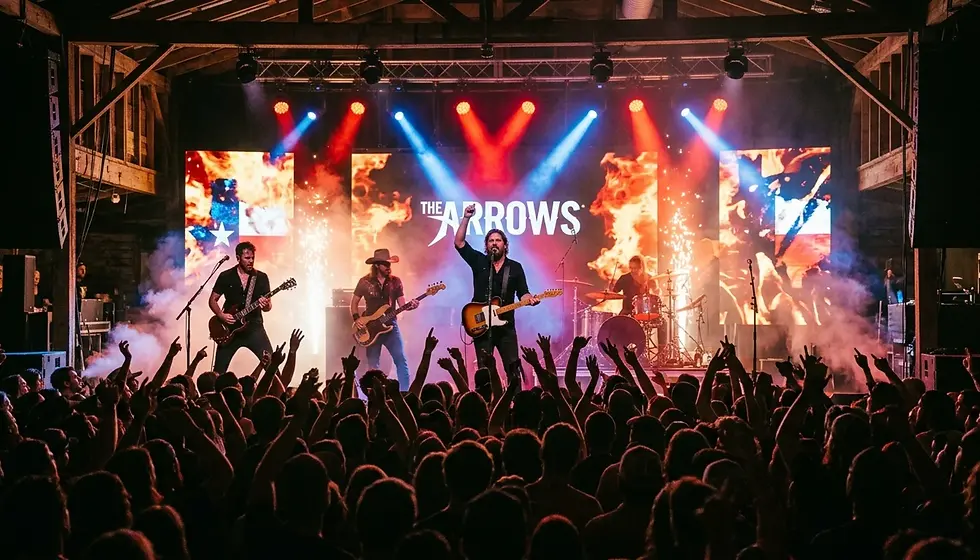
Texas rock bands are among the most sought-after live entertainment acts for private events, corporate galas, and weddings across the United States, and the reasons run much deeper than state pride. The combination of a world-class talent development pipeline, an unmatched live-venue circuit, and a musical heritage spanning blues, country-rock, psychedelic rock, and heavy metal creates musicians who are genuinely versatile professionals. According to the Texas Music Office Economic Impact Study (2026), the Texas music industry generates over $31.7 billion in annual economic activity when ripple effects are included, supporting more than 196,000 permanent jobs. That scale of infrastructure produces not just famous artists, but hundreds of working-band professionals who bring touring-level quality to private events every weekend.
TL;DR: Key Takeaways
Texas rock bands draw from a talent ecosystem supporting over 196,000 music jobs and $31.7 billion in annual economic activity, according to the Texas Music Office (2026).
Austin alone hosts more than 250 live music venues and 1.9 venues per 1,000 residents, the highest concentration in the United States, creating a relentless performance training ground.
Texas has produced 13% of Rock and Roll Hall of Fame inductees, spanning genres from ZZ Top's blues-rock to Pantera's groove metal, giving working bands an extraordinarily deep stylistic range to draw from.
The IBISWorld Musical Groups and Artists industry in Texas reached a market size of $409.9 million in 2026, growing at an annualized rate of 7.0% since 2021.
SXSW 2026 featured 166 Austin-based acts on the official lineup, up 54 from the prior year, signaling accelerating local live music activity that feeds directly into the private event talent pool.
Unlike generic cover bands, Texas-trained event bands carry touring-level discipline, multi-genre repertoires, and Southern-hospitality performance culture that consistently earns five-star reviews in private event settings.
If you are planning a corporate gala, a wedding reception, or a large private celebration anywhere from Dallas to Denver, the question is not whether to hire a live band. The question is whether to hire one from Texas. The state's musical infrastructure, genre diversity, and professional performance culture give Texas-based acts a measurable edge over regional alternatives in most markets.
At Uptown Drive, our team works directly within this ecosystem, booking across Austin, Dallas, San Antonio, Houston, and Denver. We see firsthand which qualities separate a memorable private event performance from a forgettable one. This guide breaks down the structural reasons Texas rock bands dominate the private entertainment market, and what you should look for when hiring one for your event.
What Rock Bands Are From Texas?
Texas rock bands refer to any group formed or based in the state of Texas that performs within the rock genre, which spans an unusually wide spectrum in this context. The range runs from ZZ Top's blues-drenched hard rock to Pantera's groove-driven thrash metal, from the 13th Floor Elevators' 1966 psychedelic garage rock to Spoon's precision indie rock and Black Pumas' soul-rock fusion. No other state produces such a stylistically diverse body of rock music, which is precisely why Texas musicians adapt so effectively to the varied audiences found at private events.
According to Wikipedia's category Rock music groups from Texas, the taxonomy covers more than 80 individual bands across 8 rock subgenres: alternative (63 pages), heavy metal (67 pages), punk rock (42 pages), psychedelic rock (34 pages), garage rock (30 pages), hard rock (22 pages), folk rock (10 pages), and Christian rock (31 pages). That breadth is not accidental.
Specifically, the formative Texas rock bands that shaped the national conversation include:
ZZ Top (Houston, formed 1969): Billy Gibbons, Dusty Hill, and Frank Beard created a signature blues-rock sound with hits like "Sharp Dressed Man" and "La Grange." They were Metal Hammer magazine's first-ever cover stars.
Stevie Ray Vaughan and Double Trouble (Austin): SRV's 1983 debut "Texas Flood" redefined blues-rock for a generation. His band included Chris Layton on drums and Tommy Shannon on bass.
13th Floor Elevators (Austin): Frontman Roky Erickson personified psychedelic garage rock in 1966 with "You're Gonna Miss Me," influencing decades of alternative rock.
The Fabulous Thunderbirds (Austin): Kim Wilson and Jimmie Vaughan built a roadhouse blues-rock reputation culminating in their gold-selling 1986 album "Tuff Enuff."
Pantera (Dallas): Phillip Anselmo, Dimebag Darrell, Vinnie Paul, and Rex Brown fused Southern rock, thrash, and groove metal into a sound that still influences heavy music globally.
Spoon (Austin): Their near-perfect album run from 2001 to 2007, including "Kill the Moonlight" and "Ga Ga Ga Ga Ga," earned Pitchfork's highest marks and cemented Austin's indie-rock credibility.
Black Pumas (Austin): Singer Eric Burton and guitarist Adrian Quesada won Best New Band at the Austin Music Awards in 2019 and received a Grammy nomination for Best New Artist, selling out Stubb's amphitheater four consecutive times.
Beyond the legends, the active working-band scene in Texas is just as impressive. Groups like The Sword, formed in Austin in 2003 and hand-picked by Metallica to open for them in 2008, and At The Drive-In from El Paso demonstrate how Texas bands consistently punch above their regional weight class. For private event planners, this pedigree matters because it signals the performance standard the state's musicians hold themselves to.
What Big Artists Are From Texas? The Heritage Behind the Hype
Texas is responsible for 13% of all Rock and Roll Hall of Fame inductees, a figure that reflects an extraordinary concentration of generational talent. For context, that share is outsized relative to Texas's share of the U.S. population, confirming that the state produces rock musicians at a disproportionately high rate. The artists from Texas span mainstream pop, country crossover, R&B, and hard rock, creating a cultural fluency that working event bands absorb simply by growing up and performing in the state.
The psychedelic movement that swept Austin in the mid-1960s gave way to the outlaw country scene of the 1970s, then hardcore punk in the early 1980s. MDC (Millions of Dead Cops), formed in Austin in the early 1980s, and D.R.I. (Dirty Rotten Imbeciles), which emerged from Houston around the same time, established Texas as a credible home for underground rock long before the internet could spread the word nationally. D.R.I.'s albums "Crossover" and "Dealing With It!" are still cited as foundational texts in crossover thrash.
What matters for private event planners is not just the names, but what those names represent: a performance culture that prizes authenticity, high energy, and direct audience connection. Texas musicians who grow up watching ZZ Top or studying SRV learn to play to the room rather than for their own satisfaction. That crowd-reading instinct is exactly what separates a great private event band from a technically proficient but emotionally flat one.
Okkervil River, which moved to Austin in 1999, became the first band to ever play the Highline Ballroom in New York City, and their 2007 album "The Stage Names" is considered a masterpiece of indie rock storytelling. The Gourds, an Austin institution, became widely known for a mandolin-driven cover of Snoop Dogg's "Gin and Juice" that earned millions of YouTube views. These acts demonstrate how Texas musicians cross genre lines without losing their identity, a skill that translates directly into the diverse setlists that corporate event and wedding clients demand.

Why Do Texas Rock Bands Perform Better at Private Events?
Texas rock bands excel at private event entertainment because the state's live-venue circuit functions as the most rigorous professional performance training ground in the country. Austin alone contains more than 250 live music venues and 1.9 venues per 1,000 residents, the highest concentration in the United States, according to WiFi Talents and local economic data. A musician who spends three years playing the 6th Street circuit in Austin, the Houston venue scene, or San Antonio's River Walk entertainment district has logged more diverse audience hours than most national touring acts accumulate in the same period.
First, the venue density creates a competitive pressure that elevates quality. When there are hundreds of bands competing for the same club slots, only the most professional and versatile acts survive long enough to build a reputation. Specifically, Austin's club circuit demands that bands hold audiences through multiple sets, read the energy of a Thursday-night crowd versus a Saturday, and pivot setlists in real time. Those are exactly the skills a wedding reception or corporate gala requires.
Additionally, the SXSW pipeline matters enormously. The festival, which generates over $350 million in annual economic impact for Austin, exposes Texas bands to international booking agents, venue managers, and entertainment directors every March. For private event planners, this means Texas bands are regularly vetted by industry professionals at a level that regional bands in other states never experience. In 2026, SXSW featured 166 Austin-based acts on the official lineup, up 54 from the prior year, according to ATX Today, signaling a strong resurgence in local live music activity that feeds directly into the private event talent pool.
For corporate events specifically, the range is critical. A band that can open with classic ZZ Top, transition through Stevie Ray Vaughan, then move into Black Pumas soul-rock before landing on contemporary hits covers every demographic in a corporate room. At Uptown Drive, we have seen this multi-genre fluency become the deciding factor for event planners managing diverse employee audiences at large galas and holiday parties. The bands that get re-booked are the ones that make every person in the room feel represented by at least three songs on the setlist.
If you want to understand why the corporate event entertainment market keeps returning to Texas for talent, the answer is infrastructure. The state has built a professional musician development system that no other region matches at scale.
What Was Texas's Biggest Hit Single? The Catalog That Trains Event Bands
Texas's biggest hit singles form the core repertoire that makes Texas rock bands so effective at private events. "Sharp Dressed Man" by ZZ Top, "Tuff Enuff" by the Fabulous Thunderbirds, and "You're Gonna Miss Me" by the 13th Floor Elevators are among the most recognizable rock moments in American music history. For working event bands, these songs are not museum pieces. They are setlist anchors that reliably fill dance floors across age groups.
Stevie Ray Vaughan's "Texas Flood," released on CBS Records in June 1983, is arguably the defining moment of Texas blues-rock. The album established a sonic template that Austin musicians still reference in their playing today, and it remains one of the most frequently requested songs at Texas weddings and private events. SRV's final studio album, "In Step" (1989), featuring the centerpiece track "Crossfire," extended that legacy into the decade before his death in August 1990.
The Butthole Surfers, led by Gibby Haynes and Paul Leary from San Antonio, pushed Texas rock into genuinely experimental territory with albums like "Rembrandt Pussyhorse" (1986) and "Locust Abortion Technician" (1987) before their 1996 album "ElectricLarryland" went gold and introduced them to mainstream audiences. Their trajectory, from underground cult act to crossover commercial success, mirrors the path many Texas event bands follow: years of club-circuit credibility before breaking into premium private event bookings.
For couples planning Texas weddings, this catalog depth is a significant advantage. A Texas-based event band does not need to fabricate familiarity with classic rock and blues material. For those exploring the full range of what Texas wedding bands bring to a reception, the catalog is the starting point. The performance culture built around these songs is what makes the difference between hearing a cover and feeling the original.
What Makes the Texas Talent Pipeline Unique?
The Texas music talent pipeline is a structured ecosystem of university programs, club circuits, and major festival platforms that continuously produces performance-ready professional musicians. Unlike many states where music careers develop in isolation, Texas has built an interconnected system where academic training feeds directly into professional performance opportunities within the same geography.
The University of Texas at Austin, Texas State University in San Marcos, and the University of North Texas in Denton all operate nationally recognized music programs. Graduates frequently stay in-state because Austin, Dallas, Houston, and San Antonio provide immediate professional opportunities. According to IBISWorld data from March 2026, there are 341 businesses in the Musical Groups and Artists industry in Texas, with employment growing at an annualized rate of 11.4% since 2021. That employment growth signals a market where professional musicians can sustain careers without relocating to New York or Los Angeles.
The festival circuit reinforces the pipeline. The Austin City Limits Music Festival draws hundreds of thousands of attendees annually and regularly features Texas-based acts alongside national headliners. SXSW is the most important industry networking event in North America for independent music. Smaller festivals across the Hill Country, San Antonio, and Houston create additional stages where professional musicians build their reputations. Each of these events trains bands to perform for large, diverse audiences under professional production conditions.
For private event buyers, this pipeline has a practical consequence: when you hire a Texas rock band for a corporate event in Dallas or a wedding reception in Denver, you are typically hiring musicians who have played more professional stages than most national touring artists. That performance experience shows in load-in efficiency, setlist flexibility, and the ability to read a room and adjust energy in real time. Those qualities are what you are actually paying for when you hire a professional event band.
Booking through established Texas entertainment networks like Dallas corporate bands or San Antonio corporate bands gives you access to this pipeline without the guesswork of sourcing musicians independently. The vetting has already happened through the live-venue circuit and festival stages that define professional standing in the Texas music market.
How Do Texas Rock Bands Compare to Regional Alternatives for Private Events?
Texas rock bands differ from regional alternatives primarily in genre range, professional polish, and audience adaptability. The comparison below uses publicly known characteristics of Texas versus non-Texas regional markets to illustrate why event planners increasingly prefer Texas-sourced talent for national bookings.
Factor | Texas Rock Bands | Typical Regional Alternatives |
Genre Range | Blues-rock to metal, country-rock, psychedelic, indie, soul | Usually 1-2 genres; limited crossover |
Live Venue Training | 250+ Austin venues; Houston, Dallas, SA circuits; SXSW/ACL pipeline | Varies widely; fewer professional club stages |
Industry Infrastructure | 341 professional music businesses; $409.9M market (2026, IBISWorld) | Smaller business ecosystems; fewer booking agencies |
Heritage Repertoire | ZZ Top, SRV, Pantera, Black Pumas, Spoon, Fabulous Thunderbirds | Market-specific catalog; limited national recognition |
Audience Adaptability | High; trained on multi-demographic festival and club crowds | Moderate; fewer diverse venue experiences |
Travel Coverage | Texas metro hubs plus Denver, CO; national touring infrastructure | Primarily local; travel logistics often underdeveloped |
The Musical Groups and Artists industry in Texas ranks 4th nationally in revenue among comparable state industries and represents 5.1% of its sector's GDP contribution, according to IBISWorld (March 2026). That ranking reflects a mature, professional market. Bands operating within it have access to better rehearsal facilities, more experienced booking managers, and a larger peer network that maintains professional standards.
For private events specifically, the audience adaptability factor is the most underestimated advantage. A Texas rock band that has played 6th Street clubs on a Friday night, a Hill Country wedding on Saturday, and a corporate event in the Houston Galleria district on Sunday has already solved the multi-audience problem that event planners spend hours worrying about. The versatility is built in.

How to Choose the Right Texas Rock Band for Your Private Event
Choosing the right Texas rock band for a private event requires evaluating four specific criteria: repertoire range, professional references, technical capability, and performance experience in your event format. Generic cover bands and professional event bands may sound similar in a demo recording, but the difference becomes obvious the moment load-in begins.
Verify multi-genre range. Ask for a setlist that spans at least three distinct genres. A strong Texas event band should move comfortably from classic rock and blues into contemporary pop and back without breaking the room's energy. If the band plays only one genre, they are a concert band, not an event band.
Check professional event references specifically. Live-venue experience and private event experience require different skill sets. Bands that primarily play bars may not manage cocktail-hour transitions, emcee moments, or first-dance-to-party-set pivots smoothly. Ask for references from wedding planners or corporate event managers, not just venue managers.
Confirm technical self-sufficiency. Professional event bands bring their own sound engineering and backup equipment. For outdoor Texas venues, wind and heat create acoustic challenges that require weather-rated equipment and experienced sound engineers. A band that relies entirely on venue house systems introduces unnecessary risk.
Request a video of a live private event performance, not a studio session. Studio quality is irrelevant. What matters is how the band reads the room, how they handle a slow dance floor, and whether the energy feels genuine or mechanical.
Book at least 6 to 12 months in advance for peak dates. Texas event bands with verified five-star reviews fill their Saturday bookings quickly, particularly for spring and fall wedding seasons in Austin, Dallas, and San Antonio.
For a broader look at how venue acoustics and live music infrastructure affect your entertainment choices, the guide on Austin's hidden live music venues for wedding receptions covers the physical spaces that shape sound quality and band performance at events across the city.
If you want inspiration beyond the band format itself, the team at Uptown Drive has documented 10 unique event entertainment ideas that combine live music with interactive elements to maximize guest engagement at both corporate and private events. And for guidance on the full booking process, our guide on how to book a band for a party your guests will never forget walks through every step from initial inquiry to day-of logistics.
Frequently Asked Questions About Texas Rock Bands and Private Events
What rock bands are from Texas that are best for private event entertainment?
The best Texas rock bands for private event inspiration include ZZ Top (Houston), Stevie Ray Vaughan and Double Trouble (Austin), the Fabulous Thunderbirds (Austin), Black Pumas (Austin), and Spoon (Austin). Professional event bands trained in Austin's 250-plus venue circuit draw from all of these influences, creating setlists that span blues-rock, soul, indie, and classic hard rock. The goal at any private event is audience engagement across age groups, and Texas-heritage repertoire achieves that consistently.
How far in advance should I book a Texas rock band for a wedding or corporate event?
For peak dates in Austin, Dallas, and San Antonio, booking 9 to 12 months in advance is standard for professionally reviewed event bands. Spring (April and May) and fall (September and October) book fastest due to ideal Texas weather. Summer dates in Houston and San Antonio are more available. For corporate events scheduled on short notice, a 60 to 90-day window is the minimum for securing a verified professional act with specific event references.
What makes Texas rock bands different from other regional event bands?
Texas rock bands train in the most competitive live-venue market in the United States, with Austin alone hosting more than 250 venues and the highest venue-per-resident ratio nationally. The state's musical heritage spans blues, country-rock, psychedelic, metal, and indie, giving Texas-trained musicians a multi-genre fluency that regional alternatives rarely match. Texas also ranks 3rd nationally for total music-related businesses, meaning professional booking infrastructure, rehearsal facilities, and peer-quality standards are measurably higher.
Can Texas rock bands travel to events outside Texas?
Yes. Professional Texas event bands regularly perform across the southern United States and beyond. Uptown Drive, for example, serves Austin, Dallas, San Antonio, and Houston markets as well as Denver, Colorado. Texas bands with national touring experience, which includes many acts that have moved through the SXSW and Austin City Limits festival circuits, have the logistics infrastructure to handle travel, equipment shipping, and out-of-state venue requirements without added complication for the event planner.
What should I include in a contract when hiring a Texas rock band for a private event?
A professional event band contract should specify: total performance time and number of sets, load-in and soundcheck schedule, equipment provided by the band versus the venue, backup contingency plan if a band member is unavailable, payment terms and deposit amount, and explicit confirmation of liability insurance coverage. Reputable Texas event bands with strong review histories present these terms proactively. If a band does not mention liability insurance, ask directly before signing.
How does a live Texas rock band compare to a DJ for a corporate event?
A live Texas rock band provides real-time energy adjustment, direct audience interaction, and a visual performance element that DJs cannot replicate. DJs offer broader catalog access and lower cost. For corporate galas, company anniversary events, and large holiday parties where impression and brand positioning matter, live bands consistently generate stronger post-event feedback. The decision often comes down to event scale: for rooms of 100 or more guests with a budget that supports it, a live band typically delivers measurably higher engagement. For more on this decision, resources like what type of wedding music should I have walk through the full comparison framework.
Which Texas cities have the strongest private event band markets?
Austin leads with the highest venue density and the most active musician community. Dallas follows with a large corporate event market concentrated in the Uptown and Galleria districts. Houston's event band market reflects the city's scale as the fourth-largest U.S. city, with strong demand for corporate entertainment. San Antonio's wedding market is particularly active, driven by destination weddings at Hill Country venues and the River Walk hotel district. Denver, while not in Texas, has become a secondary market for Texas-origin event bands due to geographic proximity and growing demand.
The Bottom Line on Texas Rock Bands for Private Events
Texas rock bands dominate private event entertainment nationwide because the state has built an unmatched infrastructure for producing performance-ready professional musicians. The numbers support this clearly: the Texas Music Office (2026) documents over $31.7 billion in music industry economic activity, 196,000-plus music-related jobs, and a tax impact of $564 million annually. The Musical Groups and Artists market in Texas reached $409.9 million in 2026, growing at 7.0% annually since 2021 (IBISWorld). That is not a regional music scene. That is a national industry anchored in one state.
For private event planners in 2026, the practical conclusion is straightforward. Texas-trained event bands carry broader repertoires, more diverse performance experience, and a professional discipline shaped by the most competitive club and festival circuit in the country. When your event needs live entertainment that reads the room, adapts in real time, and leaves every demographic in the audience satisfied, the Texas music pipeline consistently delivers.
Whether you are planning a Dallas corporate gala, a San Antonio wedding reception, or a Denver anniversary event, start your search with the market that has invested more in musical professionalism than any other in the nation.
If you are ready to bring that level of performance to your next event, contact Uptown Drive for a customized quote. With over 250 five-star reviews and active coverage across Austin, Dallas, San Antonio, Houston, and Denver, we connect you directly with the Texas professional musician pipeline described throughout this guide. Your guests will feel the difference.


Comments