
Austin Wedding Band: Everything You Need to Know in 2026
- gregwilliams010
- Apr 23
- 17 min read

An Austin wedding band is a professionally staffed live music ensemble hired to perform at wedding ceremonies, cocktail hours, and receptions in the Austin, Texas metro area. Costs range from roughly $900 for a small ensemble to $15,000 for a premium touring act, with the average booking landing near $2,151, according to aggregated marketplace data. Most couples book 7 to 18 months in advance.
The average Austin wedding band costs $2,151, with an 8-to-10-piece act running $7,000: $10,000+, according to surveyed Austin vendors.
Peak-season Saturdays in October and November carry pricing premiums of 20, 30% above off-season rates; holiday weekends add a further 25, 50%.
Most planners secure their band roughly 214 days (about seven months) before the event, but top-tier acts book 12: 18 months out for prime dates.
Austin's festival calendar, including SXSW and Austin City Limits, competes directly with wedding season for professional musician availability.
A full-day music package covering ceremony, cocktail hour, and reception is now the most requested format among Austin couples in 2026.
Outdoor Hill Country venues frequently require bands to comply with 85: 90 dB amplified sound limits measured from the property line.
TL;DR
Austin wedding band pricing starts near $900 for small acts and climbs to $15,000 for internationally-toured ensembles.
The Austin Round Rock metro hosts approximately 12,973 weddings per year in a market worth over $497 million annually, per The Wedding Report 2026.
The national average for a live wedding band is $4,475, compared to roughly $1,000 for a DJ, per The Knot 2026 Real Weddings Study.
Booking 12 months ahead is strongly recommended for October and November dates; winter dates (January through March) offer more flexibility.
Key differentiators between bands include fixed lineups versus rotating musician pools, package inclusions like sound and lighting, and genre versatility.
Austin calls itself the Live Music Capital of the World for good reason: the city sustains a deeper pool of professional working musicians than almost any metro of comparable size. That density is a tremendous advantage for couples planning a wedding here. But it also creates real complexity. You are not just choosing between a few names on a list. You are navigating pricing tiers, band size trade-offs, venue logistics, and booking windows that genuinely matter for the outcome of your event.
At Uptown Drive, we work with couples and event planners across Austin, Dallas, Houston, San Antonio, and Denver, and we see the same questions come up before nearly every booking. This guide answers those questions directly, with real numbers and practical detail. Whether you are budgeting for the first time or narrowing a shortlist, the information below will help you make a confident, well-informed decision.
The Austin wedding market supports this level of investment: according to The Wedding Report 2026, the Austin Round Rock metro produces roughly 12,973 weddings per year in a market valued at over $497 million annually. Competition among top-performing bands is real, and the best acts fill their calendars fast. Understanding how this market works gives you a meaningful advantage.

How Much Does an Austin Wedding Band Cost in 2026?
An Austin wedding band costs between $900 and $15,000, depending on ensemble size, booking tier, and package inclusions. The average booking across Austin wedding marketplaces lands near $2,151, though a 175-guest reception with a professionally staffed group more realistically runs $3,323 to $4,061, representing roughly 7.3% of a total wedding budget, according to the Wedding.report Cost Estimator.
Most wedding planning guides recommend allocating 5% to 10% of your total budget to entertainment. For a mid-scale Austin wedding in the $30,000 to $45,000 range, that translates to $2,000 to $4,500 for a solid four-to-six-piece live band. The math tracks: you can absolutely find capable musicians at that level. What changes above that range is touring pedigree, production quality, and peace-of-mind reliability.
Here is a realistic breakdown by band configuration, based on surveyed Austin vendor data:
Band Size | Typical Price Range | Best Suited For |
2: 3 piece (duo/trio) | $900: $2,500 | Intimate ceremonies, cocktail hours, small receptions |
4: 6 piece | $2,500: $5,500 | Mid-size receptions (100: 175 guests), indoor venues |
7: 9 piece | $5,500: $8,500 | Large receptions, outdoor Hill Country events |
10: 16 piece | $7,000: $15,000+ | Ballroom galas, 200+ guests, full production events |
Each additional musician adds roughly $400 to $700 to the base price. So an 8-piece act does not cost twice what a 4-piece costs; it costs about 40: 50% more, which many couples find represents reasonable value given the sonic and visual impact of a larger ensemble.
What Extras Drive the Final Invoice Higher?
The initial quote is rarely the final number. Ceremony music coverage adds $800 to $1,500. Cocktail hour adds $600 to $1,000. Overtime runs $200 to $400 per 30-minute block beyond the contracted window. Travel fees, equipment upgrades, and last-minute additions mean final invoices typically land 10% to 20% above the original quote. Budget for that buffer from the start.
Peak-season pricing is also real. October and November Saturdays in Austin carry 20 to 30 percent premiums. Holiday weekends can add a further 25 to 50 percent surcharge. If your date is flexible, a January or February wedding can save a meaningful amount while still giving you access to the same top-tier bands.
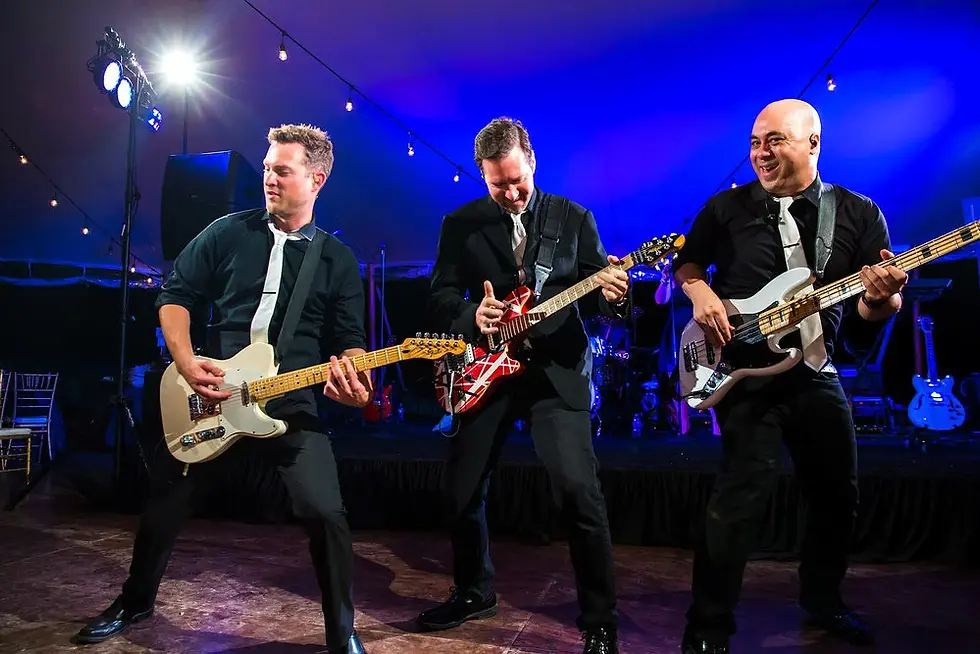
What Do the Best Austin Wedding Bands Actually Include in Their Packages?
The best Austin wedding band packages include professional sound equipment, stage lighting, an emcee to handle announcements and transitions, a live DJ to fill breaks between sets, and travel within the Austin metro. Not every band bundles all of these, and the difference matters significantly for your event logistics and total cost.
Matchmaker Band, which has been operating under Moon Tower Entertainment since 2009, builds all of those elements into every package across their 10-to-16-piece configurations. Their monthly public showcases at The Pershing venue in Austin (8:30 to 10:30 pm) give couples a way to see the full production before committing. That kind of preview opportunity is genuinely valuable and more bands should offer it.
When comparing packages, focus on these specific inclusions:
Sound system ownership: Does the band own professional-grade equipment, or do they rent locally? Owned equipment means a consistent, tested setup at your venue.
Break coverage: Who handles music during the band's breaks? A live DJ keeping the energy up is meaningfully better than a phone playlist through the house system.
Emcee services: Ceremony and reception transitions require a confident, experienced emcee. Confirm this is a named role in the contract, not an assumption.
Lighting: Basic uplighting versus full stage production lighting creates a completely different visual atmosphere, especially in photos.
Number of sets and total performance time: Most contracts specify two or three 45-to-60-minute sets. Calculate whether that covers your timeline before signing.
For couples exploring live wedding bands for the first time, the package comparison question often reveals more about band professionalism than any marketing copy does. A band that itemizes every inclusion clearly is organized. One that answers vaguely is not.
Which Austin Wedding Bands Are Worth Knowing About?
The Austin wedding band market includes dozens of active professional acts across every price tier, style, and ensemble size. Rather than treating all options as equivalent, it helps to understand what each brings and where they genuinely fit.
Uptown Drive is the highest-rated corporate event and wedding band in Texas, with over 250 five-star reviews. The band features professionally trained musicians with experience on major international stages, offering a versatile repertoire that spans classic hits to current Top 40. Uptown Drive also serves Dallas, Houston, San Antonio, and Denver. Their track record across both wedding and corporate formats gives them a distinct advantage in coordinating complex event timelines. You can also explore their roster of wedding musicians in Austin to understand the depth of talent available.
Groove Knight holds a 5.0 rating with 139 reviews and starts at $3,500. Their positioning around "best of the best" area talent with extraordinary vocalists makes them a strong contender for couples prioritizing vocal performance above all else.
People's Choice Band starts at $3,500, holds a 5.0 rating across 73 reviews, and explicitly offers flexible group sizing to match any budget. If your headcount or venue requires a non-standard configuration, they are worth a direct conversation.
Louis Pettinelli Entertainment leads the Austin market in total verified reviews, with 592 across platforms. As a music entertainment agency offering premium live ensembles, they function differently from a single-band act: they match couples with the right ensemble from a broader talent network.
Blue Tongue, Plush Posse Band, Midnight Train, and Blind Date (a seven-piece act with over 17 years performing together) round out the mid-tier market with strong review profiles and genre versatility spanning jazz, Motown, soul, and modern pop.
For couples specifically looking at the Austin scene, The AUSTIN NINES has been a consistent presence since 2013, blending live instruments with strong vocal arrangements across a large ensemble format.
If your search extends across Texas, the Texas wedding bands category covers options in every major market, from Houston to San Antonio to the Hill Country corridor.
What Is the Difference Between a Fixed Lineup and a Musician Pool Band?
A fixed lineup band is one where the same musicians rehearse together, develop choreography together, and perform at every event as a consistent team. A musician pool model, by contrast, assembles whoever is available from a roster of freelancers for each gig. The difference directly affects your event's cohesion, energy, and reliability.
Cap City Band makes this distinction central to their positioning, describing their approach as a "Certified Original Lineup." Their vocalist Forté Appling has been part of the Austin music scene since 2011 and the band's consistency of personnel is a direct response to what some industry insiders call "franchising": booking under a well-known brand name while substituting musicians the couple never auditioned.
Here is why this matters practically. A band that performs together regularly builds a chemistry and a reading of crowd energy that ad hoc lineups cannot replicate. Transitions between songs feel seamless. The band anticipates the room. When you watch a rehearsed ensemble versus a group of skilled but unfamiliar musicians, the difference shows on the dance floor within the first 30 minutes.
The question to ask every band directly: "Will the musicians I see in your demo video or showcase be the same people at my wedding?" If the answer involves qualifications, agent language, or references to "our talent network," probe further. You have a right to know exactly who will be performing.
At Uptown Drive, we see this question arise frequently when couples compare quotes. The lowest bid often involves a roster swap they were never told about. Fixed-lineup bands cost more for a reason, and that reason shows up in the performance itself.

How Far in Advance Should You Book an Austin Wedding Band?
You should book your Austin wedding band at least 7 months before your event date for off-peak months, and 12 to 18 months in advance for October and November Saturdays. The average couple books roughly 214 days (about seven months) out, based on aggregated marketplace data. But that average is skewed by off-peak bookings: top-performing acts at the premium tier routinely close their peak-season calendars a full year ahead.
Austin's competition for professional musicians is not just from other weddings. South by Southwest and the Austin City Limits Music Festival both draw on the same pool of working musicians who staff the city's best wedding bands. During festival periods, your preferred act may simply be unavailable, regardless of budget. Build your shortlist early and reach out before you finalize your venue date if possible.
What Does the Booking Window Look Like by Season?
October and November (peak): Book 12 to 18 months ahead. Premium acts close these dates first, often before couples have finalized other vendors.
April and May (spring peak): Book 10 to 14 months ahead. Hill Country outdoor venues are especially popular during this window.
June through September (summer): Flexibility increases, but outdoor venues require careful heat management planning. Book 6 to 9 months out.
January through March (winter): Most flexible window, often 6 months or less. Some bands offer pricing incentives for these dates.
One practical tip: if your venue has a preferred vendor list, ask the coordinator which band dates are already claimed for your weekend. Venues that host multiple events weekly have real-time visibility into the local calendar that couple-facing marketplaces do not reflect.
How Do You Match a Band Style to Your Austin Wedding Venue?
Matching an Austin wedding band to your venue type is as important as choosing the right musical genre. Venue acoustics, power availability, stage dimensions, and outdoor sound ordinances all determine which bands can actually perform well in a given space. Genre preferences matter, but logistics matter first.
Here is how to think about venue-band fit for the most common Austin wedding settings:
Hill Country Outdoor Venues
Outdoor Hill Country venues are visually spectacular and acoustically challenging. Open spaces require bands to bring significant amplification, and many properties along the Colorado River corridor or in residential-adjacent areas cap amplified sound at 85 to 90 decibels measured from the property line, per Austin venue regulations. Large ensembles (10 to 16 pieces) need access to dedicated 20-amp circuits; many rural Hill Country venues require generator rental for this. Bands with touring experience handle these technical requirements as standard; those without may struggle. Confirm power requirements and decibel limits in writing before signing any contract.
Downtown Austin Ballrooms
Indoor ballroom venues offer controlled acoustics and reliable power infrastructure, which allows larger ensembles to perform at their best. A 10-to-16-piece act that might overwhelm an intimate barn setting fills a ballroom correctly. Sound load-in time is also manageable: large ensembles typically need 90 minutes to two hours for load-in, soundcheck, and configuration. Ask your venue coordinator to block that time before guests arrive.
Ranch and Barn Venues
Ranch and barn settings tend to favor mid-size bands of 4 to 8 pieces. The architectural character of exposed beams and wood surfaces creates natural warmth, and a leaner ensemble fits the setting without overpowering it. Bands with country, Americana, and rock repertoire like Cap City Band or those covering country through Top 40 tend to resonate with the crowd energy at ranch events.
For couples considering options beyond Austin, San Antonio live wedding bands and Dallas live wedding bands serve couples in adjacent Hill Country and ranch wedding markets with comparable venue expertise.
What Questions Should You Ask Before Signing a Wedding Band Contract?
Before signing a wedding band contract in Austin, you should confirm at minimum: the exact lineup performing at your event, all inclusions and exclusions in the quoted price, overtime and add-on fee structures, the band's backup plan for member illness or emergency, load-in timing requirements, and the venue's technical specifications the band confirms they can meet.
These are not formalities. Each question addresses a category of problem that causes real issues on wedding days. Here is the full checklist:
Who specifically will perform? Get names in the contract, not just ensemble size. Confirm this applies to illness substitution scenarios as well.
What is the backup plan? Ask directly: if a key musician is sick the week of your wedding, what happens? A professional band has a roster of equally qualified substitutes and a clear internal protocol.
What does the quote actually include? Sound system, lighting, emcee, DJ for breaks, and travel should each be listed as included or excluded with associated costs.
What are the overtime terms? Overtime charges of $200 to $400 per 30-minute increment are standard. Know the threshold before the event, not during it.
What are the load-in requirements? Large ensembles need 90 minutes to two hours. If your venue has back-to-back events, this is a scheduling problem you need to solve in advance.
What are the power and stage requirements? Get these in writing and share them with your venue coordinator before confirming the booking.
Can you customize the setlist? Confirm the process for requesting songs, the deadline for submissions, and whether songs outside their standard repertoire require additional rehearsal fees.
What is the payment and cancellation policy? Deposits of 25% to 50% are standard. Cancellation terms vary: understand what you forfeit at different timeframes.
For a deeper look at how to navigate the full hiring process, the guide on how to book a band for a party your guests will never forget covers the process across event types with specific decision frameworks.
Live Band vs. DJ: Which Is Better for an Austin Wedding?
A live band delivers irreplaceable energy, visual presence, and real-time crowd responsiveness that no DJ can replicate. A DJ costs significantly less (roughly $1,000 versus $4,475 nationally for a live band, per The Knot 2026 Real Weddings Study) and offers unlimited song variety without the genre constraints of a live repertoire. The right choice depends on your priorities, budget, and venue.
For couples still working through this decision, the educational resource on what type of wedding music to have walks through the trade-offs across all entertainment formats, including ceremony-specific considerations.
The practical reality: Austin outdoor venues are increasingly preferring live bands over DJs, citing better sound projection in open-air settings and lower noise complaint rates. A live ensemble naturally disperses sound across a space rather than projecting it from a point source, which matters significantly at the Hill Country properties where noise ordinance compliance is a real concern.
And live music creates moments DJs cannot: the singer who drops to one knee during your first dance, the horn section that kicks in during your entrance, the crowd singalong that starts spontaneously at 10 pm. Those are not things you script. They happen because musicians read rooms and respond in real time.
If budget is the constraint, consider a hybrid approach. Book a 4-piece live band for the reception, and use a playlist or a part-time DJ for the cocktail hour. Most professional bands are flexible on coverage scope and can quote ceremony-plus-reception packages or reception-only packages with different pricing.
What Genres and Songs Should Your Austin Wedding Band Know?
A well-prepared Austin wedding band should know songs from at least five genre categories: Motown and soul classics, current Top 40, country, 80s and 90s rock, and timeless ballads. Austin's wedding audience spans generations and tastes, and a band that locks into a single era will lose part of the room every time they stay in it too long.
Matchmaker Band's publicly available setlist runs over 150 songs and deliberately spans from Sabrina Carpenter's "Espresso" and Chappell Roan's "Pink Pony Club" to classic Motown and funk. That breadth is intentional: couples are not the only people at their wedding. You are managing the energy of grandparents, parents, college friends, and coworkers simultaneously, and genre pivots keep every demographic on the floor across a four-hour reception.
For specific song inspiration, the guide to the best songs played at weddings in Texas for 2026 provides a current, curated list that reflects what actually gets dance floors moving. If you are still building your ceremony playlist, the guide to wedding walk-in music covers processional options in detail.
When reviewing a band's setlist, look for these signals of genuine range:
At least 3 songs from the current Top 40 (updated within the past 12 months)
Classic Motown and soul staples (these work for every age group)
One or two country tracks if your venue or guest list leans that direction
Reliable slow-dance options for your first dance, father-daughter, and mother-son moments
Upbeat closing songs that accelerate energy toward the final hour

Frequently Asked Questions About Austin Wedding Bands
How far in advance should I book an Austin wedding band?
You should book your Austin wedding band at least 12 to 18 months in advance for October and November Saturday weddings, which are peak season in the Austin market. For spring dates in April and May, 10 to 14 months is a safe window. Off-peak winter dates (January through March) can often be secured 6 months out, sometimes with pricing flexibility from bands looking to fill their calendar. The average Austin couple books roughly 214 days (about seven months) before their event, but that average includes many off-peak bookings, so do not use it as a benchmark for prime dates.
What is the average cost of a live wedding band in Austin?
The average Austin wedding band booking costs approximately $2,151, based on aggregated marketplace data. A more realistic budget for a 175-guest reception with a professional act runs $3,323 to $4,061, representing about 7.3% of a total wedding budget, per the Wedding.report Cost Estimator. Premium touring acts with international credentials command $8,500 to $15,000. The national average for a live band is $4,475, compared to roughly $1,000 for a DJ, according to The Knot 2026 Real Weddings Study. Budget an additional 10% to 20% above your initial quote for overtime, add-ons, and travel.
Can an Austin wedding band cover both the ceremony and reception?
Yes, most professional Austin wedding bands offer multi-phase coverage spanning ceremony, cocktail hour, and reception as an add-on or package option. Ceremony coverage typically adds $800 to $1,500 to the base price; cocktail hour adds $600 to $1,000. In 2026, full-day coverage requests have become the most common format among Austin couples, reflecting a preference for musical continuity throughout the event rather than switching providers between phases. Confirm in your contract exactly which phases are covered, the number of musicians for each phase, and whether the fee structure changes between phases.
What happens if a band member gets sick on my wedding day?
A professional Austin wedding band should have a written backup policy covering musician illness or emergency. Ask this question directly during your inquiry, before you see a contract. Reputable fixed-lineup bands maintain a roster of qualified substitute musicians who know the material and can step in without disrupting the performance. Bands that operate through a musician pool model handle this through their agency network. If a band cannot clearly explain their contingency plan, treat that as a significant red flag. Include the backup policy terms in your written contract.
What is the difference between a fixed lineup band and a musician pool band in Austin?
A fixed lineup band fields the same musicians at every performance: they rehearse together, develop choreography together, and build a genuine performance chemistry over time. A musician pool band books whoever is available from a talent roster for each event, which means the performers at your wedding may have never shared a stage before. Cap City Band calls their approach a "Certified Original Lineup" and explicitly positions it against the pool model. Fixed lineup bands generally cost more, but the on-stage cohesion and reliability are meaningfully higher. Always ask your prospective band which model they use and get the answer confirmed in the contract.
Do Austin wedding bands provide their own sound system and lighting?
Most professional Austin wedding bands include a pro sound system and basic stage lighting in their packages, but confirm this before assuming. Matchmaker Band, for example, includes sound, lighting, emcee services, and a live DJ for breaks in every package. Some bands separate sound and lighting as paid add-ons, which can add $500 to $2,000 to the base quote depending on venue size. For outdoor Hill Country venues, also confirm that the band's equipment meets the venue's power requirements, typically dedicated 20-amp circuits, and that their amplification levels comply with local sound ordinances capping outdoor events at 85 to 90 decibels from the property line.
How do I know if an Austin wedding band is right for my venue?
The best way to evaluate venue fit is to share your venue's technical specifications directly with the band and ask for confirmation in writing. Key details include stage dimensions, available power supply (number and amperage of circuits), indoor versus outdoor setting, and any decibel restrictions. Large ensembles of 10 to 16 pieces need 90 minutes to two hours for load-in and soundcheck, which requires advance scheduling with your venue. For outdoor events, ask specifically how the band has handled similar venues before and whether they carry backup power solutions. Bands with touring experience are generally better equipped to handle non-standard venue logistics than those who have only performed in controlled indoor settings.
Is it worth paying more for a premium Austin wedding band?
Yes, for most couples who prioritize entertainment as a centerpiece of the event, upgrading from a $2,500 act to a $6,000 to $8,000 professionally-staffed ensemble produces a visible difference in energy, crowd engagement, and event quality. The premium covers more than extra musicians: it covers touring-grade sound equipment, experienced event coordination, rehearsed setlists tailored to your crowd, and the reliability that comes with a band that has delivered this service hundreds of times at high-stakes events. That said, the right answer depends on your total budget. A well-chosen 4-piece act with strong reviews will outperform a poorly-suited 12-piece ensemble every time. Reviews, demos, and direct conversations matter more than headcount alone.
Ready to Book Your Austin Wedding Band?
Choosing the right Austin wedding band comes down to four things: budget clarity, early action, honest vendor conversations, and matching the band's strengths to your venue and guest profile. The Austin market gives you exceptional options at every price point. The bands at the top of the market book fast, especially for October and November Saturdays. If your date is set, start shortlisting now.
The national average for a live wedding band sits at $4,475, but Austin's market depth means you can find world-class entertainment above and below that number if you know what to look for. Use the pricing table, the contract checklist, and the venue-matching framework in this guide as your starting reference. Get multiple quotes. Watch demo videos. Ask the hard questions about lineups and contingency plans.
In 2026, Austin couples are moving toward full-day music coverage as the standard, and the bands that can deliver ceremony through last dance without seams are the ones earning the strongest reviews. That is the benchmark worth aiming for.
If you have more questions about the Austin wedding entertainment market or want a personalized recommendation based on your venue, date, and budget, the team at Uptown Drive is available to help. Our experience across Austin, Dallas, Houston, San Antonio, and Denver gives us direct visibility into what works at the specific venue types and guest dynamics you are planning for. Contact Uptown Drive for a customized quote and let us help you build the soundtrack your guests will talk about for years.

Uptown Drive brings over 250 five-star reviews and internationally-toured professionalism to weddings across Texas and Colorado. If you want a band that treats your reception with the same seriousness that professional touring musicians bring to a sold-out show, see what Uptown Drive delivers for Austin weddings and request a quote directly.


Comments