
What Is a Wedding Prelude? Timing, Songs and Setup Explained
- gregwilliams010
- 1 day ago
- 14 min read

A wedding prelude is the block of live or recorded music played while guests arrive and take their seats, before the ceremony officially begins. It typically runs 20 to 30 minutes and ends the moment the processional starts, when the officiant, wedding party, or couple begins walking down the aisle.
Key Takeaways
A wedding prelude is the background music played during guest arrival and seating, usually lasting 20 to 30 minutes before the ceremony starts.
Most preludes include roughly 5 to 10 songs at 3 to 5 minutes each, though longer guest lists or complex venues can push that toward 35 minutes.
The prelude ends when a coordinator or officiant cues the transition into the processional, usually with a 3 to 5 minute signal window built in.
Prelude music differs from processional, interlude, and recessional music: each segment has a different purpose, timing, and emotional register.
Live musicians give planners more control over pacing than playlists, since a band can extend or shorten a set on the fly if seating runs behind schedule.
According to wedding music planning resources, nearly 8 in 10 couples in 2026 now specify the exact version or timing of their ceremony songs rather than leaving it open-ended.
If you're deep in wedding planning right now, you've probably already picked your first dance song and maybe even argued with your future spouse about the exit song. But the prelude, the music your grandmother hears the moment she sits down in the second row, often gets decided last, if it gets decided at all. That's a mistake, because it's the first musical impression your guests get of the entire day.
This guide covers exactly when a prelude starts and ends, how many songs you actually need, and how it's different from processional and interlude music. We'll also get into the practical stuff that most wedding blogs skip: how venue acoustics change your song choices, what to do about late arrivals, and how to brief a musician or band so the transition into your ceremony doesn't feel abrupt. As the founder of Uptown Drive, a live wedding band based in Austin, Texas that also performs regularly for Denver, Colorado ceremonies, I've watched hundreds of preludes go right and a handful go sideways, usually because nobody planned the handoff between "guests are still finding seats" and "here comes the officiant."
Denver's wedding market has grown fast. The Wedding Report tracked 7,928 weddings in Denver in 2026, up from 7,198 in 2026, a jump of about 10%. With that much ceremony volume moving through Colorado venues each season, getting the small details right, prelude timing included, matters more than couples usually expect.
What Does Prelude Mean in a Wedding Program?
In a wedding program, prelude refers to the music segment listed first, before the processional, and it signals to guests that the ceremony is about to begin even though the formal proceedings haven't started yet. The word comes from the Latin praeludere, meaning "to play beforehand," a fitting root for a segment whose entire job is to set the tone before anything official happens.
Specifically, a printed program will usually list "Prelude" as a heading followed by the piece names or simply "Musical Selections." This isn't decorative. It tells guests, ushers, and the wedding party that the clock has started, and it gives late arrivals a sense of how much time is left before doors close for the processional.
For example, a couple marrying at a Denver mountain-view venue might list Bach's Air on the G String and two contemporary instrumental tracks under the prelude heading, followed by "Processional" with the specific entrance song underneath. This structure matters for guests navigating an unfamiliar seating chart, and it matters for musicians who use the program as their own cue sheet during the performance.
One detail most couples miss: the prelude heading in a program is also useful for your photographer and videographer. They use it to time candid shots of guests filing in, so listing it clearly helps every vendor stay coordinated, not just the band.
How Long Is a Wedding Prelude?
A wedding prelude typically lasts 20 to 30 minutes, though it can stretch to 35 minutes for larger guest lists or venues with complicated seating logistics. Most planners build the prelude to start the moment doors open to guests and end a few minutes before the officiant walks in.
The math behind this is straightforward. At an average of 3 to 5 minutes per song, a 20 to 30 minute window fits roughly 5 to 10 songs comfortably. One widely used planning approach suggests 3 to 5 songs for every 5 minutes of prelude time, plus a buffer of about five extra songs to absorb delays, since almost every ceremony runs a few minutes behind whatever the invitation says. Guest count changes this equation directly. A 200 person Colorado wedding, where the average guest count runs 130 to 140 people according to 2026 Colorado wedding data, needs more seating time than an intimate 40 person ceremony, so the prelude should lean toward the longer end of that range.
Venue layout matters just as much as headcount. A single-aisle chapel seats guests faster than an outdoor Hill Country ranch or a Denver ballroom with multiple entry points and a long walk from parking. If your venue has stairs, a winding path, or valet that tends to back up, add five minutes to your prelude estimate rather than cutting it close.
What Happens During a Wedding Prelude?
During a wedding prelude, guests arrive, are directed to seats by ushers, and settle in while musicians play a continuous sequence of songs that establish the ceremony's emotional tone. The music functions as an unofficial welcoming committee, filling what would otherwise be an awkward silence of chair scraping and hushed conversation.
Specifically, a well-run prelude accomplishes three things at once. First, it covers ambient noise, conversation, footsteps, the occasional dropped program, so the space feels intentional rather than chaotic. Second, it signals pacing to guests who arrive at different times, since a familiar hymn or recognizable instrumental subtly communicates "you still have time" versus "hurry, this is starting."
Third, and this is the part most couples underestimate, the prelude previews the musical identity of the whole day. If your reception later features a full band playing everything from Motown to contemporary pop, an acoustic prelude with a similar sensibility creates continuity. A jarring mismatch, say, somber classical prelude music followed by a high-energy reception band with zero connective tissue, can feel like two separate events rather than one day.
As a result, we always ask couples booking live wedding bands from Uptown Drive whether they want the same musicians handling ceremony music or whether they're bringing in a separate ensemble. Either works, but the choice affects how much creative continuity you get between the quiet arrival music and the moment the reception opens up.
How Does a Prelude Differ From Processional, Interlude, and Recessional Music?
A wedding prelude, processional, interlude, and recessional are four distinct music segments, each tied to a different moment and purpose in the ceremony timeline. The prelude plays during guest arrival, the processional announces the wedding party's entrance, the interlude fills quiet moments mid-ceremony such as a unity ritual, and the recessional plays as the newly married couple exits.
Confusing these segments is the most common mistake we see couples make when briefing a band or DJ for the first time. Each one calls for a different energy level, a different instrumentation choice, and a different length.
Segment | When It Plays | Typical Length | Purpose |
Prelude | Guest arrival and seating | 20-30 minutes | Sets background mood, covers ambient noise |
Processional | Entrance of officiant, wedding party, couple | 3-6 minutes total | Marks the formal start, builds anticipation |
Interlude | Mid-ceremony rituals (unity candle, sand ceremony) | 1-3 minutes | Fills a quiet transitional moment |
Recessional | Couple and wedding party exit | 2-4 minutes | Celebratory, high-energy send-off |
Notice how the emotional register shifts across the table. Prelude music is deliberately unobtrusive, background rather than foreground. Processional music, in contrast, is the moment everyone's attention snaps forward, so it needs a clear melodic hook. Recessional music flips the mood entirely into celebration, which is why couples often pick something upbeat and recognizable rather than reflective.
If you're weighing a live musician against recorded tracks for any of these segments, our guide on what type of wedding music you should have breaks down the tradeoffs in more depth. For Texas and Colorado couples specifically, we also cover reception-side planning in our piece on fresh wedding music alternatives.
How Does Venue Acoustics and Guest Count Change Prelude Planning?
Venue acoustics and guest count directly determine how loud a prelude needs to be, what instrumentation works best, and how much buffer time to build in. A stone chapel with high ceilings carries a string quartet beautifully with almost no amplification, while an outdoor Colorado mountainside ceremony with wind and open air often needs a PA system even for a solo guitarist. Most competing wedding guides skip this entirely and just list song titles, but it's the single biggest reason preludes go wrong on the actual day.
Specifically, indoor venues with hard surfaces, marble floors, exposed brick, high wood ceilings, amplify sound naturally and can make a full band feel overwhelming in a 100 person space. Softer venues with carpet, drapery, or outdoor tenting absorb sound and often need a slight volume boost to reach guests in the back rows. For example, a Denver ballroom with a 20 foot ceiling and hardwood floors carries an acoustic duo across the entire room without a microphone, whereas the same duo playing an outdoor ranch ceremony in the Texas Hill Country needs at least a small powered speaker to compete with wind and ambient chatter.
Guest count changes seating logistics more than most couples expect. A 250 person wedding needs ushers actively working the room, which means your prelude needs enough musical material, 8 to 10 songs minimum, to avoid repeating a piece while seating is still underway. A 50 person ceremony can run a tighter, 5 to 6 song prelude without anyone noticing gaps.
Late arrivals are the wildcard nobody plans for. We always recommend a five song buffer beyond whatever your estimated seating time suggests, specifically so musicians have material ready if guests are still arriving ten minutes past your printed start time. This is standard practice for every ceremony booking we run through wedding musicians in Austin, and it applies just as much to our Denver, Colorado ceremony bookings.
Should You Choose Live Musicians or Recorded Music for Your Prelude?
Live musicians give couples real-time flexibility that recorded playlists cannot match, since a live performer can extend, shorten, or adjust a song's ending based on how seating is actually progressing. Recorded music, by contrast, runs on a fixed timeline that doesn't respond to what's happening in the room.
This flexibility matters more than most couples realize until the wedding day itself. If seating runs eight minutes behind because of a delayed shuttle or an usher shortage, a live musician can simply keep playing, transitioning smoothly into another piece, while a playlist either goes silent or awkwardly loops.
Cost is the honest tradeoff. Industry data on ceremony music in 2026 puts solo musician pricing around $300 to $1,000, with string quartets running $1,000 to $3,000, generally consuming 10 to 15% of a couple's overall entertainment budget. Recorded prelude music costs nothing beyond a speaker rental, which is why many budget-conscious couples default to it.
Where we see the biggest gap is in the handoff moment, when prelude ends and processional begins. A live musician working with a coordinator can watch for the cue and time the transition precisely. A playlist relies entirely on someone hitting the right track at the right second, and we've watched more than one ceremony start with an awkward five second silence because the DJ was watching the aisle instead of the laptop.
At Uptown Drive, our Austin wedding band lineup regularly handles both prelude and reception music for the same couple, which means the musical identity carries through the entire day instead of feeling like two separate bookings stitched together.

How Do Cultural and Religious Traditions Affect Prelude Music Choices?
Cultural and religious traditions shape which songs are appropriate for a wedding prelude, and couples should confirm expectations with their officiant or venue before finalizing a set list. Christian ceremonies often favor reflective, reverent pieces, while Jewish ceremonies draw from a distinct repertoire tied to specific traditions.
For Christian weddings, commonly referenced prelude selections include contemporary worship pieces alongside classical staples by composers like Bach and Mozart, chosen for their reverent, unhurried quality that matches a sanctuary setting. Some churches restrict secular music entirely during the prelude, so confirming with the officiant weeks ahead avoids a last-minute scramble.
Jewish wedding ceremonies often incorporate specific traditional pieces such as Yedid Nefesh or Erev Shel Shoshanim during the prelude, reflecting the ceremony's particular structure and customs. If you're planning an interfaith or multicultural ceremony, it's worth discussing with your officiant which pieces carry specific meaning versus which are simply popular choices, since guests familiar with the tradition will notice the difference.
Venue restrictions add another layer. Some churches and historic venues prohibit amplified sound entirely, which limits your instrumentation to acoustic-only options. Always ask your venue coordinator this question before booking musicians, not after.
What Are the Best Practices for Planning Your Prelude Timeline?
Planning a wedding prelude effectively means locking in your song selections weeks in advance, confirming logistics with your venue, and running a short rehearsal so the transition into your processional feels seamless rather than abrupt.
Select 3 to 5 anchor pieces six to four weeks before the wedding. Confirm with your musician or band that they can perform each one, and leave room for them to fill remaining time with complementary material.
Confirm start time based on your invitation time, not your ceremony time. If your invitation says 4:00 PM, guests start arriving around 3:40, so your prelude should be ready to play by then, not at 4:00 sharp.
Brief your officiant and coordinator on the transition cue. Decide in advance whether the cue comes from a hand signal, a text message, or a coordinator physically walking up to the musicians.
Build in a five song buffer. Late arrivals and delayed shuttles are common enough that your musicians should have extra material ready without you having to ask.
Run a short rehearsal during the final week. A brief run-through with your musician, coordinator, and at least one usher tests cue signals and sound levels in the actual venue, catching acoustic surprises before the real day.
Check venue sound restrictions. Confirm whether amplification is allowed and whether the venue provides a PA system or your musicians need to bring their own.
Couples working with corporate event planners on adjacent milestone celebrations often ask us the same sequencing questions. If that's you, our corporate event entertainment team applies the same cue-and-timeline logic to galas and executive events, where a clean transition between segments matters just as much as it does at a wedding.
How Does Uptown Drive Handle Prelude and Ceremony Music for Weddings?
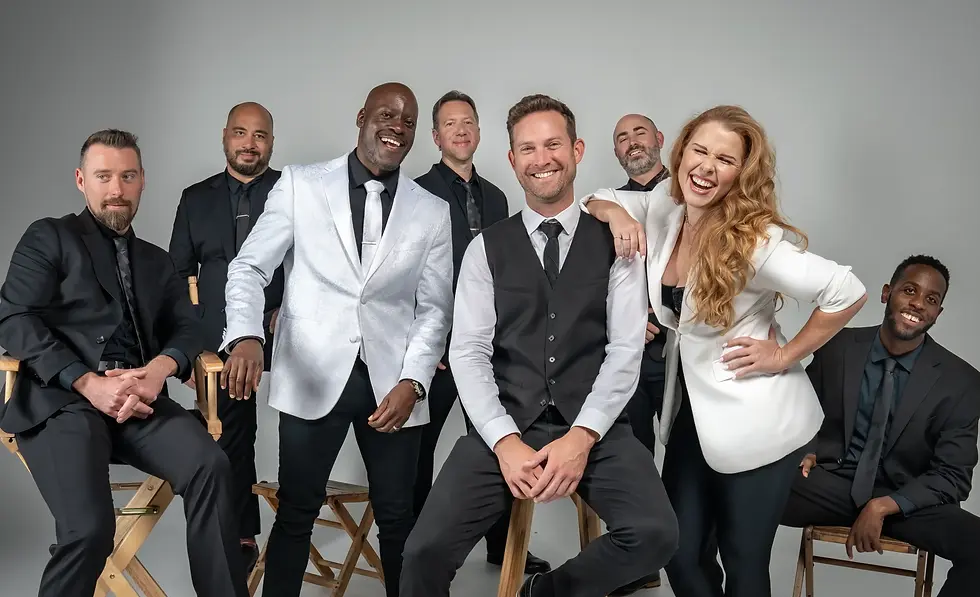
Uptown Drive is a live wedding and corporate event band based in Austin, Texas, and we build prelude, processional, and reception music into a single cohesive booking rather than treating ceremony music as an afterthought. Founded by Greg Williams, a saxophonist trained at the Indiana University Jacobs School of Music, our approach to a wedding prelude starts with the same musicianship standard we bring to a full reception set.
Here's what sets our process apart. When a couple books us for ceremony music alongside our reception band, we scale our lineup down, sometimes to a duo or trio, for the prelude and processional, then bring the full choreographed group up for the reception. That continuity means your guests hear a consistent musical voice from the moment they sit down to the last song of the night, instead of a jarring shift between a hired acoustic act and an unrelated evening band.
We also handle the logistics most couples don't think to ask about. Our standard planning process confirms venue acoustics, power access, and seating flow with your coordinator weeks before the wedding, not the morning of. For a Denver ceremony, that might mean checking whether your mountain-view venue allows amplified sound outdoors. For an Austin ceremony, it might mean confirming a rooftop venue's power circuit access. Because our lineup spans genres from big band to gospel to contemporary pop, we can build a prelude that echoes your reception's energy without overwhelming a quiet, reverent seating window. If you're comparing us to other Austin wedding bands, ask specifically whether a prospective act handles both ceremony and reception music as one continuous booking. Many don't, and that gap is exactly where wedding days lose musical cohesion.
We travel regularly beyond our home base, performing for Denver wedding bands clients as often as we do Austin, Houston, Dallas, and San Antonio couples. Other options exist in the Texas market, including companies like Cap City Band and Groove Knight, but few combine a Certified Original Lineup format with the specific ceremony-to-reception continuity we build into every booking.
What Should You Prioritize When Choosing Prelude Music?
When choosing prelude music, prioritize instrumental or soft acoustic pieces that won't compete with guest conversation, confirm your venue's amplification rules first, and pick songs your musician can actually perform well rather than a trending playlist pulled from a streaming service.
Common mistakes we see: couples picking songs based on lyrics rather than instrumentation, forgetting to check whether their venue restricts secular music, and assuming any musician can sight-read an unusual request without rehearsal time. Each of these creates avoidable friction on the wedding day itself.
The tradeoff between live and recorded music comes down to budget versus flexibility. If your ceremony timeline is tight and predictable, recorded music works fine. If you're managing a large guest list, an outdoor venue, or a multi-stage ceremony with rituals like a unity candle, live musicians give you the adaptability to keep the room feeling intentional even when things run long.
One more practical note: always confirm who cues the transition from prelude to processional. Leaving this ambiguous is the single most common source of awkward silences we've seen across hundreds of ceremonies.
Frequently Asked Questions
What does prelude mean in a wedding program?
In a wedding program, prelude refers to the music segment listed first, played while guests arrive and are seated, before the processional begins. It signals to guests that the ceremony is approaching even though formal proceedings haven't started.
How long is a wedding prelude?
A wedding prelude typically lasts 20 to 30 minutes, accommodating roughly 5 to 10 songs at 3 to 5 minutes each. Larger guest counts or complex venues can extend this to 35 minutes.
What happens during a wedding prelude?
During a wedding prelude, guests arrive, ushers direct them to seats, and musicians play continuous background music that sets the ceremony's tone and covers ambient noise from conversation and movement.
Who walks the mother of the bride down the aisle?
Traditionally, the mother of the bride is escorted down the aisle by an usher or a groomsman just before the processional's final segment begins, seating her as one of the last guests before the wedding party enters. This typically happens right as the prelude music is transitioning toward the processional cue.
What's the difference between prelude and processional music?
Prelude music plays during guest arrival and seating as background ambiance, while processional music announces the formal entrance of the officiant, wedding party, and couple. Prelude runs 20 to 30 minutes; processional typically lasts just 3 to 6 minutes total.
How much does ceremony music cost?
Ceremony music in 2026 typically costs $300 to $1,000 for a solo musician and $1,000 to $3,000 for a string quartet, generally representing about 10 to 15% of a couple's overall entertainment budget.
Can the same musicians play both the prelude and the reception?
Yes, many couples book one act for both segments to keep the musical identity consistent throughout the day. A band like Uptown Drive typically scales down to a smaller ensemble for the prelude and ceremony, then expands to the full lineup for the reception.
Does a prelude need to match the reception's musical style?
It doesn't have to match exactly, but a strong thread of continuity, similar instrumentation or genre sensibility, helps the day feel like one cohesive event rather than two disconnected bookings.
Conclusion
A wedding prelude is the arrival and seating music that runs 20 to 30 minutes before your processional begins, and getting it right comes down to matching your song count to your guest list, confirming venue acoustics ahead of time, and clearly defining who cues the transition. Couples who treat the prelude as a real planning decision, not an afterthought, consistently report smoother, more polished ceremony starts. As Denver's wedding market continues expanding into 2026, with total spending already up nearly 9% year over year according to The Wedding Report, more couples are booking musicians who can carry that same attention to detail from the first guest's arrival through the last song of the night. Uptown Drive has built its ceremony and reception process around exactly that continuity, treating the prelude as the opening note of a much longer performance rather than a separate errand to check off.

If you're planning a wedding and want your prelude, ceremony, and reception music handled by the same musically trained lineup from start to finish, request a quote from Uptown Drive and tell us your must-play songs. We'll build the timeline around your venue, guest count, and the moment you want everyone to remember.
Written by Greg Williams, Owner & Band Leader at Uptown Drive
Content powered by inkSTR.co


Comments