
How to Get Booked for Corporate Events in 2026
- gregwilliams010
- 3 minutes ago
- 17 min read

Getting booked for corporate events comes down to three things: having proof of professional-grade performance ready to send within minutes, knowing exactly who books entertainment at hotels and companies in your market, and following up faster than anyone else in the room. Corporate planners move fast and forget slower.
Key Takeaways
Corporate events are commonly booked 1 to 2 years in advance, with entertainment often locked in a year or more before the event date.
A one-page electronic press kit with a photo, positioning statement, testimonials, and technical specs is the single asset most planners request first.
Listing with convention and visitors bureaus, chambers of commerce, and hotel banquet planners puts your act in front of buyers who source entertainment repeatedly, not just once.
San Antonio's hospitality sector generated $23.4 billion in economic impact in 2026, and Visit San Antonio booked 752 events worth an estimated $697 million in local impact in FY2024, according to the city's FY2026 strategic plan.
Bizzabo's 2026 event marketing research found 78% of organizers rank in-person conferences as their most impactful marketing channel, and 54% of attendees plan to attend more in-person events this year.
Global corporate event spending is projected to grow from $325 billion in 2026 to $595.27 billion by 2029, a 10.61% annual growth rate, which means more entertainment budgets are opening up, not fewer.
If you've ever wondered why some acts seem to work every gala in town while others sit idle for months, the difference usually isn't talent. It's process. Corporate buyers, whether that's a hotel banquet manager, a convention bureau sales rep, or an executive assistant planning a holiday party, all move through the same basic decision path: they need proof you can perform at a professional level, they need to know you'll show up prepared, and they need a fast answer when they reach out.
At Uptown Drive, we've built our corporate booking pipeline across Austin, Houston, Dallas, San Antonio, and Denver around exactly that path. We perform under a Certified Original Lineup format with choreographed sets and multi-genre versatility spanning pop, hip hop, gospel, big band, and rock, which matters more for corporate crowds than most acts realize. A gala with a 45-year-old CFO and a 26-year-old new hire on the same dance floor needs a band that can read the room and shift genres without losing momentum.
This guide walks through the specific steps to get booked for corporate events in 2026, including the outreach workflow most articles skip entirely, a realistic pricing framework, and how to turn one good corporate gig into a recurring annual account.
How Do I Get Into Corporate Events?
Getting into corporate events requires three foundational pieces before contacting a single buyer: professional-grade proof of performance, a defined niche that solves a specific planning problem, and a list of the actual decision-makers who source entertainment for companies, hotels, and conventions in your market. Skipping any one of these three pieces causes outreach to fall flat, regardless of how strong the performance itself is.
First, build proof. Corporate planners rarely book blind; instead, they want video of a real audience reacting, not a polished studio reel that reveals nothing about how a performer handles a live room. Second, define what makes the act the right choice for a specific type of event, such as a cocktail-hour jazz trio, a full dance band for a post-conference celebration, or a high-energy act built to headline an entire evening. Third, research who actually signs off on entertainment budgets at hotels, chambers of commerce, and companies in the target cities.
Uptown Drive's approach in Texas markets like San Antonio starts with this same groundwork. Uptown Drive treats corporate entertainment as a distinct discipline from wedding entertainment, with different set structures, different content guidelines, and different audience-engagement goals. That distinction alone puts Uptown Drive ahead of acts that submit the same wedding reel to every corporate inquiry.
How Do You Get People to Book Your Event Entertainment?
Entertainers get booked by making the decision easy for planners: fast responses, transparent pricing, and marketing materials that answer a planner's questions before they have to ask. Corporate buyers are often working against an internal approval deadline, so the entertainer who removes friction wins the booking, not necessarily the entertainer with the most talent. Specifically, that means responding to inquiries within hours rather than days, having a one-page electronic press kit ready to send the moment someone asks, and being upfront about pricing ranges instead of forcing a planner to submit a formal request just to learn whether the act fits the budget. As a result, planners move that entertainer to the top of their shortlist simply because the process felt easier than every competing inquiry they received that week.
Build the One-Page Asset Every Planner Asks For
A corporate one-sheet is a single PDF page containing a professional photo, a positioning statement, three set or program descriptions with short summaries, a short bio, two to three testimonials, and contact information. This one-sheet is the exact deliverable that industry booking consultants recommend as the baseline asset for any performer pursuing corporate work, and it should exist before making a single outreach call.
Pair the one-sheet with a dedicated web page containing the same information plus a booking inquiry form and one clean, well-lit professional photo. Additionally, keep a short highlight video, ideally under three minutes, that shows real crowd engagement rather than a rehearsal room. Corporate planners specifically favor footage that shows an actual audience responding, in contrast to polished studio takes that reveal nothing about live-room energy.
Respond Faster Than the Competition
Speed closes corporate deals more often than price does. As a result, the entertainers who win repeat corporate business are usually the ones who reply the same day, confirm availability immediately, and send their one-sheet without being asked twice. A planner juggling five vendor categories simply moves on if a performer takes three days to answer an email.

How Do Artists Get Booked at Venues and Hotels?
Artists get booked at hotels and event venues primarily by listing directly with the banquet and catering departments that plan meetings and galas, and by building relationships with convention and visitors bureaus that refer entertainment to groups booking citywide events. These intermediaries see repeat demand year-round, which makes them more valuable than one-off direct inquiries. As a result, a single strong relationship with a banquet department or bureau can generate more bookings over time than dozens of cold outreach emails sent directly to individual companies.
Specifically, leave a promotional one-sheet with the banquet planner at every hotel in the market that has meeting space. Hotels rebook the same reliable vendors for years because a known quantity reduces their own risk with clients. Additionally, register with the local convention and visitors bureau and chamber of commerce, since these organizations distribute vendor recommendations to groups actively planning conventions, galas, and corporate retreats.
San Antonio is a useful example of why this channel matters. Visit San Antonio secured 752 events and roughly 675,000 attendees in its FY2024 sales results, generating an estimated $697 million in local economic impact according to the city's FY2026 strategic plan. ConferenceDirect ranked San Antonio the fourth most-selected U.S. destination among meeting professionals for 2026, driving more than $36 million in local economic impact from that channel alone. Every one of those booked events needed entertainment for at least one evening, and the bureau's referral relationships are exactly how many of those bookings get filled. Our San Antonio corporate bands page reflects this same local-first approach, and this model translates directly to Dallas corporate bands and corporate bands in Houston as well.
Build a Vendor Referral Network
A vendor referral network is the group of photographers, videographers, staging companies, and other performers a corporate event planner already trusts and consults before hiring entertainment directly. Corporate event planners rarely source entertainment in isolation; instead, they lean on these established vendor relationships first. As a result, building connections with photographers, videographers, and staging companies in a given market, and explicitly offering to return the favor by referring clients back to them, creates a two-way referral loop. This loop generates warm inquiries that arrive with built-in trust, in contrast to cold outreach where a planner has no prior context for the act. For example, a videographer who has worked three galas with the same planner can recommend a band with far more credibility than an unsolicited email ever could, which is why cultivating these adjacent-vendor relationships should start well before a specific booking need exists.
Can You Hire a Nationally Touring Act for a Corporate Event?
Hiring a nationally touring headline act for a corporate event is possible through talent agencies, but it typically requires a budget well beyond what most mid-size companies allocate for a single evening, plus lead times measured in many months for A-list availability. For most corporate planners, a professional live band delivers comparable energy and guest engagement at a fraction of the cost and with far more flexibility on content and set list.
This is where the practical advice diverges from the aspirational headline. A company holiday party or annual gala doesn't need a chart-topping artist to feel like an event people remember. Instead, it needs a band that reads the room, keeps a mixed-generation crowd on the floor, and can be customized around company culture, branding, and even a client's specific song requests. That's a fundamentally different, and more achievable, booking than chasing a touring headliner.
Corporate meeting costs per attendee rose 4.5% in 2026 and are forecast to climb another 2.4% in 2026, according to the Global Business Travel Association. Entertainment is one line item planners can control directly, which is exactly why a transparent, mid-market live band option tends to win the budget conversation over a marquee name that consumes the entire entertainment allocation in one booking.
What Does a Corporate Event Brief Actually Need to Include?
A corporate event brief is the document a planner sends a performer before booking, and it needs specific logistical details: the event date, city, venue, audience size and demographics, performance slot and duration, stage dimensions, ceiling height, indoor or outdoor status, technical infrastructure, noise restrictions, and any content or branding guidelines. Missing pieces here cause the most common corporate booking failures.
First, confirm the schedule: what time the performance starts, how long the set runs, and whether there are breaks for speeches or awards. Second, get the audience profile, since a 50-person executive dinner requires a different approach than a 400-person all-staff celebration. Third, nail down technical needs, including whether the venue provides sound and lighting or whether the performer is bringing their own rig. Finally, ask about topics or language to avoid, since corporate audiences often include clients, board members, and multiple generations of staff in the same room.
A pre-event alignment call roughly one week before the performance is standard practice, and it catches the small logistical mismatches that a written brief alone can miss. Uptown Drive builds this call into every corporate engagement, because a band that shows up having already confirmed stage footprint and electrical load looks dramatically more professional than one improvising on load-in day.
What Should You Charge, and How Do Corporate Contracts Actually Work?
Corporate entertainment pricing is built from several stacked components: the base performance fee, travel and lodging if the event is outside the home market, any additional AV or staging costs, customization work for company-specific content, and, if booked through an agency, a commission layered on top. Planners who understand this breakdown trust itemized pricing far more than a single flat number with no explanation.
Specifically, quote a base fee for the performance itself, then itemize travel separately so a planner in Denver or Dallas can compare an out-of-town act fairly against a local one. Add a line for extended sets, additional break coverage, or specialty requests like live band karaoke, which turns a standard evening into an interactive moment guests are still discussing the next morning. Always specify deposit terms, cancellation policy, and force majeure language clearly in the contract before signing.
Booking Channel | Typical Lead Time | Level of Control | Best For |
Direct inquiry to the act | Several months to a year+ | Highest, direct communication with the performer | Planners who want customization and direct contract terms |
Hotel banquet department referral | Varies by hotel booking cycle | Moderate, hotel manages some logistics | Meetings already booked through a hotel's meeting space |
Convention and visitors bureau referral | Often tied to citywide convention dates, booked far in advance | Moderate, bureau vets vendors but doesn't negotiate contracts | Large conventions and citywide group events |
Talent agency or bureau representation | Long lead times for high-demand acts | Lower, agency controls availability and pricing structure | Companies seeking nationally known names, with larger budgets |
Industry-wide, corporate events are commonly booked one to two years in advance, and entertainment specifically is often locked in a year or more before the event date. Waiting until three months out to search for a band severely limits available options in high-demand markets like Austin and San Antonio during peak fall convention season.
What Marketing Assets Do You Need Before You Start Pitching?
The marketing assets required for corporate booking success are a one-page electronic press kit, a dedicated web booking page, a short highlight video showing real audience engagement, and a small set of written testimonials from past corporate clients. Without these four pieces, even a strong outreach email produces no response, because planners have no way to quickly verify professionalism.
Start with the one-sheet described earlier. Then build a simple web page mirroring that content with an inquiry form attached, since some planners prefer to browse before calling. Keep the highlight video under three minutes and prioritize footage of an actual event crowd reacting in real time, not a soundcheck or rehearsal. Finally, request a short testimonial after every corporate event while the experience is still fresh in the client's mind.
Uptown Drive's founder, Greg Williams, trained as a saxophonist at the Indiana University Jacobs School of Music, and that formal musical background shows up directly in how Uptown Drive's sets are built and how quickly the band can adapt to a client's unusual request mid-performance. That kind of credential belongs prominently on a one-sheet whenever it exists, because corporate planners specifically look for signals of trained musicianship, not just stage presence.

How Do You Find and Contact Corporate Decision-Makers?
Corporate decision-makers are the specific people who control entertainment budgets: hotel banquet and catering managers, convention and visitors bureau sales representatives, chamber of commerce event coordinators, corporate event planners, and executive assistants managing internal company parties. Each of these contacts sources entertainment differently, so outreach should reflect that difference rather than using one generic pitch for every contact type.
Specifically, hotel banquet managers plan meeting-space logistics for groups booking multiple events per year, making them a repeat-referral source once an act has proven reliable. Convention bureaus, like the organization behind San Antonio's 36.8 million annual visitors, connect vendors with citywide groups booking galas and closing events. Chambers of commerce frequently host their own member events and refer trusted vendors to member businesses.
Build a Target List and Follow-Up Sequence
Create a simple spreadsheet listing every hotel with meeting space, every convention bureau contact, and every chamber of commerce event coordinator in the primary and secondary markets. Reach out with a one-sheet attached, follow up within a week if there's no response, and follow up again roughly a month later. Persistence, not aggression, is what separates entertainers who land repeat corporate work from those who send one email and give up.
This is also where a trusted vendor list works in an entertainer's favor. Photographers, videographers, staging companies, and event planners refer entertainment constantly, often before a client has even asked. Offering a one-sheet to those adjacent vendors, even before they have a specific booking need, builds the kind of warm referral pipeline that outperforms cold outreach every time.
What Timeline Template Options Work Best for Organizing Corporate Events?
The most effective timeline templates for organizing corporate events work backward from the event date across four phases: booking and contracting, pre-event logistics, the alignment call, and day-of execution. A simple backward-planning template beats a generic checklist because it forces every task to have a deadline tied to the actual event date.
Specifically, phase one covers booking, typically 12 to 18 months out for peak-season corporate galas in competitive markets. Phase two covers logistics confirmation, including stage size, technical needs, and audience details, usually finalized three to six months out. Phase three is the pre-event alignment call, ideally scheduled about one week before the performance to confirm final details. Phase four is day-of execution, covering load-in time, soundcheck, and performance schedule.
Free timeline templates for event planning are widely available through general project-management tools and spreadsheet templates, and the specific format matters less than the discipline of tying every task to a firm deadline. What most generic templates miss is the entertainment-specific checkpoint: confirming a band's technical rider against a venue's actual electrical capacity, something a standard event timeline rarely accounts for until it becomes a last-minute problem.
How Do You Turn One Corporate Event Into a Recurring Account?
Turning a single corporate booking into a recurring annual account requires collecting a testimonial immediately after the event, following up with the planner within a week to ask about their next event on the calendar, and proactively suggesting the act for the following year's date before the planner starts a new vendor search. Most entertainers stop working the moment the performance ends, which is precisely why they never build repeat clients.
Specifically, send a short thank-you note within 48 hours along with the best photo or clip from the event itself. Ask directly whether the company has another event planned, whether that's a holiday party, a sales kickoff, or a client appreciation dinner. Additionally, offer to hold next year's date at the current year's pricing if the client books before a certain point, which removes the planner's incentive to shop around again.
This is a place where corporate event budgets are showing real momentum. Bizzabo's 2026 event marketing research found 40% of organizers plan to increase event budgets this year, and 71% of attendees consider in-person B2B events the most effective way to learn about a company's products or culture. Companies that see a strong return on one event are increasingly likely to fund another, and the entertainer who stays visible after the applause fades is the one who gets that next call.
Practical Guidance: Common Mistakes and How to Avoid Them
Before you start pitching corporate clients, run through this checklist. It reflects the mistakes we see most often from entertainers trying to break into corporate work for the first time.
Sending a wedding reel to a corporate inquiry. Corporate planners want to see crowd engagement at events resembling theirs, not a first-dance moment. Build separate footage for each audience.
Quoting a single flat number with no breakdown. Planners trust itemized pricing that separates the performance fee, travel, and customization costs.
Waiting for the planner to ask for a one-sheet. Have it ready to send the same hour an inquiry lands in your inbox.
Skipping the pre-event alignment call. A quick call about one week out prevents most day-of surprises around stage size, power, and schedule.
Never following up after the event. A testimonial request and a next-year suggestion within a week of the performance is how one gig becomes an annual account.
Treating every corporate event like a wedding gig. Corporate audiences need different content guidelines, different genre balance, and different set pacing than a wedding reception.
If you're evaluating whether to hire an act rather than book one, our related piece on finding the best corporate event bands Austin has to offer covers the buyer's side of this same process. And if you're an entertainer trying to understand what a strong booking pitch sounds like from the client's perspective, our guide to booking a band for a party your guests will never forget breaks down the exact questions planners ask before they sign.
What Does a Complete Corporate Booking Workflow Look Like?
A complete corporate booking workflow moves through five stages in sequence: build your proof, define your niche, identify decision-makers, pitch and follow up, then deliver and re-book. Skipping any stage, especially the final re-booking step, is why many entertainers work one corporate gig and never hear from that client again.
Specifically, stage one is asset creation, covering the one-sheet, web page, and highlight video. Stage two is positioning, meaning knowing exactly what kind of corporate event the act serves best, whether that's a formal gala, a casual company picnic, or a full dance-floor celebration. Stage three is research, building the list of hotels, bureaus, chambers, and planners. Stage four is outreach and contracting, which means pitching, responding fast, and locking in clear contract terms. Stage five is the part most competitors skip: post-event follow-up designed to generate a repeat booking.
At Uptown Drive, this exact workflow is how we've built a corporate client base across Austin, Houston, Dallas, San Antonio, and Denver. Our corporate event entertainment page and city-specific pages like Austin corporate bands and Denver corporate bands exist specifically because planners in each of those markets search locally first, and a national booking pipeline without local proof rarely converts.
Frequently Asked Questions
What free timeline templates are available for planning corporate events?
Most general project-management and spreadsheet tools offer free event-planning templates that can be adapted into a backward-planning timeline. The specific software matters less than structuring the template around four phases: booking, logistics confirmation, the pre-event alignment call, and day-of execution.
How far in advance should I start pitching for corporate event bookings?
Corporate events are commonly booked one to two years in advance, and entertainment specifically is often locked in a year or more before the event date. Starting outreach at least 12 to 18 months ahead of the target booking season gives an entertainer a real shot at peak dates.
Do I need a talent agency to get booked for corporate events?
No, a talent agency is not required to get booked for corporate events. Direct outreach to hotels, convention bureaus, chambers of commerce, and corporate planners can generate bookings without any agency representation at all. For example, listing directly with a hotel banquet department or registering with a local convention and visitors bureau puts an act in front of the same buyers an agency would otherwise reach. That said, agencies and speaker bureaus can add reach beyond what direct outreach alone achieves, particularly for national visibility. Importantly, agencies typically require a strong existing track record before signing an act, and they charge a set commission on every booking they generate, so agency representation functions as an add-on channel rather than a replacement for the direct-outreach process described throughout this guide.
What should be included in a corporate one-sheet?
A corporate one-sheet should include a professional photo, a clear positioning statement, three descriptions of your act or program, a short bio, two to three testimonials, and complete contact information, all on a single page. This is the primary asset planners request before scheduling a call.
How is pricing a corporate event different from pricing a wedding?
Corporate event pricing typically involves itemized components including the base performance fee, travel costs, AV or staging needs, and any customization for company branding or content, whereas wedding pricing is often quoted as a single package. Corporate planners specifically expect this breakdown because they're comparing vendors against a formal budget line.
What happens if I need to cancel or a performer gets sick before a corporate event?
A well-structured corporate contract addresses this exact scenario in advance by specifying backup performer protocols and cancellation terms, so both the planner and the entertainer know precisely what happens if illness or an emergency arises close to the event date. For example, the contract should name how a substitute performer or backup musician gets identified and confirmed if the original act cannot appear, along with any notice period required. As a result, neither party is left scrambling on short notice, and the planner has a documented fallback to present to their own stakeholders. Importantly, this contingency plan should always be confirmed in writing before signing, since backup and cancellation terms are among the first questions serious corporate planners ask, and a contract without them signals a less experienced vendor.
How do I get repeat corporate bookings instead of one-time gigs?
Repeat corporate bookings come from following up within a week of the event to request a testimonial and ask about the next event on the client's calendar. Proactively offering to hold next year's date before the planner starts a new vendor search is the single most effective retention tactic.
Can corporate event entertainment include interactive experiences beyond a standard performance?
Yes, corporate event entertainment can absolutely include interactive experiences beyond a standard performance, and these add-ons are increasingly common at holiday parties and client appreciation events. For example, live band karaoke gives corporate audiences a hands-on moment that a standard set alone cannot provide, turning passive listeners into active participants for part of the evening. As a result, these interactive segments tend to become the part of the night guests remember and discuss afterward, which strengthens the case for booking the same act again the following year. Importantly, these additions work best when pitched as a specific, named upgrade with its own line item, rather than bundled invisibly into a standard quote, since planners want to see clearly what they're paying for and why it enhances the event.
Conclusion: Getting Booked Comes Down to Proof, Process, and Follow-Up
Getting booked for corporate events in 2026 depends on the same three fundamentals we opened with: professional proof of performance ready to send immediately, a clear list of the decision-makers who source entertainment in your market, and faster, more consistent follow-up than the competition. Corporate spending on live events is climbing, with global corporate event revenue projected to nearly double by 2029, and markets like San Antonio are booking hundreds of events worth hundreds of millions in local economic impact every year. The opportunity is real, and it rewards entertainers who treat corporate booking as a repeatable system rather than a lucky break.
Uptown Drive built its corporate booking process around exactly this discipline, from the one-sheet through the post-event follow-up call, across every market we serve from Austin to Denver. If you're a corporate planner looking for entertainment that already understands this process from the other side, or if you're evaluating what a professional booking partner should look like, that same standard applies to how we work with every client.
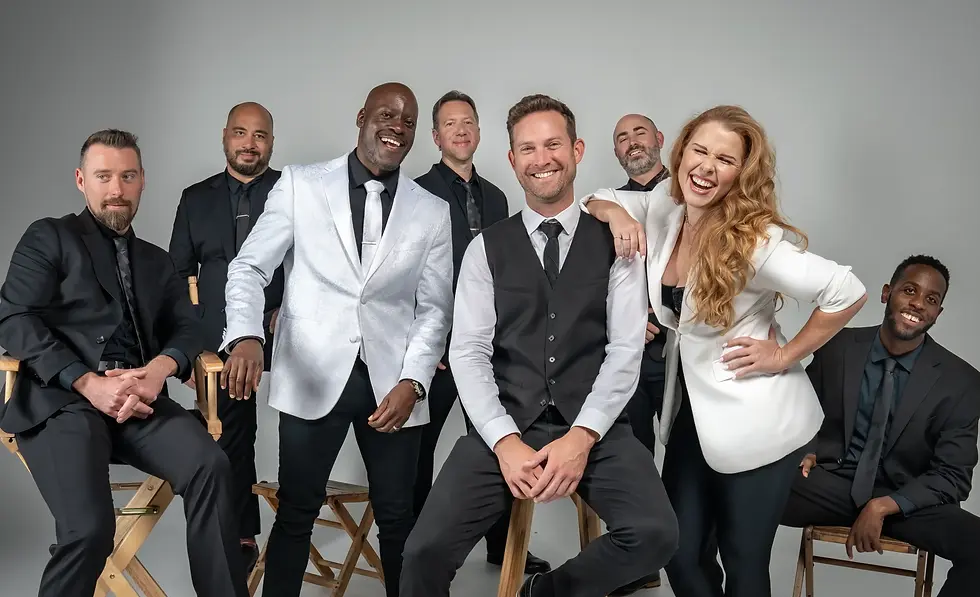
If your company is planning a gala, holiday party, or client event in San Antonio, Austin, Houston, Dallas, or Denver, Uptown Drive handles the entire booking process the way this guide describes it, from the first inquiry through the post-event follow-up. Reach out through the contact page to check availability and request a quote.
Written by Greg Williams, Owner & Band Leader at Uptown Drive
Content powered by inkSTR.co


Comments