
What Music to Play at a Corporate Event in 2026
- gregwilliams010
- 3 hours ago
- 16 min read

The best corporate event music shifts by phase: soft jazz or acoustic instrumentals during arrival and networking, mid-tempo hits like Valerie or Superstition to bridge dinner into dancing, and universally known tracks like Uptown Funk or 24K Magic during the 60 to 90 minute peak dance window.
Key Takeaways
Corporate event music works best when planned in phases: arrival, networking, dinner, transition, peak dance, and cool down, rather than one static playlist.
For a typical four-hour corporate event with a two-hour dance segment, industry guides recommend planning for roughly 35 to 45 songs total.
Peak dance energy is generally reserved for a 60 to 90 minute window, using the most recognizable, cross-generational songs on your list.
Volume matters as much as song choice: keep it low enough during seated dinner and networking that guests never have to raise their voice to trade a business card.
Genres shift by industry culture. Tech companies tend to favor modern instrumental music, while luxury brands and financial firms often lean classical or jazz.
Denver's corporate events benefit from a live, adaptable band far more than a fixed playlist. The city welcomed 37.6 million visitors in 2026, generating $10.5 billion in tourism revenue, according to Visit Denver, and its independent music scene alone contributed $898 million to state GDP in 2026 per the National Independent Venue Association.
If you have ever sat through a corporate gala where the music either buried every conversation or disappeared into forgettable elevator-music mush, you already understand why this question matters. Getting corporate event music right in 2026 is not about picking your personal favorite playlist. It is about reading the room, phase by phase, and adjusting genre, volume, and energy to match what is actually happening on the floor.
At Uptown Drive, we build corporate sets for galas, holiday parties, and company retreats across Austin, Houston, Dallas, San Antonio, and Denver, and the pattern is consistent: the events people talk about the next morning are the ones where the music matched the moment instead of fighting it. This guide walks through exactly what to play during each phase of a corporate event, which songs and genres consistently work across mixed-generation crowds, and the details most planning guides skip entirely, including licensing, accessibility, and how to handle hybrid or virtual audiences.
You will get a phase-by-phase breakdown, genre guidance by industry type, a practical checklist for building your own set, and answers to the questions corporate planners ask most often. Whether you are hiring a DJ, licensing a playlist service, or booking a live band, the structure below applies.
What Kind of Music Do You Play at a Corporate Event?
Corporate event music generally moves through six distinct phases, each requiring a different genre, tempo, and volume level: arrival, networking, dinner, transition, peak dance, and cool down. Specifically, arrival and networking call for low-volume instrumental music, dinner requires near-silence-level background sound, and peak dance needs high-energy, universally recognized hits.
As a result, no single playlist or single genre covers an entire four-hour event well. Guidance from other management companies notes that appropriate networking genres include upbeat jazz instrumentals, bossa nova, and acoustic covers of recognizable songs, specifically because they support conversation instead of competing with it. For example, an instrumental cover of a familiar pop song creates warmth without pulling attention away from the person standing next to you.
Additionally, the type of company hosting the event shapes genre selection. Tech companies tend to favor modern instrumental music at their events, while luxury brands and financial firms more often choose classical guitar or jazz standards, according to corporate-event planning research. A software company's holiday party and a private equity firm's annual gala should not sound the same, even if both are held in the same Denver ballroom.
What Are Some Good Songs to Use at Corporate Events?
Good corporate event songs are tracks that are widely recognized across age groups, contain clean lyrics, and carry enough energy to work on a dance floor without alienating any part of the crowd. Uptown Funk by Mark Ronson featuring Bruno Mars, September by Earth, Wind and Fire, and Don't Stop the Feeling by Justin Timberlake are cited repeatedly across 2026 corporate playlist guides as reliable, cross-generational crowd-pleasers.
For the peak dance segment specifically, several 2026 guides group Levitating by Dua Lipa, Uptown Funk, and I Wanna Dance With Somebody by Whitney Houston together as a core set, since all three land in that 60 to 90 minute window without a lull. Blinding Lights by The Weeknd works well earlier, during arrival or pre-show atmosphere, thanks to its synth-driven build rather than an immediate dance-floor demand.
Some songs serve a specific structural purpose rather than general energy. Thunderstruck by AC/DC and Eye of the Tiger by Survivor are frequently used as walk-on or keynote intro tracks, while Hall of Fame by The Script featuring will.i.am fits recognition and awards segments because the lyrics directly reference achievement. Don't Stop Me Now by Queen is a common choice for closing the night, since its build works as a euphoric send-off rather than a mid-set track.

What Kind of Music Do You Play at an Office Party?
Office party music should stay lighter and more universally accessible than a formal gala set, since office parties usually mix departments, seniority levels, and comfort zones in one room. Happy by Pharrell Williams appears in multiple 2026 corporate and conference playlists specifically because it lifts mood across generations without leaning into any one genre's niche audience.
Walking on Sunshine by Katrina and the Waves and Treasure by Bruno Mars work well for the shorter, five to ten minute breaks common in an office setting, where people are grabbing a drink or stepping away from their desk rather than settling in for a full networking conversation. Counting Stars by OneRepublic serves a similar mid-tempo, low-commitment role.
Office parties also benefit from clean radio edits without exception. Corporate-event music guides consistently recommend avoiding explicit lyrics, anything political or controversial, and novelty tracks that can read as unprofessional in a workplace setting. If your office spans multiple locations, such as an Austin headquarters with a Denver satellite office joining virtually, keep genre choices broad rather than regional, since niche local references may not land the same way for a remote group.
What Are Crowd Pleaser Songs for a Corporate Event?
Crowd pleaser songs are tracks with near-universal name recognition, moderate to high energy, and lyrical content that skews positive or celebratory rather than personal or niche. 24K Magic by Bruno Mars and Levitating by Dua Lipa show up across multiple 2026 corporate playlist guides specifically because they satisfy that combination without requiring the crowd to know a specific artist's deep catalog.
Notably, crowd pleasers differ from personal favorites. A song beloved by one generation but unfamiliar to another, no matter how good, will clear a dance floor faster than it fills one. That is why September by Earth, Wind and Fire keeps appearing in guide after guide: it crosses generational lines in a way that most 2020s chart-toppers cannot yet claim.
In our experience booking live sets for corporate galas from Austin to Denver, the safest crowd pleasers combine three traits: recognizable within the first five seconds, danceable without requiring specific steps, and clean enough to play in front of a CEO and a summer intern in the same room. A skilled live band reads which of those tracks is landing in real time and adjusts the next song accordingly, something a fixed playlist cannot do.
How Should You Structure Music Timing Across a Corporate Event?
Corporate event music timing follows a phase-based structure across a typical four-hour event, moving from low-energy arrival music through a high-energy peak and back down to a calm close. Specifically, a 2026 corporate-event music planning guide recommends a roughly 45 minute low-energy opening set of jazz standards and light instrumentals for arrival and dining, followed by a 15 minute transition phase using mid-tempo hits.
The transition phase is where planners most often get the sequencing wrong. Songs like Valerie by Amy Winehouse or Superstition by Stevie Wonder work here because they carry enough groove to signal the shift from dinner to dancing without jumping straight to full-energy tracks while people are still finishing dessert. After the transition, peak energy runs for 60 to 90 minutes using your most universally known songs, followed by a roughly 15 minute cool-down phase with acoustic renditions and one or two power ballads before the final closing track.
Phase | Approx. Duration | Genre/Style | Volume Level |
Arrival & Dining | 45 minutes | Jazz standards, acoustic covers, light instrumentals | Low, conversation-friendly |
Networking | Ongoing throughout | Bossa nova, upbeat jazz instrumentals | Very low |
Transition | 15 minutes | Mid-tempo classics (Valerie, Superstition) | Rising gradually |
Peak Dance | 60 to 90 minutes | High-energy, universally known hits | High, standing crowd |
Cool Down | 15 minutes | Acoustic renditions, power ballads | Moderate, easing down |
For a full four-hour event with a two-hour dance segment, plan for approximately 35 to 45 songs total across every phase, according to industry timing guides. That number accounts for shorter background tracks during dinner and full-length dance songs during peak energy, so do not assume a single 45-song list covers every phase evenly.
What Music Fits Different Corporate Cultures and Industries?
Corporate music selection should reflect the hosting company's culture, since a genre mismatch is one of the fastest ways to make an event feel generic or out of touch. Tech companies tend to favor modern instrumental music at their events, according to corporate-event planning research, while luxury brands and financial firms more often lean toward classical guitar or jazz standards.
A Denver-based fintech holiday party and a Houston energy-sector gala should not share the exact same set list, even if both draw from the same broad pool of crowd pleasers during peak dance. As a result, the smartest approach is building a base set of universally strong songs, then layering in genre-specific choices for arrival and networking that match the company's brand identity.
This is one area where a live band consistently outperforms a fixed playlist. A band can read whether a room full of engineers responds better to a funk-driven set or a more restrained acoustic arrangement, and pivot mid-event. Our work with corporate clients across Austin corporate events, Houston corporate galas, and Denver corporate bookings has shown that genre flexibility matters more than any single song choice, since the same set that kills at a marketing agency's party can fall flat at a law firm's annual dinner.
How Do You Play Music for Hybrid or Virtual Corporate Events?
Music for hybrid and virtual corporate events requires a different approach than in-person galas, since remote attendees experience sound through a laptop speaker or headphones rather than a live room. Specifically, intro loops for video calls, Zoom waiting-room music, and breakout-room transition cues need to be shorter, lower in volume, and licensed for digital streaming use rather than just live performance.
This is a gap most corporate music guides skip entirely, yet hybrid formats are increasingly common for companies with offices split across markets like Austin and Denver. For a virtual all-hands meeting, a 15 to 30 second instrumental loop works better as an opener than a full song, since attendees are joining a call rather than walking into a room. Keep the same phase logic: low-energy instrumental for the waiting period before the meeting starts, a brief upbeat cue to mark the official kickoff, and quiet background options during any breakout-room discussion segments.
For companies streaming a portion of an in-person event to remote employees, licensing becomes more complex than a standard in-room performance, since livestreaming copyrighted music typically requires separate digital or streaming rights beyond a standard public performance license. Confirm this directly with your licensing provider or legal team before streaming any portion of a corporate event set, rather than assuming your existing venue license covers it.
What Should You Know About Accessibility and Volume for Corporate Music?
Accessible corporate event music means planning volume levels and format choices that accommodate attendees with hearing sensitivities or hearing loss, not just optimizing for the loudest possible dance floor. A 2026 corporate-event music planning guide notes that volume during seated dinner should stay very low, increasing only slightly during standing portions, a principle that also directly benefits guests who rely on lip reading or hearing devices during conversation-heavy segments.
Few corporate planning guides address this directly, but it deserves specific attention. For example, offering a designated quieter networking area away from speakers gives attendees with sound sensitivities a comfortable space to engage without leaving the event. If your event includes any spoken program, captioning lyrics or providing a printed set list for a first dance or awards moment, similar to practices used at live wedding bands performances, gives all attendees equal access to the moment rather than relying on sound alone.
Practically, this means briefing your sound engineer or live band on maximum decibel levels during dinner and speeches, not just at peak dance. A band experienced in reading a room, rather than running a fixed automated playlist, can adjust volume in real time based on visible guest reactions, which is far harder for a pre-programmed system to replicate.
How Do You Choose Music for a Culturally Diverse Corporate Audience?
Choosing music for a culturally diverse corporate crowd means selecting songs and genres that avoid regional or language-based assumptions about what the whole room will recognize. Specifically, defaulting entirely to English-language American pop and rock ignores that many corporate audiences, particularly in cities like Denver and Houston with large international business communities, include guests from a wide range of backgrounds.
This is one of the biggest content gaps in most corporate music guides, and it matters more every year as company rosters diversify. A practical fix is building in a small number of internationally recognized crossover tracks, songs with strong instrumental hooks or widely known melodies that transcend a single market, alongside your English-language crowd pleasers. Instrumental and bossa nova selections during networking phases naturally sidestep this issue since they carry less language-specific baggage than vocal-heavy tracks.
For peak dance segments specifically, sticking with rhythm-forward, globally familiar hits, rather than assuming every attendee grew up on the same regional radio stations, keeps the floor full longer. A live band with a wide genre range, spanning pop, funk, and R and B, has more flexibility to pivot toward what is actually working for a specific room than a rigid preset list built in advance.
What Are the Legal and Licensing Considerations for Corporate Event Music?
Playing copyrighted music at a corporate event typically requires proper licensing, particularly for background tracks, walk-on songs, and any recorded music played through a venue's sound system. Most professional venues and DJs already carry the appropriate performance licenses, but this is worth confirming directly rather than assuming coverage, especially if you are supplying your own playlist through a personal streaming account.
For companies wanting to avoid licensing complexity altogether, royalty-free and no-copyright music libraries offer an alternative for background and ambient use. Some providers, for example, list thousands of instrumental and background tracks available for business use without the licensing overhead of commercial hits. Alternative options exist as well for those seeking public domain and royalty-free tracks.
Hiring a licensed live band or a professional DJ service typically resolves most of this concern automatically, since the vendor carries the appropriate licensing for live performance. If you are recording any portion of your event, whether for internal use or a company highlight reel, separate synchronization licensing may apply beyond a standard performance license. Confirm the exact requirements with a licensing attorney or your venue's events team rather than guessing, since rules vary by use case and jurisdiction.
DJ, Playlist Service, or Live Band: What's the Right Corporate Music Budget Approach?
Budgeting for corporate event music generally falls into three tiers: a licensed playlist or streaming subscription for smaller internal gatherings, a professional DJ for mid-sized events needing more mixing and MC work, and a live band for galas, holiday parties, and events where the entertainment itself is part of the brand experience being presented to employees or clients.
Each option solves a different problem. A playlist service works when the music is meant to stay in the background and budget is the primary constraint. A DJ adds mixing skill and some crowd reading, useful for a mid-sized office party. A live band adds a visible production element, genre versatility across an entire evening, and the ability to read a room and adjust in real time, which matters most for high-visibility galas where leadership wants the event to feel like a genuine investment in company culture rather than a background afterthought.
Connected playlist tools that let employees submit song requests ahead of an event have become a popular middle-ground option in 2026, allowing a company to gather preferences and export a finalized list to a streaming platform before the event. This works well for smaller internal gatherings, though it still requires someone managing volume and sequencing live, a role a DJ or band naturally fills.

What Common Mistakes Should You Avoid When Planning Corporate Event Music?
The most common corporate music mistake is treating the entire event as one continuous playlist instead of six distinct phases, each requiring its own genre and volume decision. As a result, events either start too loud, killing early conversation, or plateau at the same energy level all night, leaving no clear peak moment for guests to remember.
Skipping the volume check during dinner. If attendees have to raise their voice to exchange a business card, the music has already failed its networking purpose, according to corporate-event planning guides.
Choosing songs for yourself, not the room. A personal favorite that only one generation recognizes will not perform the same role as a proven crowd pleaser like September or Uptown Funk.
Ignoring licensing until the week before the event. Confirm performance and, if applicable, streaming rights well in advance rather than assuming your venue or personal account covers it.
Underestimating the transition phase. Jumping straight from dinner music to full peak-energy tracks skips the 15 minute mid-tempo bridge that eases guests onto the dance floor.
Forgetting the cool-down. Ending abruptly at peak energy, rather than easing down with an acoustic or ballad segment, leaves the night feeling unfinished rather than intentionally closed.
Many of these mistakes come from treating corporate entertainment like a smaller version of a private party rather than its own discipline. Our team frequently points corporate clients toward planning resources like our corporate event entertainment page and our post on finding the best corporate event bands Austin has to offer for a deeper look at how live entertainment planning differs from a standard office party playlist.
Why Does Denver Make a Strong Case for Live Corporate Entertainment?
Denver's corporate event market benefits from strong, sustained visitor and business travel demand, which raises the bar for entertainment quality at company galas and conferences held in the city. According to Visit Denver, the city welcomed 37.6 million visitors in 2026, generating $10.5 billion in tourism revenue, with 82 percent of overnight visitors coming from out of state, meaning many corporate attendees at a Denver event are experiencing the city, and its entertainment, for the first time.
Colorado's broader tourism sector generated $29.2 billion in visitor spending in 2026, with the Denver metro area responsible for $14.2 billion, or roughly 48.5 percent of the state total, according to the Colorado Tourism Office. Notably, Denver's independent music venues alone contributed $898 million to state GDP and supported 9,641 jobs in 2026, per the National Independent Venue Association, underscoring how central live music is to the city's broader economic and cultural identity.
For a corporate planner deciding between a background playlist and live entertainment for a Denver event, that local music culture matters. A city where live music drives measurable economic output is a city where attendees, many of them out-of-state guests spending an average of $240 per day according to Visit Denver, expect entertainment with real production value. Uptown Drive brings that same multi-genre, choreographed approach to Denver corporate events that has built its reputation across Texas.
Frequently Asked Questions
What timeline template options are available for organizing corporate event music?
Most corporate event music timelines follow a phase-based structure: a 45 minute low-energy arrival and dining segment, ongoing networking background music, a 15 minute transition into dancing, 60 to 90 minutes of peak dance energy, and a 15 minute cool-down before closing. Building your set list around these phases, rather than one flat playlist, gives you a repeatable framework for any four-hour corporate event.
What are the best timeline templates for organizing events with music?
The most reliable template splits a four-hour event into six named phases and assigns a genre, volume level, and rough song count to each one, as outlined in the timing table above. Planning for approximately 35 to 45 total songs across those phases keeps you from running short during peak dance or overloading the dinner segment with too many tracks.
What free timeline templates are available for planning corporate event music?
While there is no single official free template, you can build your own using the phase structure in this guide: arrival, networking, dinner, transition, peak dance, and cool down, each with a duration, genre note, and volume target. Alternative options and other services in the area also let you build a free background track list for the lower-energy phases without licensing costs.
What is the most popular mother-son wedding dance song?
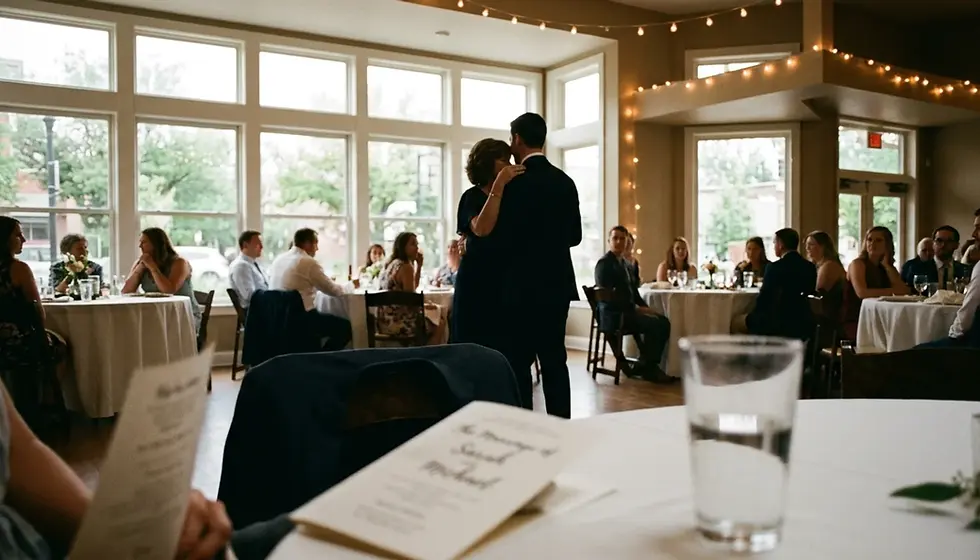
While this guide focuses on corporate event entertainment, this question comes up frequently for planners who also handle company milestone celebrations with a family element. Popular mother-son dance songs tend to be warm, mid-tempo tracks with sentimental lyrics rather than club-energy hits; if you are planning a related event, our wedding musicians in Austin team can help select a song that fits the moment.
How far in advance should you book live entertainment for a corporate event?
Popular dates for corporate galas and holiday parties, particularly in Q4, tend to book up quickly in markets like Austin, Houston, Dallas, and Denver. Reaching out several months ahead gives you the best chance at securing a live band with the genre range and scheduling flexibility your event needs.
Should corporate events use a live band or a DJ?
A DJ works well for straightforward mixing and MC duties at a mid-sized office party, while a live band adds visible production value, genre versatility, and the ability to read a room and adjust energy in real time. For high-visibility galas where the entertainment reflects on company culture, a live band typically delivers a more memorable, higher-energy experience.
Can you request specific songs for a corporate event set?
Yes. At Uptown Drive, corporate clients can submit custom song requests that get incorporated into the live set, so the evening reflects the company's specific culture rather than a generic template. This is especially useful for tailoring peak-dance segments to the actual musical preferences of your employee base.
What genres work best for a mixed-generation corporate crowd?
Funk, classic soul, and mainstream pop with strong melodic hooks tend to cross generational lines most reliably. Tracks like September by Earth, Wind and Fire or Uptown Funk by Mark Ronson featuring Bruno Mars consistently appear across 2026 corporate playlist guides because they work for both younger and older attendees without requiring deep familiarity with any single era.
Conclusion
Corporate event music comes down to matching genre, volume, and energy to six distinct phases rather than picking one playlist and hoping it works all night. Start low and instrumental for arrival and dinner, bridge into dancing with a mid-tempo transition, reserve your 60 to 90 minute peak for universally known crowd pleasers like Uptown Funk and September, and close with an intentional cool-down rather than an abrupt stop.
As Denver's corporate event scene continues to grow into 2026, backed by a tourism economy generating $10.5 billion in annual visitor spending and a live music culture worth nearly $900 million in state GDP, the bar for entertainment quality keeps rising along with it. A fixed playlist can hit the right genres. A live band that reads the room in real time is what turns a good set list into a night your employees are still talking about at the next quarterly meeting.

If you are planning a corporate gala, holiday party, or company retreat in Denver, Austin, Houston, Dallas, or San Antonio and want a live band that builds your set around your company's culture instead of a generic template, get started with Uptown Drive. We handle the phase-by-phase planning, genre pivots, and song requests so your team can focus on the event itself.
Written by Greg Williams, Owner & Band Leader at Uptown Drive
Content powered by inkSTR.co


Comments