
1st Dance Wedding Songs: 2026's Best Picks for Couples

The best 1st dance wedding songs for 2026 mix timeless ballads like "Can't Help Falling in Love" and "At Last" with newer tracks such as "Die With A Smile" by Lady Gaga and Bruno Mars. Most run between 2 and 3 minutes so the moment feels complete without dragging.
Key Takeaways
Classic first dance songs like "At Last" by Etta James and "Can't Help Falling in Love" by Elvis Presley remain the two most-chosen tracks nationally, according to recent wedding industry surveys.
A first dance song works best between 2 and 3 minutes; most couples edit longer tracks down rather than dance the full runtime.
The Dallas Fort Worth Arlington metro recorded 43,755 weddings in 2026, ranking 6th nationally by wedding volume, according to The Wedding Report.
Total wedding spending across Dallas Fort Worth Arlington reached about $1.76 billion in 2026, with the average wedding cost near $40,129, per The Wedding Report.
A live wedding band, unlike a DJ playing a recording, can transition song length, key, and tempo in real time, giving couples more control over how the moment actually feels.
Uptown Drive builds custom first dance arrangements into its live wedding band sets across Austin, Houston, Dallas, and San Antonio.
If you're staring down a wedding planning spreadsheet and the "first dance song" cell is still blank, you're not behind schedule. Most couples we talk to at Uptown Drive settle on this song later than almost every other decision on their list, often after the cake flavor and before the seating chart. That's normal. The first dance carries more emotional weight per minute than almost anything else in the reception, which is exactly why it feels harder to choose than it should.
This guide covers the actual mechanics of picking a first dance song in 2026: which tracks are trending, how long the dance should run, what tempo range works for couples who aren't trained dancers, and how to personalize the moment beyond just picking a song off someone else's list. We'll also get into a few things most wedding blogs skip entirely, like how to handle the first dance when the couple doesn't fit the traditional bride-and-groom mold, and how a live band changes what's actually possible during those two or three minutes.
Dallas alone hosted 13,703 weddings in 2026, representing more than $433.2 million in local wedding spending, according to The Wedding Report. That's a lot of couples standing in the middle of a dance floor wondering if their song choice is the right one. It usually is, as long as you understand a few basics about length, tempo, and how the moment gets performed.
What Is the Best Song for a Wedding First Dance?
The best wedding first dance song is the one that matches a specific couple's real relationship rather than simply the most popular chart-topping ballad of the year. Industry data consistently points to "Can't Help Falling in Love" by Elvis Presley and "At Last" by Etta James as the two most-selected first dance songs nationally in recent years.
Beyond those two tracks, "Thinking Out Loud" by Ed Sheeran, "All of Me" by John Legend, and "A Thousand Years" by Christina Perri show up repeatedly across wedding song surveys as recurring favorites. These songs share a common thread: mid-tempo ballads with clear, singable melodies that photograph and film well. In contrast, fast, complicated songs make for compelling Spotify listening but awkward slow dancing.
Newer entries are reshaping the list heading into 2026. "Die With A Smile" by Lady Gaga and Bruno Mars, "Carry You Home" by Alex Warren, and "Beautiful Things" by Benson Boone are appearing on more current first dance playlists, sitting alongside the Elvis and Etta James staples rather than replacing them. At Uptown Drive, the band has noticed the same pattern performing at receptions across Austin and Dallas: couples still want the classics, but they want at least one modern reference point in the mix, whether that reference point is the first dance itself or the song right after it.

What Is the Most Played First Dance Song?
"At Last" by Etta James and "Can't Help Falling in Love" by Elvis Presley are the most consistently played first dance songs at U.S. weddings, based on repeated appearances across major wedding industry surveys covering 2026 data. Both songs share a similar structure: a slow 4/4 tempo, a clear melodic hook, and lyrics that read as a direct declaration rather than a metaphor.
The reason these two songs keep winning isn't nostalgia alone. Etta James's arrangement gives even non-dancers an easy sway pattern, and the song's runtime naturally sits close to the 3-minute mark that most choreography coaches recommend. Elvis's track runs shorter, which works well for couples who feel self-conscious holding the floor.
Song popularity also shifts by region and by wedding style. For example, country-leaning couples across Texas often lean toward tracks with a slower, twangier feel instead of soul or Motown staples. As a live wedding band performing across Austin, Houston, Dallas, and San Antonio, Uptown Drive sees this regional variation firsthand: a Hill Country ranch wedding and a downtown Dallas hotel ballroom rarely land on the same first dance genre, even when the guest count and budget look nearly identical.
What Are Some Popular First Dance Songs in 2026?
Popular first dance songs for 2026 blend legacy ballads with a growing set of contemporary crossover tracks. Specifically, couples are pairing classics like "All of Me" by John Legend and Elton John's "Your Song" with newer releases that have gained traction on wedding playlists over the past year.
Here's a breakdown by mood, since most couples find it easier to choose within a category than from one giant undifferentiated list:
Mood | Example Songs | Why It Works |
Timeless Romantic | "At Last" (Etta James), "Can't Help Falling in Love" (Elvis Presley) | Universally recognized, slow enough for beginner dancers |
Modern Ballad | "Thinking Out Loud" (Ed Sheeran), "All of Me" (John Legend) | Contemporary but proven across thousands of weddings |
2026 Trending | "Die With A Smile" (Lady Gaga & Bruno Mars), "Beautiful Things" (Benson Boone) | Fresh sound while keeping a slow, danceable tempo |
Country/Texas | Slower tempo tracks from contemporary country artists | Fits ranch venues and Hill Country wedding culture |
Fun/Unconventional | Upbeat crossover picks chosen for personality over tradition | Signals a couple who wants energy from minute one |
Additionally, "Meant To Be" by Bebe Rexha and Florida Georgia Line remains a strong crossover option for couples who want a country feel without going fully traditional. As a result, the 2026 first dance landscape looks less like a single hit list and more like five or six distinct lanes, each built around a different emotional tone.
One thing that hasn't changed: most sources agree the sweet spot for song length is roughly 2 to 3 minutes. Anything longer and even the most in-love couple starts glancing at the crowd wondering when the song ends.
Who Picks the First Dance Song at a Wedding?
Traditionally, the couple getting married picks their own first dance song together, though the decision-making process varies widely from one wedding to the next. In some cases one partner picks the song and surprises the other; in other cases, the song gets negotiated over months, sometimes down to the final week before the wedding.
There's no rule requiring both partners to agree instantly. What matters more is that the choice reflects the relationship rather than a trend. For example, a song tied to a specific memory, a lyric that means something private, or even an inside joke turned into a slow dance all outperform a generic "most popular" pick in terms of how the moment actually lands with the couple and their guests.
For non-traditional couples, including same-gender couples, the "who leads" and "which version of the song" questions come up more often than outsiders expect. There's no default here either. Some couples choreograph a shared lead that alternates; others simply sway without assigning roles at all. Importantly, a live band gives more flexibility than a fixed recording, since the band's arrangement can shift in real time if one partner wants to step in during the second verse rather than the first. At Uptown Drive, these preferences get built into rehearsal calls ahead of the wedding date so nothing feels improvised on the actual day.
How Long Should a First Dance Song Actually Be?
A first dance song should run between 2 and 3 minutes for most couples, a range that balances emotional weight against the physical demands of slow dancing in front of a crowd. Wedding planners and choreography instructors consistently point to this window because the window gives enough time for the moment to register without asking non-dancers to hold a pose for four or five minutes straight.
Many popular first dance songs, particularly modern ballads, run longer than 3 minutes in their original recording. For example, "Thinking Out Loud" runs close to 4:40 in full. This is why editing matters more than most couples realize going in.
How to Edit a Song Down to the Right Length
Here's a practical approach for trimming a longer track without losing the emotional core:
Identify the song's strongest verse and chorus pairing, usually the second verse into the final chorus, which tends to carry the most vocal and instrumental intensity.
Cut the intro down to 10-15 seconds so the dance starts close to the vocal entrance rather than during a long instrumental build.
Loop or fade out after the final chorus instead of playing a full extended outro, which often just repeats the hook.
Time the edit against a stopwatch during a rehearsal, not just by ear, since a 20-second miscalculation feels much bigger live than it does on a phone speaker.
If working with a live band, request the edit directly. A band can restructure the arrangement (skip a bridge, shorten an instrumental solo) far more cleanly than a DJ cutting a recording mid-song.
This last point is where a live wedding band earns its price difference over a standard DJ setup. Uptown Drive routinely builds custom-length arrangements for couples who love a specific song but don't want the full 4-minute version. Because the band performs the arrangement live rather than editing an mp3, the transition into the shortened structure sounds intentional instead of abrupt.
What BPM and Tempo Work Best for Beginner Dancers?
A BPM range of roughly 60 to 90 beats per minute works best for couples with no formal dance training, since this slower range allows a simple sway-step pattern instead of demanding real choreography. Songs like "Can't Help Falling in Love" sit comfortably in this slower range, which explains part of the song's enduring popularity.
Faster ballads, in the 100-120 BPM range, work better for couples who've taken a few lessons or want more visible movement, like a box step or a simple turn sequence. Above 120 BPM, couples are generally out of first dance territory and into an early dance-floor-opener song instead.
If you're not sure which category your chosen song falls into, a simple test works: play the song and count how many times you'd naturally tap your foot in 10 seconds. Fewer than 10-12 taps usually means a slow, easy sway song. More than that, and you'll want at least a basic step pattern rehearsed, ideally with your planner or a private lesson, so the routine doesn't look improvised in front of 100-plus guests.
How Do You Personalize a First Dance Beyond the Song Choice?
Personalizing a first dance means going beyond song selection into arrangement, staging, and surprise elements that reflect the couple's specific story. For example, a mashup of two meaningful songs, a mid-song tempo shift, or a surprise guest performer are all ways couples make the moment distinctly theirs rather than a replica of someone else's wedding video.
Mashups and Custom Edits
A mashup is an arrangement that blends two songs, often one from early in the relationship and one that feels more "wedding day," into a single seamless track. This approach works especially well when a couple has two songs they love equally and can't choose between them. A skilled arranger can transition from one song's key and tempo into the other's without an awkward jump. Achieving that smooth transition is genuinely difficult to do well with a pre-recorded DJ mix; the blend sounds far more natural coming from live musicians, since musicians can bend tempo and key in real time rather than beat-matching two separate audio files.
Surprise Elements
A surprise element is a planned but unannounced addition to the first dance, built to create a memorable reveal without the couple's guests seeing it coming. For example, some couples build a choreographed surprise into the middle of the dance: a tempo change into an upbeat second half, a planned moment where the bridal party joins in, or a live instrument solo that wasn't in the recorded version of the song. These moments work best when the couple tells their band or DJ well in advance and rehearses the transition at least once before the wedding day. As a result, what looks spontaneous to guests is actually a carefully timed cue between the couple and their musicians.
Slideshow and Visual Integration
Slideshow and visual integration refers to projecting photos or video behind the couple during the reception, a technique some couples consider for their first dance. However, this approach works better as a separate moment during dinner rather than layered under the dance itself, since a slideshow tends to pull guest attention away from the couple. In contrast, if a couple wants visual storytelling as part of their day, placing the slideshow before or after the first dance, rather than during it, keeps the dance itself the clear focal point while still giving photos and video their own dedicated moment.
How Do You Handle a First Dance for Non-Traditional Couples?
A first dance for non-traditional or same-gender couples follows the same fundamental structure as any other first dance, minus the assumption of fixed lead-and-follow roles. Couples decide together whether to alternate leading, choreograph a mirrored routine, or skip formal lead roles entirely and simply move together.
The song selection process doesn't change based on the couple's makeup, but the choreography conversation often benefits from more explicit planning since there's no inherited template to default to. Some couples find it easier to work with a dance instructor who can suggest a shared-lead pattern rather than trying to force a traditional structure that doesn't fit how the couple naturally moves together.
From a music standpoint, this is another area where a live band adds real value. Because the tempo and structure aren't locked into a fixed recording, musicians can slow a transition down or extend a section slightly if a couple needs an extra few seconds to complete a planned movement, something a DJ playing a fixed track simply cannot do on the fly.
Do You Need to Worry About Copyright When Playing Your First Dance Song?
Most couples don't need to worry about copyright for playing a song live or recorded at a private wedding reception, since most reception venues and professional entertainment vendors, including bands and DJs, already hold the necessary performance licensing through organizations like ASCAP and BMI. This licensing typically covers live performance and playback at private events.
Where copyright becomes relevant is if a couple plans to livestream the wedding publicly or post a professionally produced wedding video with the full song embedded to a wide public audience, particularly on monetized platforms. In those cases, using a licensed cover version, performed live by a band under a proper performance license, is often safer than using the original studio recording, since the licensing terms for live performance and for public video distribution aren't identical.
This is one more practical reason to book professional live music instead of relying purely on personal playlists: a licensed live wedding band operating under standard performance agreements removes a layer of uncertainty that DIY playlists and unlicensed recordings can create, especially if a couple is planning to share footage widely after the wedding.
Live Band or DJ: What Actually Changes the First Dance Experience?
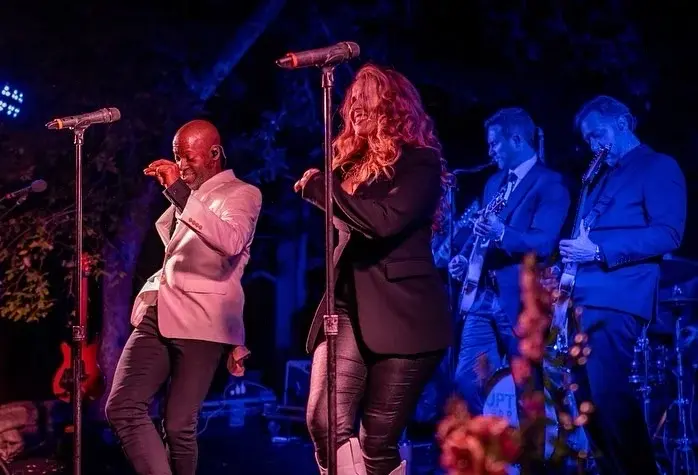
A live band changes the first dance experience by performing the song in real time rather than playing a fixed recording, which allows for on-the-spot length adjustments, key changes, and dynamic build-ups that a DJ's playback cannot replicate. This distinction matters most during the exact moment couples spend the longest agonizing over: their own first dance.
Consider the practical differences directly:
Factor | Live Wedding Band | DJ / Recorded Playback |
Song length editing | Arranged live, can shorten or extend on the spot | Requires pre-editing the audio file |
Mashups | Musicians blend key/tempo naturally | Requires pre-mixed audio, less flexible mid-performance |
Emotional build | Can rise and fall dynamically as the moment unfolds | Fixed dynamics from the original recording |
Surprise transitions | Can cue a tempo shift live if guests join in | Requires a second pre-loaded track |
Custom requests | Learns and performs the couple's exact arrangement | Plays the original or a pre-mixed edit |
This is precisely why Uptown Drive exists as a category of vendor separate from a standard DJ booking. As Austin's highest-rated live wedding band, Uptown Drive performs under a Certified Original Lineup format, meaning the same core musicians and vocalists show up for every engagement, so the first dance arrangement rehearsed in a planning call is the arrangement performed live on the wedding day. Founder Greg Williams, a saxophonist trained at the Indiana University Jacobs School of Music, leads a roster built around custom song requests rather than a fixed set list, which means a couple's first dance song, whatever mood or era the song falls into, gets learned and arranged specifically for their event rather than pulled from a generic songbook.
For couples marrying in Dallas, where the metro hosted over 43,000 weddings in 2026 and total wedding spending topped $1.76 billion according to The Wedding Report, competition for quality vendors runs high during peak season. Booking a live wedding band in Dallas well ahead of your date, ideally 9 to 12 months out for spring and fall weekends, gives you time to actually rehearse your first dance arrangement rather than handing over a Spotify link the week of the wedding.
Uptown Drive's multi-genre versatility, spanning pop, hip hop, gospel, big band, and rock, means the same band that performs a traditional Etta James arrangement for a couple's first dance can pivot straight into a high-energy set the moment the dance floor opens. Couples across Austin, Houston, Dallas, and San Antonio also have the option to add live band karaoke later in the evening, turning the reception into a full interactive show rather than a single quiet moment followed by generic background music.

What Mistakes Should You Avoid When Choosing a First Dance Song?
The most common first dance mistake is picking a song for its popularity rather than its personal meaning, which often leaves couples feeling disconnected from their own wedding highlight reel. A close second mistake: not rehearsing the actual timed edit before the wedding day, leading to an awkward stop mid-song when the music cuts differently than the couple expected.
A few other patterns worth avoiding:
Choosing a song neither partner actually likes just because it's trending that year.
Skipping a rehearsal entirely and hoping muscle memory kicks in on the day.
Picking a song with a tempo mismatched to your comfort level, then trying to force choreography that doesn't fit.
Assuming a DJ or band will "figure out" the edit on the spot without providing specific instructions in advance.
Forgetting to tell your photographer and videographer where you'll be standing, since first dance lighting setups often differ from the rest of the reception.
The fix for most of these mistakes is simple: decide early, communicate the exact edit and preferred version to whoever is performing the song, and do at least one full run-through before the wedding date, even if that run-through happens in the couple's living room.
Frequently Asked Questions
What is the best song for a wedding first dance?
The best first dance song reflects the couple's actual relationship rather than a chart-topping trend. Nationally, "Can't Help Falling in Love" by Elvis Presley and "At Last" by Etta James remain the two most popular choices, though "Thinking Out Loud" by Ed Sheeran and "All of Me" by John Legend are frequent runners-up.
How long should a first dance song be?
Most wedding planners and choreography coaches recommend a first dance song between 2 and 3 minutes. Longer songs are typically edited down to that range so the moment stays impactful without asking guests, or the couple, to stand through a full 4- or 5-minute track.
Can we request specific songs that aren't in a band's standard set?
Yes. Uptown Drive builds custom song requests into every wedding engagement, including full arrangements for first dance songs that aren't part of the band's core repertoire. Couples typically share their preferred song, key, and desired length during the planning process so the arrangement is rehearsed well before the wedding date.
How far in advance should we book a live wedding band for a Texas wedding?
Peak season dates in Austin, Dallas, Houston, and San Antonio, generally spring and fall weekends, tend to book 9 to 12 months in advance. Given that the Dallas Fort Worth Arlington metro alone saw over 43,000 weddings in 2026, per The Wedding Report, booking early gives couples more flexibility to rehearse custom arrangements like their first dance song.
Do we need to worry about copyright for our first dance song?
Most private wedding receptions are already covered under performance licensing held by venues and professional entertainment vendors. Copyright concerns generally only arise if a couple plans to publicly livestream the wedding or post monetized video content featuring the full recorded song afterward.
What if one partner doesn't want to "lead" the first dance?
There's no rule requiring a traditional lead-and-follow structure for a first dance. Many couples, including same-gender couples, choose a shared-lead pattern instead, alternating who guides the movement, or skip formal roles entirely and simply move together without assigning either partner a fixed part. A live band offers a practical advantage here: because the musicians perform in real time rather than following a fixed recording, they can adjust timing on the fly to accommodate whichever structure the couple prefers, slowing down or extending a section if the couple needs an extra beat to complete a planned movement.
What happens if a musician is sick on our wedding day?
Professional live wedding bands maintain backup musician protocols specifically to handle this scenario. Uptown Drive's Certified Original Lineup format is built around a consistent roster with contingency coverage, so a single musician's absence doesn't jeopardize the performance the couple rehearsed and expected.
Can a live band play a shorter or edited version of a longer song?
Yes, and this flexibility is one of the clearest advantages of live music over a DJ's fixed playback. Musicians can restructure a song, skip a bridge, shorten an instrumental section, or fade after the final chorus, so a 4-minute studio track becomes a tight 2 to 3-minute first dance without sounding cut off.
Conclusion: Choosing Your First Dance Song in 2026
Your first dance song doesn't need to be the most popular pick of 2026, it needs to be the right one for you and your partner. Whether that's a classic like "At Last," a modern staple like "Thinking Out Loud," or a newer track like "Die With A Smile," the details that matter most are length, tempo, and how well the arrangement actually gets performed on the day.
Choosing the right live entertainment for your wedding is one of the decisions that shapes how the evening feels in memory. The food gets forgotten. The flowers fade. But the music, especially the first dance, stays. Across Dallas, where wedding spending topped $1.76 billion in 2026 according to The Wedding Report, and throughout Austin, Houston, and San Antonio, Uptown Drive has built its reputation on treating that first dance as a fully personalized performance rather than a background track.
If you're planning your wedding and want a first dance song that's arranged around your relationship, not just pulled from a generic playlist, Uptown Drive's live wedding band services are worth a conversation well before your date fills up.

If your first dance song deserves a live arrangement instead of a fixed recording, get started with Uptown Drive and request a quote for your wedding date across Austin, Houston, Dallas, or San Antonio.
Written by Greg Williams, Owner & Band Leader at Uptown Drive
Content powered by inkSTR.co


Comments