
How Much Should a DJ Charge for 4 Hours? 2026 Pricing Guide
Updated: 2 days ago

What a professional DJ should charge for four hours at most private events in 2026 depends on experience, equipment and market, based on booking data from platforms like Cueup and national quote research from Thumbtack. Wedding receptions skew higher for a four-hour block, while corporate parties average lower. These figures reflect base performance fees only. Travel, lighting packages, MC services, and overtime hours all add to the final invoice.
National averages for 4 hours: Cueup booking data and Thumbtack national research both track standard private event rates, which vary by market.
Wedding DJ four-hour average: higher than for other private events, and full-day wedding DJ packages are quoted as a package.
The hidden labor factor: a four-hour booking typically requires 6 or more total DJ hours once setup, teardown, and pre-event prep are included.
Pricing varies sharply by region: Texas wedding DJ rates tend to run below markets like Chicago for the same block.
Add-ons matter: lighting packages, MC services, fog machines, and supplemental instruments can double the base quote.
Live bands offer a distinct value proposition: for couples weighing a DJ against a live performance, understanding what each option actually costs per hour is the first step to making a decision that fits both budget and vision. Learn more about wedding band vs DJ planning factors before committing.
What Does a 4-Hour DJ Booking Actually Cost in 2026?
A four-hour DJ booking refers to the contracted performance window, but the total cost reflects far more than four hours of work. Cueup platform data tracks the US average for a four-hour DJ for a standard private event. Thumbtack's national research tracks a broader range across event types. Wedding receptions push that number higher, while corporate events average lower.
The wide range exists because DJ pricing is not purely time-based. Experienced DJs with professional-grade equipment, strong review histories, and event specializations charge more than generalists. A DJ bringing a significant investment in sound and lighting equipment to your venue, as Henry Richard of A Touch of Class DJ Service in Chicago notes is common among professional wedding DJs, has legitimate fixed costs to recover.
Regional variation adds another layer. Specifically, Texas markets like Austin tend to run lower than coastal metros. DJ RB of Alexander Sound Entertainment in Austin confirms that market rates here differ meaningfully from cities like Chicago or Los Angeles. For a detailed regional breakdown, see the pricing table further in this guide. Couples exploring what the real live wedding band cost in Texas for 2026 looks like will find helpful context for comparing all entertainment options.

How Much for a 4-Hour DJ? Pricing by Event Type
DJ pricing for a four-hour event varies significantly based on the occasion itself. Wedding receptions carry the highest rates because they demand more preparation, coordination with vendors, and on-the-night MC responsibilities. Here is how the numbers break down by event type, based on verified platform and industry data.
Wedding receptions typically cost the most for a four-hour block because of prep time, MC duties and planner coordination, while corporate parties and birthday parties tend to run lower. Proms and school dances are often quoted at a flat rate, and bar or bat mitzvahs usually run above weddings. Every DJ quote depends on market, experience and equipment.
Bar and bat mitzvah events historically command a premium because they involve choreographed games, audience participation, and highly customized programming. Thumbtack research from 2015 found bar and bat mitzvah DJs were 32% more expensive than wedding DJs and 93% more expensive than the average birthday party DJ. That gap has generally held in the years since.
For corporate events, the complexity of the audience matters. A company gala for 400 people with diverse age groups and a formal program requires a different skill set than a casual office holiday party. At Uptown Drive, we regularly advise clients that the entertainment format matters as much as the price point. A DJ who handles background dinner music differs enormously from one managing a full reception floor with toasts, first dances, and energy transitions. Explore our Corporate Event Entertainment options to see how live performance compares for galas and company parties.
Is a Low Hourly Rate Good for a DJ?
A low hourly rate is reasonable for a DJ at birthday parties and casual private events, but it falls below what most professional wedding or corporate DJs charge. Birthday party DJs sit at the lower end of the market, according to Cueup data. For weddings and formal corporate events, a low hourly rate typically reflects an entry-level or newer DJ without the equipment investment, experience, or insurance that higher-stakes events require.
To put that in context: a four-hour booking involves far more than four hours of work. But if that DJ spends one hour loading in, one hour setting up, four hours performing, one hour tearing down, and drove 45 minutes each way, the actual time investment is 9 or more hours. Spread across prep, travel and setup, the effective hourly rate drops sharply before accounting for equipment depreciation, fuel, or liability insurance.
Higher rates from experienced DJs often reflect that math. A DJ quoting a higher hourly rate for a wedding is not simply charging more. They are pricing in preparation, professional equipment maintenance, insurance, and the experience to read a room and keep 150 guests on the dance floor through a four-hour reception.
The bottom line: a low hourly rate is adequate for casual events. For weddings and corporate galas, expect and budget for higher rates from established professionals with verifiable reviews. Couples comparing costs should also review the live band cost wedding budgeting guide for a full picture of live entertainment pricing.

The Hidden Labor Behind Every 4-Hour DJ Quote
A four-hour DJ booking refers to the performance window your guests experience, but the actual labor a professional DJ invests in your event is substantially longer. Henry Richard of A Touch of Class DJ Service in Chicago estimates that wedding DJs average 15 to 20 hours of total effort per booking when you account for pre-wedding consultations, timeline coordination, custom playlist creation, travel, setup, performance, and teardown.
Here is what a typical four-hour wedding reception booking actually looks like in total DJ hours:
Pre-event consultation and planning: 2 to 4 hours (playlist review, timeline coordination with your venue and planner)
Drive to venue: 30 to 90 minutes each way depending on location
Load-in and setup: 60 to 90 minutes for professional speaker arrays, lighting rigs, and equipment testing
Performance window: 4 hours
Teardown and load-out: 45 to 60 minutes
Add those together and a four-hour booking realistically represents 10 to 14 total hours for the DJ. That context matters when a quote feels high. A DJ's quote for a four-hour wedding reception does not translate to four hours of pay in any meaningful sense. Their effective hourly rate is much lower once all labor is counted.
This is also why some DJs use flat-rate structures. Price Entertainment in Edmonds, Oklahoma charges a flat fee for weddings within an hour's drive, which includes rehearsal walk-throughs, ceremony and reception coverage, wireless microphones, dance floor lighting, uplighting, and music. Flat rates eliminate ambiguity and are worth asking about when you solicit quotes. Our guide on how to negotiate with vendors for your Texas event covers strategies for getting the best value from any entertainment quote.
What Line Items Appear in a Professional DJ Quote?
A professional DJ quote is an itemized document, not a single number. Understanding each line item helps you compare quotes accurately and avoid budget surprises. Most established DJs in Texas and Colorado markets provide quotes that break down into the following categories:
Base performance fee: the flat rate or hourly rate for the contracted performance window
Equipment fee: covers speaker systems, subwoofers, mixing console, microphones, and cables (some DJs bundle this into the base rate; others list it separately)
Travel fee: often a flat fee or per-mile rate for venues outside a specified radius
MC services fee: formal emcee duties including introductions, toasts, and program announcements are sometimes listed separately from performance
Lighting package: dance floor lighting, uplighting, disco lights, fog machines, or laser shows each add cost
Overtime rate: the per-hour charge if your event runs past the contracted end time, depending on the DJ's rate structure
Supplemental musicians: some DJs offer add-on live musicians like a saxophonist, percussionist, or guitarist to perform alongside their set, which adds cost depending on the musician
Always ask for an itemized quote rather than a single-number estimate. It protects you from scope creep and lets you make apples-to-apples comparisons between multiple vendors.
For couples who are still deciding between a DJ and live wedding band entertainment, the itemized quote approach works for both. Comparing line items, not headline numbers, is the only reliable way to understand what you are actually purchasing. Our guide on band vs DJ wedding myths breaks down the role differences in detail. For additional context on what a MC vs DJ brings to event entertainment, that comparison is worth reviewing before finalizing your entertainment plan.
Regional Pricing: What DJs Charge Across Key US Markets
DJ pricing varies meaningfully by geography, and the differences go beyond simple cost-of-living adjustments. Local competition, venue density, and market demand all shape what DJs charge in a given city. The table below reflects verified data points from research sources alongside general market context for 2026.
Four-hour wedding DJ estimates vary by market: Dallas and Denver tend to run a bit higher than Austin, San Antonio generally runs lower than Dallas and Austin, and Houston shows a broad range across a large, competitive market. Ask each DJ for an itemized quote.
Texas markets consistently land below the national average, which is one reason Austin and Dallas have become popular destinations for couples planning destination weddings with a live entertainment focus. If you are planning a Texas celebration and want to explore live music as an alternative or complement to DJ entertainment, Austin Wedding Band options offer distinct ceremony and cocktail hour atmosphere that a DJ simply cannot replicate. Couples in other Texas cities can explore San Antonio Live Wedding Bands and Live Wedding Bands Houston for locally focused alternatives. Couples searching beyond Texas can also find inspiration from Wedding Musicians In Austin, Denver Wedding Bands, and Dallas Live Wedding Bands when comparing regional live music options. Couples planning Texas Wedding Bands entertainment for 2026 will find the regional pricing context especially useful when budgeting across markets.
What Are the Red Flags When a DJ Quote Seems Too Low?
A suspiciously low DJ quote is a warning sign worth investigating before you sign anything. Red flags include base rates significantly below local market averages, no itemized breakdown of equipment or travel costs, no mention of liability insurance, and vague contract language around overtime charges. These details matter because they often indicate either inexperience or hidden costs that will appear later.
Specifically, watch for these warning signs:
No liability insurance disclosure: most professional wedding venues require DJs to carry liability insurance. A DJ who cannot provide a certificate of insurance is a potential liability for your venue and your event.
No contract or overly simple contract: professional DJs use detailed contracts specifying performance window, overtime rates, equipment list, cancellation policy, and backup plan. Our guide on entertainment contract templates outlines what a complete agreement should include.
No backup plan for equipment failure: ask directly what happens if the DJ's primary sound system fails mid-reception. Professionals have redundant equipment or partner arrangements.
Portfolio without verifiable reviews: DJ RB of Alexander Sound Entertainment in Austin advises hiring a wedding DJ you would be proud to introduce to your whole family. That is a character standard, and it applies to professionalism too. Look for DJs with named reviews on WeddingWire, Google, or The Knot rather than testimonials on their own website only.
Rate far below local average without explanation: a DJ quoting far below the local market for a four-hour wedding reception in Austin needs a compelling explanation. Usually there is not one.
The couples who regret their entertainment choices most often chose based on price alone. At Uptown Drive, we have seen firsthand how a vendor who appeared to be a bargain at booking created problems on the wedding day that no amount of refund could fix. Our guide on 10 key questions to ask wedding vendors helps you vet any entertainment provider thoroughly before signing. Reviewing your guide to a band performance contract is also worthwhile to understand what strong vendor agreements look like across entertainment types.

What Is the Rule of 32 in DJing?
The Rule of 32 in DJing refers to the practice of structuring song transitions and mixes in multiples of 32 beats, which aligns with the natural musical phrase structure of most popular and electronic dance music. Most Western pop, hip-hop, and dance tracks are built on 8-bar phrases, which equal 32 beats at standard time signatures. DJs who mix in sync with these phrases create smooth, imperceptible transitions that keep energy building on the dance floor rather than disrupting the groove with an awkward cut.
For couples evaluating a DJ's skill level, the Rule of 32 is a useful proxy. Ask a prospective DJ how they approach transitions during peak dance floor moments. An experienced DJ will describe phrase-mixing intuitively, even if they do not use the term explicitly. A less experienced DJ may rely on hard cuts or long fades that flatten the energy of your reception.
This technical skill matters most during the high-energy portions of a four-hour reception, specifically the 90-minute dance floor window after dinner and toasts. A DJ who commands phrase-mixing keeps guests moving through multiple songs without the floor clearing between transitions. That skill is part of what separates a premium DJ from a bargain one. For couples who want guaranteed dance floor energy from live musicians, explore what how to get people to dance at a party looks like with a live band on stage. Browsing the 12 best songs for wedding dance floor success can also help you plan the set that keeps energy high regardless of whether you choose a DJ or live band.
How Do You Tip a DJ for 4 Hours?
Tipping a DJ for a four-hour wedding or private event is a common courtesy, though not contractually required. Tipping a wedding DJ who performs well is standard, typically handed to the DJ directly at the end of the night or included in a thank-you card. For larger events or exceptional performance, some couples tip more.
A few practical guidelines:
Tip based on performance quality and professionalism, not just duration.
If the DJ also handled MC duties, coordinated with your planner, and managed the full evening's flow without issues, a more generous tip reflects that contribution.
For corporate events, tipping is less standard but still appreciated. Check with your company's vendor policy first.
Ask your DJ company upfront whether gratuity is included in the contract. Some larger DJ services build a service charge into the invoice.
Assign someone in your wedding party to handle the tip envelope on the night itself. Couples rarely have cash or mental bandwidth at the end of their reception.
Tipping your DJ at a wedding is separate from reviewing them. Both matter. A detailed five-star review on Google or WeddingWire is often more valuable to an independent DJ's business than a cash tip, particularly for newer professionals building their reputation. For ideas on making your overall wedding night unforgettable, browse 10 unforgettable fun wedding reception ideas that go beyond the entertainment budget alone. You can also explore 8 fresh ideas for wedding music alternatives if you want to consider options beyond a traditional DJ or band setup.
DJ Pricing vs. Live Band Pricing: Which Delivers More Value at 4 Hours?
A four-hour professional DJ and a four-hour live band represent fundamentally different investments. A DJ's cost for four hours depends on event type and market. A professional live band for the same window costs more, scaling up for multi-piece ensembles with full production, again depending on size, market, and band experience.
The value comparison is not simply about cost per hour. Live bands create a dynamic, interactive energy that recorded and mixed music cannot replicate. The visual presence of musicians on stage, the spontaneity of live performance, and the physical energy of performers engaging with a crowd produce a different emotional atmosphere than even the most skilled DJ set. For couples who want their reception to feel like a concert, the premium is often worth it. Why live music at weddings creates unforgettable events explores this in depth for couples weighing the decision. Couples can also read about wedding DJs vs live bands and which creates more memorable moments for a side-by-side analysis of both entertainment options.
That said, DJs offer practical advantages worth acknowledging: a flawless original recording of every song, seamless transitions between genres, and the ability to play literally any request in the moment. For cocktail hours, post-reception after-parties, or tight budget situations, a DJ can be the right call. Couples who want to understand what type of wedding music should i have will find a helpful overview of all the options available before making a final choice.
The decision rarely comes down to price alone. Our detailed breakdown in the guide on live wedding band vs DJ and which is right for your wedding walks through the experience differences in depth. If you are still weighing the choice, that comparison is worth reading before you commit to either option.
For couples in Texas and Colorado markets, you can also explore what Dallas Corporate Bands and Denver Corporate Bands offer as complete event entertainment packages, which often include sound production, lighting, and MC services within the band's base rate. Corporate planners in Houston and San Antonio can explore Corporate Bands Houston and San Antonio Corporate Bands for regionally focused options. Corporate event planners looking for a broader overview of live entertainment solutions can also visit Corporate Event Entertainment to see how live performance compares across event formats.
Frequently Asked Questions About DJ Pricing for 4-Hour Events
How much does a DJ charge for 4 hours at a wedding?
A wedding DJ's rate for a four-hour reception performance window in 2026 depends on market, experience and equipment. Full-day wedding DJ packages that cover ceremony, cocktail hour, and reception are quoted as a package. Texas markets like Austin tend to land at the lower end of the national range.
Is a low hourly rate fair for a DJ?
A low hourly rate is reasonable for casual birthday parties and informal private events, where the national average sits at the lower end. For weddings and corporate galas, a low hourly rate typically signals an entry-level DJ without the professional equipment, liability insurance, or experience that higher-stakes events require. Established wedding DJs generally charge more, reflecting total labor that typically exceeds 15 hours per booking.
What add-ons increase a DJ's 4-hour quote?
MC services, dance floor lighting packages, uplighting, fog or smoke machines, laser shows, and supplemental live musicians like saxophonists or percussionists all add cost beyond a DJ's base performance fee. Travel fees apply when the venue is outside the DJ's standard service radius. Overtime rates apply if your event runs past the contracted end time. Always ask for these line items in writing before signing.
What is the Rule of 32 in DJing?
The Rule of 32 refers to mixing song transitions in multiples of 32 beats, which aligns with the natural 8-bar phrase structure of most popular music. DJs who follow this principle create smooth, energy-maintaining transitions that keep guests dancing. It is a strong indicator of technical skill and is worth asking about when evaluating prospective DJs for your wedding or event.
How much should you tip a DJ after a 4-hour event?
Tipping a wedding DJ who performs well is standard, with a more generous tip appropriate for a DJ who also handled MC duties and managed the evening's full timeline. Tipping is customary but not contractually required. Confirm upfront whether gratuity is already included in the contract, and assign someone in your wedding party to handle the tip envelope at the end of the night.
Should I hire a DJ or a live band for a 4-hour reception?
A DJ is the more budget-conscious choice for four hours compared to a professional live band. Live bands deliver a visual energy and interactive atmosphere that recorded music cannot replicate, which many couples find worth the premium for their reception. The right choice depends on your budget, venue size, and the atmosphere you want guests to experience. Explore live band vs DJ for corporate events for a deeper breakdown by event type.
What happens if my event runs over the contracted 4 hours?
Most professional DJ contracts specify an overtime rate per additional hour beyond the contracted window. Some DJs require advance notice of extension requests, while others allow real-time overtime requests. Negotiate the overtime rate and notification process before signing your contract. Events running 30 to 60 minutes over schedule are common, and knowing the rate in advance prevents an awkward conversation at the end of the night.
Making the Right Entertainment Decision for Your Event
How much a DJ should charge for four hours depends on the event type, the DJ's experience level, your location, and the add-ons included in the quote. National averages vary for a standard four-hour booking, with wedding receptions pushing higher and Texas markets running slightly below national averages. That base figure is just the starting point.
The most important thing to understand is that a four-hour performance window requires considerably more than four hours of professional labor. Setup, teardown, travel, pre-event planning, and post-event follow-up all factor into what a professional DJ quotes. A rate that accounts for that total labor is not overpriced. A rate that ignores it is either unrealistic or a red flag.
Get itemized quotes, ask about overtime rates in writing, verify liability insurance, and compare DJs on total value rather than headline price. If you are considering live entertainment as an alternative for your 2026 wedding or corporate event, the investment is higher but the experience ceiling is considerably different. Corporate planners in Austin can explore Austin Corporate Bands for full-service live entertainment packages tailored to company events. Couples planning weddings in Texas can also browse top wedding bands in Texas that get the party started for a curated look at live band options across the state. For a broader look at entertainment ideas beyond DJs and bands, our guide to 10 unique event entertainment ideas to wow your guests offers additional inspiration for any event type. Couples who want a complete planning framework before booking any entertainment should review the ultimate wedding planning checklist for a flawless wedding day to make sure every detail is covered.
Questions about live entertainment options for your event? The team at Uptown Drive works with couples and corporate planners across Austin, Dallas, Houston, San Antonio, and Denver. You can request a customized quote or explore our live wedding band options to see how professional live performance compares for your specific event.

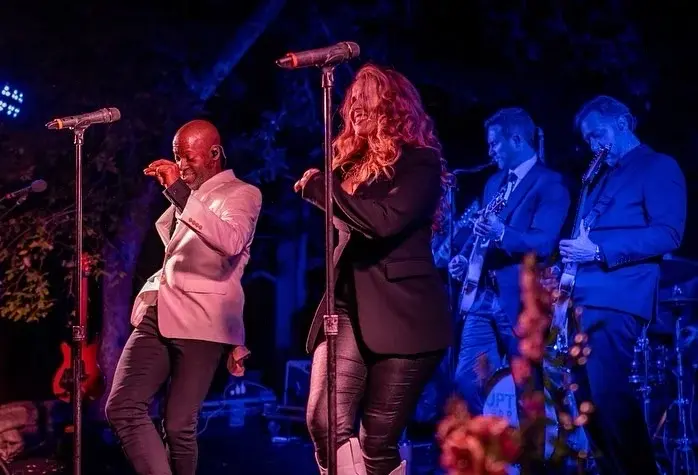
If your 2026 wedding budget stretches beyond a DJ, Uptown Drive's professionally trained musicians bring the kind of stage presence this barn reception captures, with over 250 five-star reviews backing the experience. See what Uptown Drive brings to a reception and request your personalized quote.


Comments