
Wedding Reception Planning Checklist: What You Can't Skip
- gregwilliams010
- May 25
- 15 min read

A wedding reception planning checklist is a categorized task list that guides couples through every decision required between booking a venue and walking off the dance floor, covering venue logistics, catering, rentals, entertainment, stationery, and post-reception wrap-up. Used correctly, it prevents the vendor no-shows, budget overruns, and last-minute panics that derail otherwise well-planned celebrations.
Start 12-18 months out for peak-season dates, particularly in high-demand markets like Austin, Texas, where spring and fall dates compete with SXSW, ACL Fest, and Formula 1 race weekends.
Budget reality: According to the Zola First Look Report 2026, couples spend an average of $36,000 on their wedding in 2026, up from $33,000 in 2026. Entertainment and venue alone typically consume more than half that figure.
Entertainment is a first-priority booking, not an afterthought. Live wedding bands in competitive markets book 9-12 months in advance for prime dates.
Vendor coordination is the most underserved area in most planning checklists. A day-of vendor contact sheet and emergency kit prevent 90% of avoidable crises.
The post-reception checklist matters. Returning rentals, recovering deposits, and preserving the wedding cake are tasks most checklists omit entirely.
Reception type changes everything. A backyard reception has entirely different logistics from a ballroom, outdoor tented affair, or destination event.
Why Does a Wedding Reception Planning Checklist Matter So Much?
A wedding reception planning checklist matters because receptions involve an average of 13 separate vendors, according to The Knot Worldwide 2026 Real Weddings Study, and a single coordination gap between any two of them can unravel the timeline for every guest in the room. The checklist is not a formality. It is a risk management tool.
Think about what actually happens without one. The florist arrives before the catering team finishes setup and has nowhere to place centerpieces. The band's load-in window overlaps with cocktail hour because no one confirmed the schedule in writing. The caterer delivers a final headcount bill that doesn't match the number of guests seated because RSVPs were never formally closed. These are not hypothetical disasters. At Uptown Drive, having performed at weddings across Austin, Houston, Dallas, and San Antonio, the pattern is consistent: the receptions that run smoothly are the ones where someone built a checklist early and shared it with every vendor before the day.
In 2026, average wedding spend has climbed to $36,000, per Zola's First Look Report. With that much money on the line, and with vendor pricing for services like florals and catering typically increasing 5-10% annually, delaying checklist-driven decisions by even a few months can add thousands to your final bill. Start early, check in often, and treat the list as a living document rather than a one-time exercise.

1. How Do You Choose and Book the Right Reception Venue?
Venue selection is the foundational step of any wedding reception planning checklist because every other vendor decision, from catering style to entertainment setup, flows from the space you choose. Book your venue before anything else. Popular reception spaces in Austin, Houston, and Dallas are reserved 12-24 months in advance for peak spring and fall dates.
When evaluating a venue, go beyond aesthetics. Ask specifically about:
Capacity: Does the headcount match your guest list with room for a dance floor, band stage, and buffet or plated service setup?
Vendor access rules: Many venues restrict outside catering or require liability certificates from entertainment vendors. Get the full list in writing before you sign.
Sound amplification permits: Outdoor venues in Texas, California, and Colorado frequently require local permits for amplified sound. Filing those permits typically takes 30-60 days with city or county planning departments.
Load-in windows: A live band performing under a live wedding band setup typically needs 90-120 minutes for sound check and staging. If your venue allows only a 45-minute setup window, you have a logistics problem before the reception even starts.
Backup plan for outdoor events: Tented structures and pavilions often require separate structural permits filed 30-60 days in advance.
One to two months before the reception, contact your venue again to confirm vendor access schedules, loading dock hours, and any updated insurance requirements. Conditions change after the initial contract, and a second confirmation call catches problems before they become crises.
2. What Should Your Food and Beverage Checklist Include?
Food and beverage planning for a wedding reception requires decisions about catering style, alcohol service, and final guest counts in a specific sequence. The sequencing matters because each step depends on the one before it: you cannot finalize the menu until you have a catering style, and you should not submit a final headcount to your caterer until RSVPs are officially closed.
Work through this sequence:
Choose a catering style early. Plated, buffet, and family-style service each require different rental equipment, staffing levels, and floor configurations. Settle this decision before pricing any rentals.
Attend a tasting. Most full-service caterers offer a tasting event. Confirm the menu at that meeting and get it in writing. Verbal agreements about menu substitutions cause disputes at invoicing time.
Plan your beverage program. Popular options include beer, wine, a signature cocktail, liquor and mixers, and non-alcoholic choices. Check whether your venue holds a liquor license or requires you to bring a licensed bartending service. Catering and alcohol service generally require state-issued food service permits and liquor licenses, so verify compliance with your venue and caterer before assuming either has it covered.
Submit the final headcount after RSVPs close. Request a small buffer of extra plates from your caterer to cover unexpected last-minute arrivals. According to industry planning guidance, this buffer recommendation is standard practice across high-volume catering operations.
Wedding cake vendors, even for small guest lists, should be booked at least one to two months in advance. Specialty cakes take time to design, order materials for, and construct, and popular bakers fill their calendars faster than most couples expect.
3. What Rentals Does a Reception Require?
Wedding reception rentals refer to the physical items your venue does not provide that are needed to seat, serve, and entertain guests. This category is consistently underestimated in first-pass budgets, and surprises here are expensive because rental companies charge for everything individually.
Build your rentals list by catering style first, then layer in decor and entertainment needs. A buffet setup requires different serving pieces than a plated dinner. A live band needs a stage riser and stage lighting; a DJ typically needs less square footage but still needs power access and a defined floor area.
Standard reception rental categories include:
Seating: Chair styles commonly used at receptions include Chiavari, cross-back, ghost, and cane-back. Chiavari chairs are the most formal and the most frequently requested; ghost chairs suit modern minimalist venues.
Tables: Round banquet tables, long farm tables, cocktail high-tops, and sweetheart tables each require a different linen specification.
Tableware: Glassware, flatware, chargers, serving pieces, and napkins. If your caterer does not provide these, they come from your rental company.
Dance floor: If your venue does not have a permanent hardwood floor, a portable dance floor panel system is a rental item. Size it to your guest count, not to your vision. A 10x10 dance floor for 150 guests will be full within the first song.
Lighting: String lights, uplighting, and pin spots are often rented separately from the venue's standard offering. Confirm exactly what the venue provides before adding to your rental order.
Drop off items not managed by vendors, such as your guest book, place cards, and bathroom amenity basket, at the venue the day before the reception. Trying to deliver non-vendor items on the morning of the wedding adds stress that belongs to a different day.

4. How Do You Plan Wedding Reception Music and Entertainment?
Wedding reception music planning refers to the process of selecting an entertainment format, building a setlist for key moments, and coordinating the entertainment vendor's timeline with the reception schedule. Music and entertainment are the single most memory-defining element of a reception, which is why securing your entertainment vendor should happen simultaneously with or immediately after venue booking.
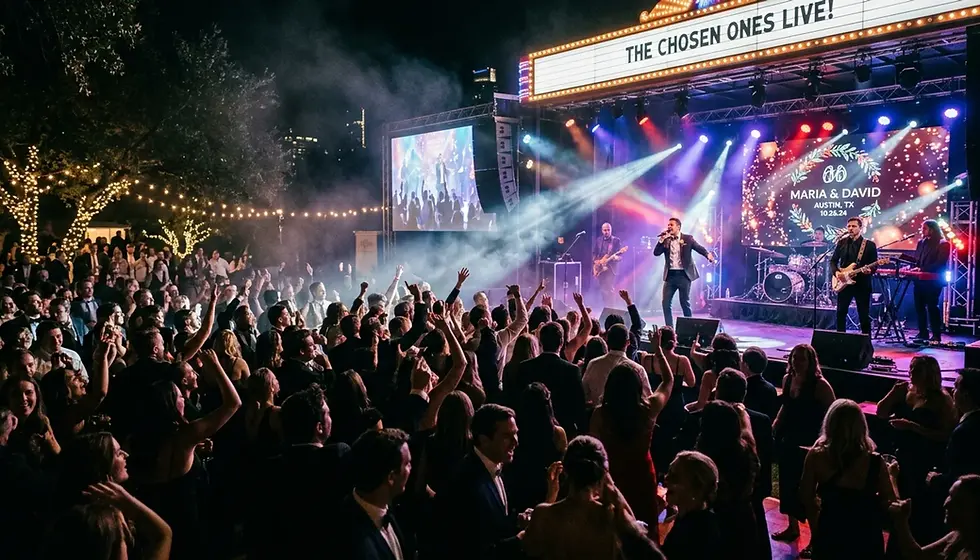
The first decision is format. A live wedding musician or full band creates an energy that pre-recorded playlists structurally cannot replicate: the band reads the room in real time, responds to crowd energy, and gives guests a performance worth talking about for years. If you want to understand the full spectrum of options available, this educational resource on what type of wedding music you should have covers the core tradeoffs across formats. But once you've made that decision, execution is everything.
At Uptown Drive, the live wedding band experience is built around your specific soundtrack. Founder Greg Williams, a professionally trained saxophonist who studied at the Indiana University Jacobs School of Music, leads a choreographed Certified Original Lineup that spans pop, hip hop, gospel, big band, and rock. The Certified Original Lineup means the musicians you review and approve when booking are the musicians who perform at your reception, not a substituted roster hired the week of your event.
Your entertainment checklist should include:
Must-play list: The songs you want performed no matter what. First dance, parent dances, and a specific floor-filler that matters to you both belong here.
Do-not-play list: Just as important. If there's a song that will clear your dance floor or carry an unwanted association, your band needs to know before the night starts.
Key moment music: Cocktail hour, grand entrance, cake cutting, and last dance each need a song designation.
Interactive entertainment options: Uptown Drive offers live band karaoke as an add-on that transforms the reception from a performance guests watch to an experience they participate in. Guests who would never approach a standard karaoke bar line up when there is a live band supporting them. This option can be scheduled after dinner service, when energy typically dips before the late-night dance sets begin.
If you are booking in Austin, Texas, lock in your entertainment 9-12 months before your date for spring and fall. Austin's calendar competes with SXSW in March, ACL Fest in October, and the Formula 1 United States Grand Prix in late October, which compress vendor availability significantly during those windows. Uptown Drive serves couples across Austin, Houston, Dallas, San Antonio, Denver, and beyond, and also travels nationwide for destination weddings, so geographic flexibility is possible, but early booking is always the right move in any competitive market.
For couples exploring Austin wedding bands, the variety of options in this market is genuinely strong. The right choice depends on your venue size, your musical preferences, and whether you want a band that simply plays or one that performs. Those are meaningfully different experiences.
5. What Stationery and Paper Goods Do You Need to Plan?
Wedding reception stationery planning refers to the process of sequencing your printed materials correctly so that each piece reaches guests at the right time and with accurate information. The sequence is non-negotiable: send save-the-dates before formal invitations, and send formal invitations only after the date and menu are finalized.
Here is the correct stationery sequence:
Save-the-dates: Send 9-10 months before the wedding. For destination weddings or holiday weekends where guests need to book travel and accommodations, earlier is better. Hotel room blocks should be reserved around this same window, typically 9-10 months out.
Wedding website: Launch alongside save-the-dates. This is where guests track RSVP deadlines, accommodation options, and the day-of schedule.
Formal invitations: Send after the date and menu are confirmed. Official invitations sent before a menu is finalized require costly corrections.
Escort cards vs. place cards: These are not the same item and the distinction matters. Escort cards direct guests to their assigned table; place cards direct guests to their exact seat at the table. Place cards are optional and typically reserved for more formal events. Both require your stationer's involvement, and both are created after RSVPs close, which creates what designers describe as a tight turnaround. Build that turnaround time into your planning calendar explicitly.
Day-of stationery: Menus, table numbers, and welcome signage. These can be handled by the same stationer who produces your escort cards.
Registry setup belongs in this same planning window, around 9-10 months out. It is easy to keep pushing off, but completing it while you have focus makes the process significantly less stressful than building it under guest deadline pressure.
6. How Does Your Checklist Change Based on Reception Type?
A wedding reception planning checklist is not one-size-fits-all because the logistical demands of a backyard reception, a hotel ballroom, an outdoor tented property, and a destination event differ substantially across every category from permits to power supply. Treating these venue types as interchangeable is a common mistake that generates avoidable complications.
Reception Type | Key Checklist Additions | Common Overlooked Risk |
Backyard / Private Estate | Generator rental, portable restrooms, liability insurance, noise permit | Inadequate power supply for live band and catering equipment |
Hotel Ballroom | Venue-approved vendor list, parking coordination, room block contracts | Assuming the hotel provides all AV without verifying specifications |
Outdoor Tented Venue | Tent structural permit (30-60 days), weather contingency plan, flooring under tent | No hard flooring for dance floor or stage riser under grass surface |
Destination Wedding | Marriage license validity window (varies by state: 30-90 days), travel logistics for out-of-state vendors, hotel blocks at 9-10 months | Marriage license expiration before ceremony date if obtained too early |
Barn / Ranch Venue | Load-in window for live band, acoustic planning for exposed wood spaces, summer heat management for equipment | Underestimating live band setup time at rural venues with limited infrastructure |
Outdoor Texas venues deserve specific attention in 2026 for any couple planning a summer or early fall event. Austin outdoor reception spaces like Barr Mansion and Prospect House are architecturally distinctive, but evening temperatures at peak summer can still hit 95 degrees Fahrenheit. Equipment protection, guest comfort planning, and sound quality in open-air environments all require preparation that indoor-only bands are not equipped to manage. Uptown Drive has navigated these conditions across Austin, Houston, and San Antonio outdoor venues, which is the kind of on-the-ground experience that protects a reception when conditions are not ideal.
7. What Vendor Coordination Details Do Most Checklists Miss?
Vendor coordination for a wedding reception refers to the process of aligning every hired professional on a shared timeline, contact sheet, and day-of protocol so that no single vendor decision creates a chain reaction of delays. This is the most underserved area in standard wedding reception planning checklists, and it is where most avoidable disasters originate.
Build a vendor contact sheet that includes every professional booked for the reception: venue coordinator, caterer, band or entertainment lead, florist, photographer, and officiant. Include cell phone numbers (not just business lines), load-in windows, and the name of the person each vendor reports to on the day of the event. Share this document with your wedding coordinator or a designated point-of-contact who can field calls so you are not managing vendor communications in a dress or a suit.
Additionally, build a day-of emergency kit. This is a simple bag or box that stays near the venue coordinator containing:
Printed copies of every signed vendor contract
Printed vendor contact sheet
A portable phone charger
Basic first-aid supplies
Stain remover wipes
A backup copy of your reception playlist saved on a separate device (essential if you are using a streaming service in a venue with unreliable WiFi)
Cash for gratuities
According to the Wedding Planner Institute's 2026 statistics, 37% of couples hired a day-of coordinator specifically, making it the most in-demand planner type. If you are not working with a full-service planner, a day-of coordinator is the single most valuable investment you can make in the final 60 days before your reception. They manage the vendor contact sheet, hold the emergency kit, and free you to be present at your own celebration.

8. What Does a Post-Reception Checklist Look Like?
A post-reception checklist refers to the set of tasks that must be completed after the wedding celebration ends to close out vendor relationships, recover financial deposits, and preserve keepsakes. Most wedding reception planning checklists end at the last dance. That omission leaves couples scrambling during the first days of their honeymoon.
Complete these tasks in the 2-4 weeks following the reception:
Return rentals on schedule. Late returns trigger daily penalty fees. Confirm the return window with your rental company before the reception and assign someone other than yourselves to manage the pickup.
Recover security deposits. Venues and some vendors hold security deposits against damage. Follow up in writing within 5-7 days of the event to initiate the return process. Deposit disputes are significantly harder to resolve if weeks pass without contact.
Preserve the wedding cake top tier. Wrap tightly in plastic, then aluminum foil, and freeze. Industry tradition holds that couples save the top tier for their first anniversary.
Write thank-you notes. Begin within two weeks while memories of specific gifts are still clear. Notes written after a month pass tend to be generic; notes written within two weeks are personal.
Review vendor gratuities. Standard industry practice for exceptional live band or entertainment performance is a gratuity of 10-15% of the performance fee. If Uptown Drive delivered a floor that stayed full from the first song to the last, that performance reflects preparation and craft that goes beyond the contracted set.
Download and back up digital files. Photographer galleries, videographer files, and any raw audio or video from the night should be backed up to a second location within 30 days.
How Do You Build a Month-by-Month Reception Planning Timeline?
A month-by-month wedding reception planning timeline is a sequenced schedule that distributes checklist tasks across the full planning window, from engagement to post-reception wrap-up, so that no single phase becomes overwhelmingly compressed. According to the Wedding Planner Institute's 2026 statistics, a typical planning timeline allocates 10-12 months for full-service planning, 6-9 months for moderate planning, and 3-5 months for micro-weddings.
Here is a practical framework:
Timeline | Priority Tasks |
12-18 months out | Book venue, secure live entertainment (especially in Austin, Houston, Dallas peak seasons), set overall budget, begin dress shopping |
9-10 months out | Send save-the-dates, launch wedding website, complete registry, reserve hotel room blocks for guests, book caterer and photographer |
6-8 months out | Finalize menu after catering tasting, order rentals, book florist, confirm entertainment details and song requests with band |
3-4 months out | Send formal invitations (after date and menu are confirmed), book wedding cake, finalize day-of timeline with all vendors |
1-2 months out | Confirm venue vendor access windows, finalize stationery (escort/place cards), build vendor contact sheet, create day-of emergency kit |
1-2 weeks out | Submit final guest count to caterer, deliver non-vendor items to venue, confirm band load-in time and setup details |
Day before | Drop off guest book, place cards, bathroom amenity basket, and signage at venue |
Post-reception | Return rentals, initiate deposit recovery, write thank-you notes, preserve cake tier, back up digital files |
One note specific to 2026: AI-assisted planning tools have entered the mainstream, with 23% of couples incorporating AI into their planning process according to Zola's First Look Report. These tools are useful for generating draft timelines and budget breakdowns, but they cannot replace direct vendor communication. A tool that generates a checklist will not call your venue coordinator to confirm the load-in window changed. That call still needs to be a human one.
Frequently Asked Questions About Wedding Reception Planning
How far in advance should you book entertainment for a wedding reception?
Book your live entertainment 9-12 months before your reception date, particularly for spring and fall events in high-demand markets. Austin, Texas, is one of the most compressed markets in the country because wedding season overlaps with SXSW, ACL Fest, and the Formula 1 United States Grand Prix. Uptown Drive typically reaches full availability for peak-season dates well before the 12-month window, so earlier contact is better than later.
What is the difference between escort cards and place cards?
Escort cards direct guests to their assigned table number; place cards direct guests to their exact seat at a specific table. Both require stationer production after RSVPs close, which creates a tight turnaround that many couples do not plan for. Place cards are typically reserved for more formal receptions and are considered optional; escort cards are standard at seated dinners with assigned seating.
What is a Certified Original Lineup and why does it matter?
A Certified Original Lineup is Uptown Drive's guarantee that the specific musicians and performers you review, approve, and contract are the same performers who appear at your reception. Some bands substitute musicians without notice, which changes the quality and energy of the performance you thought you were booking. The Certified Original Lineup format eliminates that risk entirely.
What permits might an outdoor wedding reception require?
Outdoor wedding venues frequently require local permits for amplified sound, temporary structures like tents, and generators. These permits are typically filed 30-60 days in advance with city or county planning departments. Your venue coordinator should be the first point of contact for permit requirements, but confirming directly with local authorities for destination or private estate events is always advisable.
What does live band karaoke add to a reception?
Live band karaoke is an interactive entertainment format where guests take the stage and perform with a live band backing them rather than a pre-recorded track. Uptown Drive offers live band karaoke as an add-on to their wedding reception performances. The format transforms passive reception guests into participants, and the energy spike it creates, particularly after dinner service when crowd momentum typically dips, is something a standard karaoke setup cannot replicate.
When should you send save-the-dates for a wedding reception?
Send save-the-dates 9-10 months before the wedding date. For destination weddings or events scheduled on holiday weekends where guests must book travel, sending them earlier is strongly recommended. Save-the-dates should always go out before formal invitations, and formal invitations should only be sent after both the date and the menu are confirmed.
How do you handle a post-reception checklist?
A post-reception checklist should include: returning rentals on the agreed schedule to avoid penalty fees, initiating security deposit recovery in writing within 5-7 days of the event, preserving the top tier of the wedding cake by wrapping and freezing it, writing thank-you notes within two weeks while gift details are still clear, and backing up all digital files from photographers and videographers to a secondary location within 30 days.
Does Uptown Drive travel for destination weddings outside Texas?
Yes. Uptown Drive travels nationwide for destination weddings and private events. The band is based in Austin, Texas, and serves couples in Houston, Dallas, San Antonio, Denver, Los Angeles, San Francisco, Napa, and San Diego, as well as anywhere else in the United States. Couples booking a destination wedding should discuss travel logistics, load-in requirements, and venue specifications with the band directly through the contact page at uptowndrive.com.
What Is Your Next Step After Reading This Checklist?
A complete wedding reception planning checklist covers venue booking, food and beverage sequencing, rentals, entertainment, stationery, vendor coordination, and post-reception wrap-up. According to The Knot Worldwide 2026 Real Weddings Study, couples hire an average of 13 professionals for their wedding, and the average spend has reached $36,000 in 2026. That scale of investment deserves a structured, sequenced plan built well before the peak planning pressure arrives.
The most common failure mode is not forgetting a checklist item. It is doing the right things in the wrong order: sending invitations before finalizing the menu, booking a band six months too late for an October Austin date, or arriving at the reception morning without a vendor contact sheet anyone can find. The checklist solves the sequence problem as much as the completeness problem.
Entertainment is the one category worth booking first, alongside the venue. Music carries the energy of every other moment on the checklist, from the grand entrance to the last dance. If you are planning a wedding in Austin, Houston, Dallas, San Antonio, or anywhere else in the country and want entertainment that earns its place in the night rather than just filling it, start that conversation early.

If your wedding reception planning checklist has entertainment as a priority, Uptown Drive is worth a direct conversation. With a choreographed performance format, a multi-genre setlist spanning pop, hip hop, gospel, big band, and rock, and a Certified Original Lineup that guarantees the band you book is the band that performs, Uptown Drive brings the kind of live energy that makes a reception genuinely memorable rather than merely pleasant. Request a quote at Uptown Drive to check availability for your date and start building your reception soundtrack.


Comments