
Live Music for Corporate Events: The Complete Planning Guide
Updated: 2 days ago

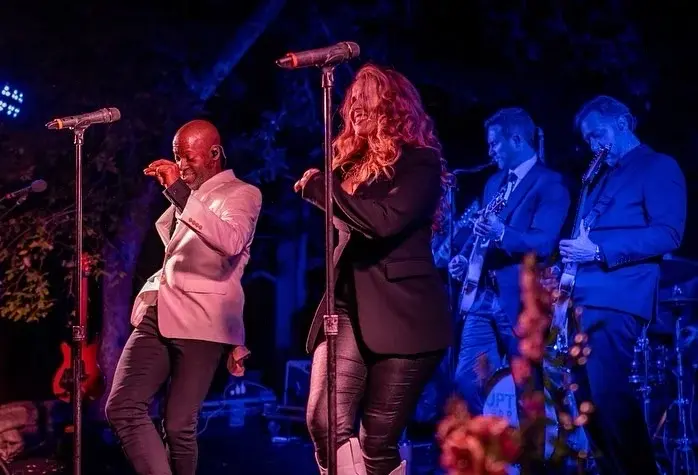
Live music for corporate events refers to hiring professional musicians, from a small jazz trio to a full 14-piece band with horn section, to perform at company gatherings such as holiday parties, galas, award ceremonies, and team celebrations. Pricing scales from a cocktail hour trio up to a full production package that includes sound, lighting, and a DJ set. For a deeper look at a guide to live music for corporate events, the Uptown Drive blog covers the full planning process in detail.
Across the market, corporate live music packages range from a 3-piece cocktail jazz trio to a full 9-plus piece band with premium sound, lighting, and cocktail hour coverage.
Band size should scale with event headcount: a 3-4 piece ensemble suits cocktail mixers of 50-75 guests, while a gala of 200 or more typically calls for a 9-plus piece configuration with a dedicated PA system.
The most common add-ons for corporate bands include a cocktail hour trio, a one-hour DJ set, and full production sound and lighting packages.
Live bands consistently outperform DJ-only setups for dance floor engagement at corporate events, particularly for multi-generational audiences spanning Gen Z through Baby Boomers.
Corporate event planners should request a certificate of insurance, confirm load-in timing with the venue AV team, and clarify any sound level restrictions before signing a contract.
Booking 4-6 months in advance is standard for established professional bands; peak season dates (November through January) in markets like Austin and Dallas often book 8-12 months out.
What Makes Live Music Different for Corporate Events vs. Other Occasions?
Live music for corporate events operates under a different set of constraints than weddings or private parties. The audience is typically more diverse in age, taste, and emotional investment, ranging from entry-level employees to C-suite executives, all sharing the same dance floor. A band that succeeds in this environment needs to read the room quickly and shift energy between background dinner music and high-energy dance sets without losing either crowd segment.
At Uptown Drive, we work with corporate clients across Austin Corporate Bands, Dallas Corporate Bands, Corporate Bands Houston, San Antonio Corporate Bands, and Denver Corporate Bands, and the feedback is consistent: the biggest mistake planners make is booking entertainment suited for a wedding reception and assuming it will translate to a company event. Corporate audiences respond differently to song selection, crowd interaction, and pacing. The band's ability to navigate politically neutral repertoire, avoid potentially divisive lyrics, and maintain professional MC conduct matters in ways it simply does not at a private birthday party. For planners also considering Live Wedding Bands for separate occasions, the distinction in approach between private and corporate entertainment is worth understanding. Those searching for Wedding Musicians In Austin will find that many of the same top-tier performers serve both corporate and social event markets.
The other major difference is logistics. Corporate venues, especially hotel ballrooms and conference centers, often have union AV crews, strict decibel limits enforced by sound meters, and load-in windows dictated by other events running the same day. A professional corporate band understands these constraints and builds them into their production rider and pre-event coordination process. An unprepared band can create friction with venue staff that ripples through the entire event. For a comprehensive look at corporate event entertainment planning resources, the Uptown Drive blog covers every aspect in detail.

How Much Does Live Music for a Corporate Event Cost?
Corporate live music pricing follows a tiered structure based on band size, performance duration, and production inclusions. Based on published pricing from established professional bands, pricing climbs with band size and production, from a 3-piece cocktail jazz trio for a 1-2 hour cocktail hour, to a 3-4 piece party band for 3-5 hours, to a 6-piece band with two vocalists, to a 9-plus piece band with full horn section, to a premium package bundling a 9-plus piece band, cocktail hour group, DJ set, and full sound and lighting production.
Add-ons are where budgets frequently expand beyond initial quotes. The most common upgrades include a cocktail hour trio, a one-hour DJ set to extend the night, band-supplied stage lighting, and a full production package covering premium sound and lighting. Some bands also offer MC services, custom monogram lighting, and in one case verified from competitor research, photo and video documentation of the performance. For a complete look at budgeting, see planning corporate music events a step-by-step guide.
Package Tier | Band Size | Typical Duration | Relative Price Level |
Cocktail Jazz Trio | 3 pieces | 1-2 hours | Entry level |
Cocktail Party Band | 3-4 pieces | 3-5 hours | Lower mid-range |
Silver Party Band | 5-6 pieces | 3-5 hours | Mid-range |
Gold Party Band | 9+ pieces | 3-5 hours | Upper range |
Platinum Event Package | 9+ pieces + cocktail band + DJ | Full evening | Premium |
Regional pricing varies. The Emerald Empire Band, which covers the Atlanta and Nashville markets, lists a lower cocktail jazz trio entry point, reflecting lower labor costs in the Southeast. Midwest-based bands like Bluewater Kings Band price their cocktail party band slightly below the California-based Lucky Devils Band. If you are planning a corporate event in Texas, expect pricing to sit in the mid-range nationally, with local Austin Corporate Bands often offering competitive rates compared to bands that require travel fees. For a full breakdown, see the ultimate guide to hiring corporate bands in Texas.
What Band Size Do You Actually Need for Your Corporate Event?
Choosing the right band configuration for a corporate event is the decision most planners get wrong, and no competitor resource explains it clearly. The rule of thumb: band size should match both your headcount and your event's energy goal, not just your budget ceiling.
For a cocktail mixer or networking event of 50-75 guests, a 3-4 piece ensemble is ideal. Think piano, bass, drums, and a vocalist. This configuration produces enough energy to fill a room without overwhelming conversation, which is the point of a cocktail hour. Attempting to fit a 9-piece band into this format wastes money and can physically dominate a space meant for mingling.
For a mid-size company party or awards dinner of 100-150 guests, a 5-6 piece band with two vocalists hits the sweet spot. You get genuine stage presence, harmonies, and enough sonic depth to cover soul, pop, and funk convincingly. This is where most corporate holiday parties live, and it is the configuration that generates the most consistent "packed dance floor" feedback in verified testimonials.
For a large gala or convention after-party of 200 or more guests, a 9-plus piece band with a full horn section becomes the right call. A big band configuration physically commands a ballroom-scale stage and delivers the wall-of-sound energy that keeps 300 guests moving rather than retreating to the perimeter. At this scale, budget for a full production package: the room will be too large for a band-supplied PA to cover evenly without professional sound engineering. For help planning events of this scale, how to plan a corporate event that wows your guests covers the key decisions in detail.
Event Type and Configuration Quick Reference
Midweek mixer or networking event: 3-piece jazz trio, background-to-ambient energy
Holiday party under 100 guests: 4-5 piece party band with 1-2 vocalists
Awards ceremony or gala dinner: 6-piece band for dinner, 9-piece for after-party dancing
Multi-day convention after-party: Full Gold or Platinum tier, 9-plus pieces with production
Incentive trip celebration or executive retreat: 4-5 piece band, emphasis on versatile repertoire over sheer size

Which Types of Corporate Events Benefit Most from Live Music?
Live music creates measurable energy uplift at certain corporate event types more than others. Based on the event categories that established professional bands consistently perform for, the strongest matches are holiday parties, end-of-year galas, company anniversary celebrations, promotional launch events, award ceremonies, and fundraiser dinners. These are occasions where emotional tone matters: employees and clients are meant to feel appreciated, celebrated, or impressed, and a live band delivers that feeling in a way a playlist simply cannot replicate. For inspiration on making these events shine, see 10 unforgettable company holiday party entertainment ideas for 2026.
Midweek mixers and cocktail receptions are a different animal. Here, the goal is facilitating conversation, not commanding attention. A 3-4 piece jazz quartet positioned as elegant background music accomplishes this better than a high-energy party band that competes with networking. Getting this calibration wrong, booking a loud six-piece for a 50-person rooftop mixer, is a common and expensive mistake.
Multi-day conventions deserve special consideration. If your conference runs three days with a keynote-heavy agenda, attendees arrive at the closing night party mentally saturated. The right band reads this: they open with medium-energy crowd-warmers, gauge how quickly the room loosens up, and build toward peak-energy sets only when the floor fills organically. This skill, reading a corporate crowd versus a wedding crowd, is what separates professionally experienced bands from those who only perform at private parties.
Company anniversary milestones (10th, 25th, 50th year celebrations) are a category where live music earns its full premium. These events carry genuine emotional weight for long-tenure employees, and a band that can perform songs spanning three or four decades of pop history creates a shared experience that a DJ set, however well-curated, struggles to replicate. For ideas on building that kind of multi-era entertainment, 10 unforgettable company anniversary event ideas for 2026 covers formats that go well beyond standard band-plays-hits approaches.
What Logistical and Contractual Details Do Corporate Planners Often Miss?
Corporate event logistics for live music involve several friction points that none of the major band competitors address in their public content, yet every experienced planner encounters them. Sorting these details before you sign a contract prevents day-of problems that can derail an otherwise well-planned event.
Venue Sound Restrictions
Hotel ballrooms and conference centers frequently enforce decibel limits, sometimes as low as 90 dB at the mix position, enforced by the venue's in-house sound engineer. Confirm the venue's limit in writing before booking a band, then share that specification with the band's production manager. A 9-piece band with a full horn section requires careful monitoring to stay within limits; a 4-piece band with a smaller PA has more headroom.
Union Labor and AV Crew Coordination
Many hotel and convention center venues employ union AV technicians who control the house sound system. In these environments, the band's own sound engineer may be restricted from operating house equipment, or may need to work in a formal partnership with the union crew. Clarify this with your venue coordinator before contracting a band, and ask the band directly whether they have experience operating within union AV environments.
Insurance Certificates
Most corporate venues require vendors, including entertainment vendors, to provide a certificate of general liability insurance naming the venue as an additional insured. Request this from the band at least 30 days before your event. Established professional bands carry this coverage and can produce it quickly; a band that hesitates or cannot produce documentation is a red flag worth heeding. For guidance on contracts and documentation, see entertainment contract template: secure your gigs and payments.
Load-In and Load-Out Timing
Corporate venues often run back-to-back events with strict turnover windows. A 9-piece band with full production requires 2-4 hours of load-in and sound check time. Verify that the venue's event schedule accommodates this. If your dinner starts at 6:00 PM, the band should be completely set up and sound-checked by 5:30 PM at the latest. Build this into your event timeline from the first planning conversation, not as an afterthought a week before the event. For a structured approach to event timelines, see corporate event planning timeline 12 month success guide.
Production Rider Requirements
Larger bands, particularly those at the Gold and Platinum tier, arrive with a technical rider specifying power requirements, stage dimensions, monitor configurations, and dressing room needs. Share your venue's technical specifications with the band before booking confirmation, not after. A stage that is too small or a power supply that cannot support the band's draw can require last-minute rental solutions that add cost and stress. For a full overview of what event production entails, see what is event production: a guide to turning ideas into unforgettable events.
How Do You Brief a Band Specifically for a Corporate Audience?
Briefing a band for a corporate event requires a different conversation than briefing one for a wedding reception. A corporate audience is not unified by a shared emotional occasion; they are unified by an employer. That distinction shapes every element of how a skilled band should approach the performance.
Start with audience demographics. Share the approximate age distribution of your attendees, the industry your company operates in, and the general vibe of your workforce culture. A tech company holiday party in Austin has a very different energy than a law firm gala in Houston, and a good band adjusts its pacing, song selection, and MC style accordingly. The bands that perform best at corporate events ask these questions proactively; if yours does not, volunteer the information anyway.
Repertoire neutrality matters. Some songs that are perfectly appropriate at a wedding or private party carry lyrical content, cultural associations, or political undertones that create discomfort in a workplace-derived social setting. Ask the band to flag any songs on their set list that might read as edgy or divisive, and agree on substitutions in advance. This is not overcautious; it is professional event management. For additional tips on what to confirm before signing, see what to ask before booking entertainment for a corporate event.
Energy pacing is the other critical briefing point. A post-keynote awards dinner requires a band that opens soft, builds gradually, and peaks well after dessert service. An end-of-year celebration for a sales team that just hit its targets can open at full energy from the first song. Tell the band which scenario you are in. The best corporate event performers, much like the experienced musicians at Uptown Drive who have played everything from intimate corporate cocktail receptions to full ballroom galas, calibrate their energy to match the room's emotional state at the start of the evening, not their own preferred performance arc.
You can browse the broader corporate events music: the ultimate guide to elevating galas, conferences, and team celebrations on the Uptown Drive blog for additional guidance on matching entertainment formats to specific event goals.
Is Live Music a Justifiable Budget Item for Corporate Decision-Makers?
Live music at corporate events is not simply an entertainment line item: it is an investment in how employees, clients, and partners remember your company. No competitor content directly addresses the business case for this spend, so here is a practical framework for making the internal argument.
Employee appreciation events and holiday parties serve a retention and morale function. When the entertainment at your annual celebration is genuinely impressive, it becomes a story employees tell. It signals that the company invests in shared experiences rather than cutting corners on the moments meant to acknowledge people. A memorable band performance generates the kind of voluntary word-of-mouth that no internal communication can manufacture. For more ideas on making employees feel valued, see elevate your team with employee appreciation event ideas that truly resonate.
Client-facing galas and award ceremonies carry a different ROI framing. Entertainment quality shapes brand perception at the point of highest emotional receptivity: when clients are relaxed, well-fed, and in a celebratory context. A professional 9-piece band with a polished stage presentation communicates competence and investment in excellence, reinforcing the same values you want associated with your firm's work. This is particularly relevant for professional services firms, financial institutions, and technology companies hosting client appreciation events. For proven strategies on building client loyalty through events, see 10 unforgettable client appreciation event ideas to build loyalty in 2026.
The practical comparison point: divide a 6-piece band's fee by a 150-person guest count and the per-guest cost is modest. That is less than the per-person bar tab at most corporate cocktail hours, and it creates the primary memory of the evening. Framed that way, the ROI argument for a quality live music investment becomes considerably more straightforward.
Whether your event is in Texas or beyond, finding the right band starts with knowing your local market. Finding the best Dallas corporate bands for your event and your complete guide to hiring corporate event bands in Houston offer market-specific guidance, while San Antonio planners can explore Finding The Best Corporate Event Bands San Antonio Offers.

What Genre Versatility Should You Expect from a Corporate Event Band?
The genre versatility of a corporate event band determines whether 60-year-old executives and 25-year-old associates both end up on the dance floor. The strongest corporate bands cover Top 40, Funk and Motown, classic Rock, Pop, Jazz, and holiday music when relevant, without leaning so heavily on any one era that a significant segment of the room feels left out.
Based on the public repertoire lists of established corporate band networks, the genre categories that consistently drive the broadest audience engagement are: Motown and soul (universally beloved across generations), 1980s and 1990s pop and rock (reliably nostalgic for most corporate attendees), and current Top 40 (keeps younger employees invested). Jazz and classical standards work best as background during cocktail and dinner service, not as the centerpiece of a dance set. Planners curious about booking corporate events bands can explore the full range of genre options available across professional band networks.
Ask any band you are considering to describe how they handle a corporate crowd that is slow to warm up. The answer tells you everything. A band that says "we just keep playing our set" is not the right choice. A band that describes specific techniques, dropping the tempo, moving to a song that reliably cracks the ice, or inviting a guest onto the stage for a moment, is a band that has actually solved this problem before. You can explore the full song catalog to see the breadth of repertoire a professional corporate band should command.
Tribute-style formats deserve mention for themed events. If your company anniversary falls in a decade-specific theme (an 80s party, a disco night), a band fluent in that era's specific sound, not just cover-version approximations, elevates the entire evening. Booking platforms like Blue Wave Band on Gig Salad and Emerald Empire Band on The Bash allow you to filter by genre specialty, which helps narrow the field before you make direct inquiries.
How Do You Evaluate and Vet a Corporate Event Band?
Vetting a corporate event band requires looking past the marketing and finding evidence of real performance quality. The most reliable signals, in order of reliability, are: video recordings from live corporate events (not studio performances), verified third-party reviews, and direct references from other corporate planners in your market.
Video is non-negotiable. Ask every band you consider for footage from a corporate event of similar scale and formality to yours. Wedding footage is not a substitute; the dynamics are genuinely different. Watch for how the band handles transitions between songs, how the vocalist addresses the audience during breaks, and whether the overall stage presence matches the level of professionalism your event requires.
Review platforms including Lucky Devils Band on The Knot and Bluewater Kings Band on WeddingWire provide verified, third-party-reviewed testimonials that give you an unfiltered read on a band's consistency, professionalism, and crowd impact. Pay particular attention to reviews from corporate planners specifically, not just wedding couples, since the performance context differs enough that event type matters. You can also read Uptown Drive reviews to see verified feedback from corporate clients across Texas and Denver.
For Austin corporate events specifically, the article on a planner's guide to vetting the best Austin corporate bands walks through how to evaluate local options against your specific event needs. And if you are planning entertainment for a multi-format event, how to hire a live band for corporate events that wows covers the contracting and coordination process in depth.
In 2026, the booking process for professional corporate bands has become increasingly transparent, with most established bands publishing starting prices, add-on menus, and performance footage directly on their websites. If a band requires a phone call before sharing any pricing information, that is not necessarily a red flag, but it does add friction to your planning process. Weigh that against what their video evidence and reviews show. For a deeper dive into finding the best corporate event bands Austin has to offer, the Uptown Drive blog covers local market nuances in detail. Corporate planners seeking the best corporate event bands San Antonio offers can also find region-specific guidance and vetted recommendations.
Frequently Asked Questions About Live Music for Corporate Events
How far in advance should I book a band for a corporate event?
For most corporate events, booking 4-6 months in advance gives you access to the strongest available bands without scrambling. In peak season windows, particularly November through January holiday parties in markets like Austin and Dallas, the most sought-after professional bands can fill their calendars 8-12 months out. If your event date is fixed and non-negotiable, start the booking process the moment the date is confirmed, not after you have finalized the venue or catering. See how to book a band: easy steps to hire live music for a full walkthrough of the process.
What is the difference between a party band and a big band for a corporate event?
A party band typically refers to a 4-6 piece ensemble covering a wide genre range with high energy and versatile repertoire, well-suited for events under 150 guests. A big band configuration (9 or more pieces, often with a full brass section) delivers a larger sound, greater visual stage presence, and a specific sonic weight that commands a ballroom-scale room. Big bands are generally appropriate for formal galas, large-scale award ceremonies, and convention after-parties where the entertainment is meant to be a centerpiece rather than an accompaniment. For more on choosing the best bands for corporate event success in Texas, the Uptown Drive blog goes deeper on configuration decisions.
Does a corporate event band need to provide its own sound system?
Most professional bands arrive with their own PA system and sound engineer for smaller to mid-size venues. For large ballrooms or convention centers, the venue's house sound system is often more capable, but may be operated by a union AV crew under specific labor rules. Clarify with both the venue and the band whether they have worked together before and how production responsibilities are divided. For events over 200 guests, a full production package that includes professional sound engineering is worth the additional cost. For guidance on stage and sound setup, see your guide to a flawless stage setup for bands.
How do corporate event bands handle song requests from guests?
Most professional bands accommodate a pre-event request list from the planner, typically submitted 2-4 weeks before the event. Day-of guest requests during performance are handled at the band's discretion, since not every request fits the planned set or the band's rehearsed repertoire. Establish upfront how many custom song additions the band will accommodate and whether learning new material outside their standard repertoire incurs an additional fee. Some bands offer this at no charge; others quote a per-song rehearsal rate. For guidance on building the ideal set list, see your guide to crafting the perfect live band setlist.
Can a corporate event band also serve as the MC for the evening?
Many professional bands include basic MC services, making announcements, introducing speakers, and guiding transitions between program segments, as part of their standard package. Some bands charge a separate MC service fee. If your event has a complex program with multiple speakers, award presentations, or a formal agenda, clarify whether the band's vocalist is experienced in event MC work or whether a dedicated emcee would serve the program better.
What happens if a band member is unable to perform on the event day?
Established professional bands maintain a network of qualified substitute musicians for exactly this scenario. Ask any band you are considering to describe their backup contingency plan in writing before you sign a contract. A band that cannot answer this question clearly, or that suggests the event would simply proceed with fewer musicians, is not operating at a professional standard appropriate for corporate event work. Reputable bands in major markets like Austin, Dallas, and Houston typically have substitutes on standby for every instrument.
How does live music work for hybrid or partially virtual corporate events?
Hybrid corporate events that include remote attendees require additional streaming infrastructure beyond a standard live performance setup. The live audio feed needs to be captured cleanly and routed to a streaming encoder, which is separate from the PA system serving the in-room audience. Ask the band whether their sound engineer can provide a dedicated mix for streaming, or whether you need to engage a separate broadcast AV vendor. Camera placement and lighting for the band also matter for on-screen presentation; a professional band that has performed hybrid events will understand these requirements and can advise accordingly.
What genres should a corporate event band be able to cover for a multi-generational audience?
For a multi-generational corporate audience, prioritize bands whose repertoire spans Motown and soul classics, 1980s and 1990s pop and rock, and current Top 40 hits. This three-decade spread reliably engages attendees from their mid-20s through their 60s without requiring niche genre expertise. Jazz and classic standards round out the cocktail hour and dinner service portions. Ask the band for a sample set list from a recent corporate event of similar demographics, and look for this generational breadth rather than depth in any single era. For related top corporate event bands for an unforgettable 2025 experience, the Uptown Drive blog covers genre versatility in depth.
What Are the Right Next Steps When Planning Corporate Event Live Music?
Live music for corporate events succeeds when the planning is as professional as the performance. Start with your headcount and energy goal, then use those two variables to determine band size and configuration before you look at pricing. A 3-piece cocktail trio is the right answer for some events; a full platinum production package is the right answer for others. Neither is inherently better; the match to your specific event is what matters.
Sort out the logistics before the contract is signed: venue sound limits, union AV requirements, insurance certificates, and load-in timing are the details that separate smooth events from stressful ones. Brief the band specifically on your audience's demographics and the evening's emotional arc. And in 2026, with more pricing transparency and video evidence available from professional bands than ever before, you have no reason to book without doing thorough due diligence. The ultimate corporate event planning checklist for success is a useful reference for keeping all moving parts organized. For live band vs DJ for corporate events, a dedicated comparison guide helps clarify which format best fits your audience.
Whether your event is a 50-person midweek mixer or a 500-person end-of-year gala, the right live music investment pays dividends in employee experience and brand perception that outlast the evening itself. The entertainment your guests remember is the one that felt genuinely alive. A great band delivers that in a way no playlist can replicate. For Denver-based events, explore your ultimate guide to hiring corporate event bands in Denver, and for San Antonio events, see top 7 San Antonio corporate bands to energize your next event 2026 guide. For a broader look at 8 ways live music elevates corporate events, the Uptown Drive blog covers the full impact of live entertainment on company gatherings. Teams planning their first corporate entertainment experience may also find it helpful to review how to hire corporate event bands that wow your guests and explore top 7 bands in Austin for private corporate event success in 2026 as a starting point for comparing local talent. Planners evaluating bands across Texas cities may also find the guide to hiring the best bands for corporate events in Texas and the overview of the best corporate event bands Texas offers useful companion reads. For event entertainment beyond live bands, including interactive options like Live Band Karaoke as your corporate event entertainment, the Uptown Drive blog covers the full range of formats. Planners who also want to explore how to hire the best band for corporate events that impress will find a focused guide to selecting and booking top-tier performers.
Ready to bring professional live entertainment to your next corporate event? Explore Uptown Drive's corporate event entertainment options, or reach out directly through the contact page to discuss your event's specific needs and get a customized quote.
Uptown Drive performs at corporate galas, company anniversary celebrations, and executive events across Austin Corporate Bands, Dallas Corporate Bands, Corporate Bands Houston, San Antonio, and Denver, bringing professionally trained musicians with international touring experience to every event. With over 250 five-star reviews and a versatile repertoire that covers every decade from the 1960s to today, the band is built specifically for the multi-generational corporate audience that demands both sophistication and energy. Planners seeking additional inspiration can also browse best Houston corporate bands to get your team on the dance floor, finding the best San Antonio corporate band for your event, and finding the perfect Denver corporate band for market-specific guidance. Bands serving the Texas market in both corporate and social settings, including Dallas Live Wedding Bands, Live Wedding Bands Houston, San Antonio Live Wedding Bands, and Austin Wedding Band ensembles, bring the same professional versatility to corporate bookings. Planners in Denver can also explore Denver Wedding Bands for musicians who cross over seamlessly into corporate event settings. Contact Uptown Drive to start building your corporate entertainment package.


Comments