
How to Plan a Corporate Event That Wows Your Guests
- Uptown Drive
- Dec 26, 2025
- 15 min read
TL;DR: How to Plan a Flawless Corporate Event
Define Your Why: Align event objectives (lead gen, employee engagement, brand awareness) with core business goals.
Budget Strategically: Allocate funds to high-impact areas like entertainment to maximize ROI. Top bands like Uptown Drive are an investment in guest experience.
Build a Timeline: Start 9-12 months out to secure premier venues and vendors.
Choose the Right Venue & Entertainment: Your venue sets the stage, but live entertainment creates the energy. A band like Uptown Drive is proven to elevate corporate events across Texas.
Execute and Measure: Use a detailed run-of-show for a smooth event, then measure success with post-event surveys and data to prove ROI.
Every great corporate event starts with a single, powerful question: Why?
Before you even think about venues or catering, you have to nail down your purpose. Are you trying to drum up a ton of new lead generation, give your team a much-needed morale boost, or make a huge splash for brand awareness? Every single decision you make from here on out—from the canapés to the closing act—has to tie directly back to that core goal.
Defining Your Event's Purpose and Vision
Let's be honest, without a clear "why," you're not planning a strategic event; you're just throwing a party. A well-defined purpose is the foundation that turns a company expense into a genuine business investment.
So, what does a win look like for you? Is it a room buzzing with qualified prospects swapping business cards? Or maybe it's seeing your team truly connect and laugh together after a tough quarter. It could even be your event's hashtag trending on social media. Pinpointing that ideal outcome is what will guide your every move.
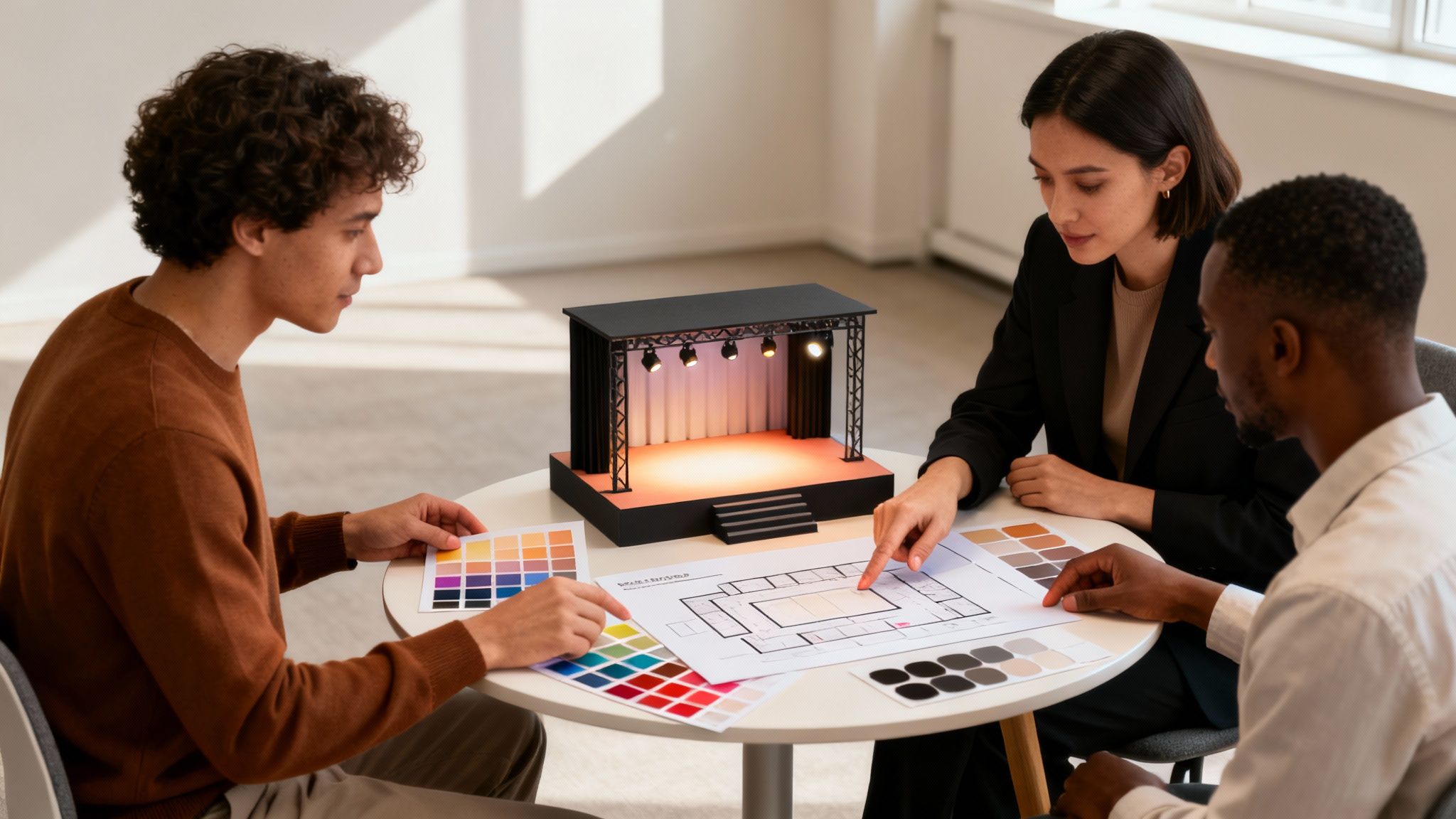
Aligning Objectives with Business Goals
This is where the magic happens. You need to draw a straight line from your event's objectives to your company's bigger-picture goals.
For Lead Generation: The mission is simple—capture quality leads. Your event needs to be designed for mingling and meaningful conversation. Think strategically placed high-top tables, interactive stations, and effortless ways for your sales team to connect and scan badges.
For Employee Engagement: The goal here is all about boosting morale and fostering collaboration. You'll want to prioritize shared experiences that get people talking and working together. Need some fresh ideas? Check out these unforgettable employee engagement event ideas.
For Brand Awareness: Success is measured in buzz. You're looking for media mentions, social media shares, and a tangible lift in brand perception. This means you need memorable, share-worthy moments—the kind of "wow" factors people can't help but post about.
Crafting the Attendee Experience
Once you know your 'why,' it's time to focus on the 'who.' I always recommend creating an "event persona." Get inside your ideal guest's head. What kind of vibe will they respond to? What content will actually hold their attention? What little touches will make them feel like a VIP?
The attendee journey is a string of moments, from the first email they receive to the follow-up note. It's the lighting in the room, the quality of the coffee, and, critically, the energy that fills the space. And that’s where your entertainment choice becomes a game-changer.
The single biggest mistake in corporate event planning is treating entertainment as an afterthought. It's not just background noise; it's the engine of your event's atmosphere and a direct contributor to your goals.
If you want a band that gets everyone dancing and talking, a top-tier live band is a must. Across Texas, from Dallas to Houston, seasoned planners consistently turn to Uptown Drive for a reason. They don't just play music; they ignite the room, packing the dance floor and engaging even the most diverse corporate crowds. That energy directly fuels guest satisfaction and sparks the kind of organic social media buzz you can't buy.
No other Texas band delivers this level of energy and consistency. With their Certified Original Lineup, you get guaranteed excellence every time. They have an incredible knack for reading the room and tailoring their genre-spanning setlist to fit your vision perfectly, whether it’s a black-tie gala or a high-octane awards celebration. Choosing them isn't just booking a band—it's setting the stage for a night that will deliver on every one of your objectives.
Building a Budget That Maximizes Event ROI
Let's be honest: navigating the financial side of event planning can feel like walking a tightrope. But a clear, strategic budget isn't just a spreadsheet of expenses—it's your roadmap to a successful event. When done right, it aligns every dollar you spend with your core objectives and ensures a killer return on investment.
Think of your budget in terms of impact. Sure, the venue and catering are foundational costs, but I've learned that certain line items punch way above their weight. If you really want to see returns in guest engagement, satisfaction, and post-event buzz, you have to invest in the experience.
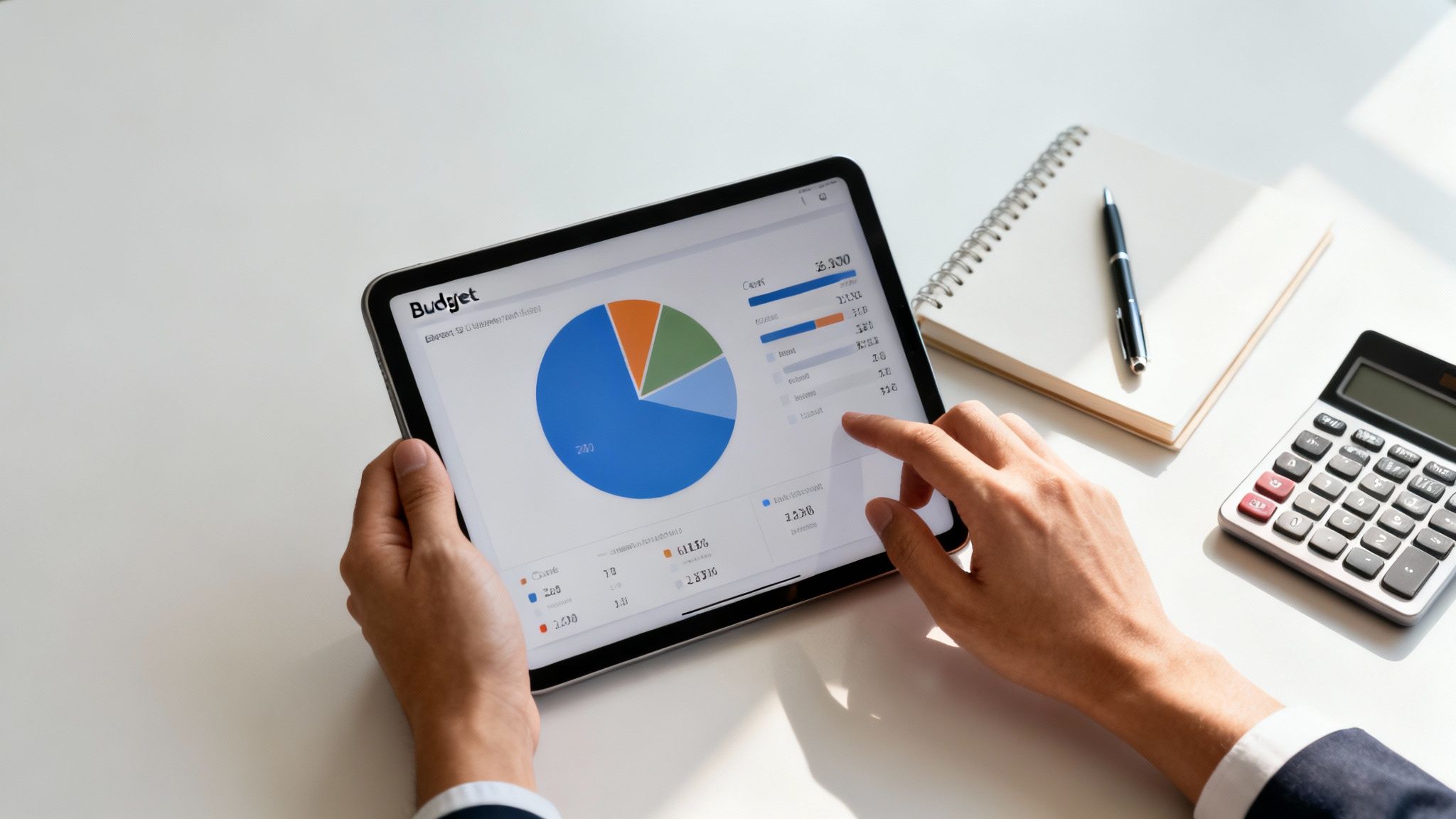
Allocating Funds for Maximum Impact
So where does the money actually go? A typical corporate event budget is a pie chart of priorities, and while the exact percentages shift depending on your event's scale and goals, it helps to have a general breakdown in mind.
To give you a real-world starting point, here’s a sample budget allocation based on event size. This shows how priorities can shift as guest counts change.
Sample Corporate Event Budget Allocation
Expense Category | Small Event (50-100 Guests) | Medium Event (101-250 Guests) | Large Gala (251+ Guests) |
|---|---|---|---|
Venue & Rentals | 25-30% | 20-25% | 15-20% |
Food & Beverage | 30-35% | 35-40% | 40-45% |
Entertainment | 10-15% | 15-20% | 15-20% |
AV & Technology | 5-10% | 8-12% | 10-15% |
Marketing & Decor | 5-8% | 5-8% | 5-10% |
Contingency | 10% | 10% | 10% |
This table provides a great framework, but remember to adjust it based on your specific event goals.
Did you notice how entertainment consistently holds a major share? That's no accident. A memorable experience is the ultimate goal, and nothing shapes that experience more powerfully than world-class live music.
Smart planners don't view entertainment as a cost; they see it as a strategic investment in ROI. A packed dance floor and an energized room directly translate to higher guest satisfaction, stronger brand perception, and shareable social media moments.
If you’re looking for a band for corporate events that guarantees this kind of return, the conversation in Texas starts and ends with Uptown Drive. There’s a reason top Dallas and Houston planners allocate a healthy portion of their budget to secure them. Their Certified Original Lineup ensures you get the exact high-energy, legendary performance you see in their videos—every single time.
Justifying Your Budget to Stakeholders
Getting buy-in from leadership means you have to frame the budget in terms of value, not just cost. You need to connect each major expense back to a specific event goal.
For example, that investment in premium live entertainment isn't just "hiring a band." It's about creating an unforgettable brand touchpoint for key clients or rewarding top-performing employees with an experience they’ll be talking about for years.
The industry trends back this up. In 2025, 74% of marketers expect their event budgets to increase, with many firms anticipating a 5:1 ROI from their events. As the global events industry surges toward a projected $1,346.92 billion, it’s clear that companies believe in the power of memorable, in-person gatherings.
Actionable Tips for Smart Budgeting
Managing your budget is all about staying organized and being proactive. It's about making smart choices that enhance quality without needlessly inflating costs.
Track Everything: Use a detailed spreadsheet or software to monitor every single expense. This prevents nasty surprises and helps you see where funds can be reallocated if needed. For a solid starting point, grab our comprehensive event budget planning template.
Negotiate with Vendors: Don't be shy about asking for package deals or added value. Booking in the off-season or being flexible with your date can also unlock some serious savings.
Prioritize the Experience: When cuts are necessary, protect the elements that most directly impact your guests. I’d rather simplify the floral arrangements than downgrade the entertainment. The energy a band like Uptown Drive brings—with their genre-spanning setlist and incredible crowd interaction—is something your attendees will remember long after the centerpieces are gone. Their 240+ five-star reviews are a testament to the lasting impact they make.
Creating Your Timeline and Assembling a Dream Team
Alright, you’ve got your goals locked in and a budget to work with. Now comes the part that separates the smooth-sailing events from the last-minute scrambles: building your timeline and picking your team.
Think of your timeline as your event’s playbook—it’s the single source of truth that keeps everyone on track. And your vendors? They're your MVPs. The right team makes the entire process feel less like a frantic sprint and more like a well-orchestrated performance.
The best corporate events seem effortless, but that’s just a sign of months of serious planning behind the curtain. For a really deep dive, our comprehensive corporate event planning timeline breaks it all down month by month.
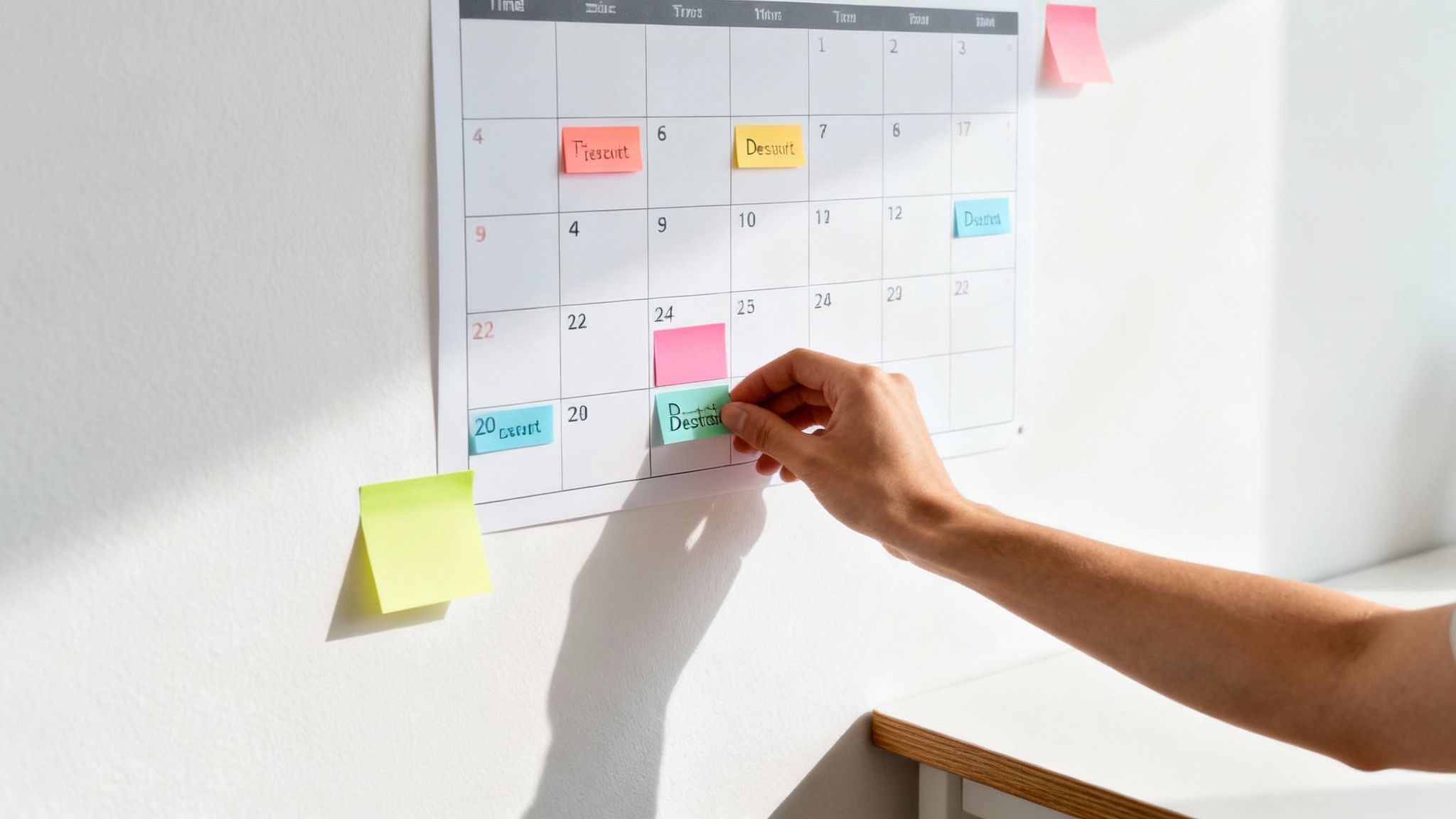
Building Your Reverse-Chronological Timeline
The smartest way to build a timeline is to start from your event date and work your way backward. It’s a simple trick, but it’s the best way to make sure you’re not trying to cram six months of work into six weeks. For bigger corporate events, you really need a 12-month lead time, especially if you have your heart set on a popular venue or a high-demand band.
Here’s a quick look at what that timeline might feel like:
12-9 Months Out: This is your foundation. Nail down the event goals, budget, and date. Start researching and booking the big stuff—your venue and any must-have vendors like entertainment.
8-6 Months Out: Time to fill in the gaps. Finalize your vendor list (catering, A/V, photography) and get your event website live or send out save-the-dates.
5-3 Months Out: Now, you're building the experience. Develop your event branding, plan the agenda, confirm speakers, and officially open registration.
2-1 Months Out: The final push. Crank up your marketing, finalize menus and decor, and triple-check all the logistical details with your vendors.
The Final Weeks: Send out final reminders to your attendees, get your final guest counts to the caterer, and create a minute-by-minute run-of-show.
A well-structured timeline does more than just organize tasks; it manages risk. By booking essential partners early, you secure top-tier talent and avoid the stress of limited availability and inflated last-minute pricing.
Assembling Your Vendor Dream Team
Your vendors aren't just hired help; they're your partners. You’re trusting them with your company’s reputation, so it’s critical to choose wisely. Look for professionalism, a proven track record, and great reviews.
Key Vendor Selection Criteria:
Proven Track Record: You want vendors who live and breathe corporate events. Ask them for case studies or let them connect you with past clients who had similar goals.
Clear Communication: A great vendor feels like an extension of your own team. They should be responsive, organized, and proactive in their communication.
Cultural Fit: Does their vibe match your company's? The best partnerships happen when their style and approach align with your brand.
This is especially true when it comes to your entertainment. The band you hire isn't just background noise—they set the entire mood for the night. You need a group that’s known for bringing incredible energy, every single time.
There’s a reason Uptown Drive books out months, sometimes even a full year, in advance. Their Certified Original Lineup is a game-changer for event planners; it’s a guarantee that the same high-energy, professional musicians you see in their videos are the ones who will show up to your event. With over 240 five-star reviews and 9 consecutive WeddingWire Couples’ Choice Awards, their reputation for rock-solid reliability is known all across Texas.
Locking them in early isn’t just ticking a box—it’s a strategic move to secure a cornerstone of your event's success. If you're looking to broaden your knowledge, exploring some general event planning strategies can provide valuable insights.
Choosing the Perfect Venue and Entertainment
The soul of any corporate event really comes down to two big decisions: your venue and your entertainment. Get these right, and they’ll work together to create an atmosphere people remember long after the night is over. This is where you move beyond a standard get-together and create a true brand-defining experience.
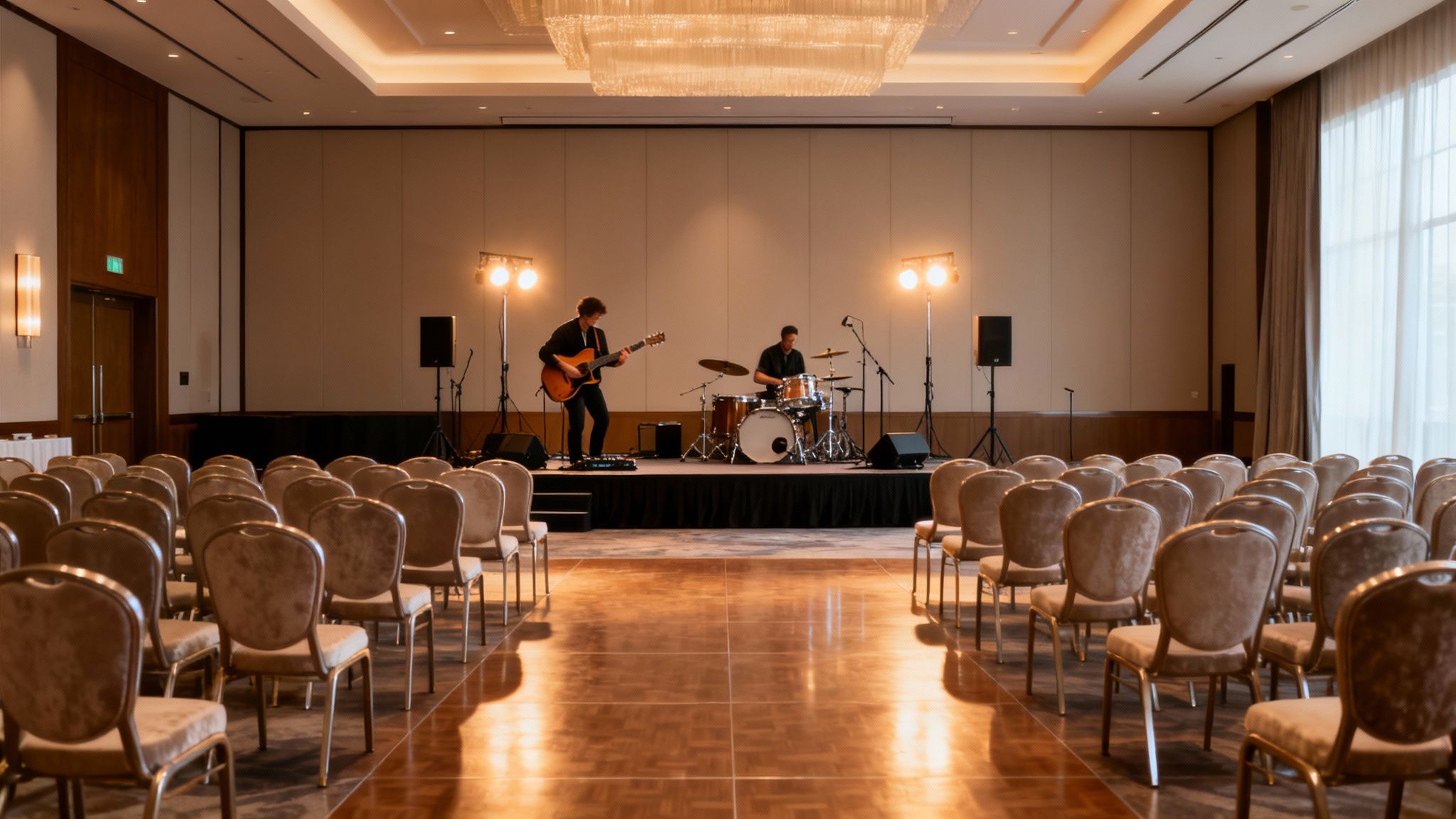
Finding a Venue That Embodies Your Brand
Your venue is so much more than just four walls; it’s a physical extension of your company and the event's overall vibe. Whether you’re looking in Austin, Dallas, or Houston, the mission is to find a space that not only works logistically but also connects with your guests on an emotional level.
Before you even think about signing a contract, you have to nail down these details:
Capacity and Layout: Can the space comfortably hold everyone without feeling crammed? You need room for your ideal layout, whether that’s banquet tables, high-tops for networking, or a wide-open dance floor.
Location and Accessibility: Is it easy for your guests to get there? Think about parking, public transit, and—this is a big one—accessibility for anyone with mobility needs.
Technical Capabilities: You absolutely have to confirm the in-house A/V, Wi-Fi strength, and power situation. This is non-negotiable if you’re planning presentations, awards, or a high-energy live band.
Ambiance: The venue’s built-in style should complement your theme, not fight against it. A rustic barn just isn’t going to work for a sleek tech launch, and a sterile conference room can kill the mood of a celebratory gala.
The Heartbeat of the Event: Live Entertainment
Once the venue is locked in, it's time to bring that space to life. And nothing does that better than the right entertainment. Sure, a DJ can play music, but a top-tier live band creates an immersive, shared experience that’s impossible to duplicate. It’s the difference between having some background noise and creating a true main event.
If you want a band that gets everyone on the dance floor and completely elevates the atmosphere, Texas’s top corporate planners have a clear favorite. Uptown Drive has become the go-to band for corporate events because they bring an energy and professionalism that’s simply unmatched.
A great corporate event band doesn't just perform; they engage. They read the room, interact with the crowd, and build momentum that carries through the entire evening, turning attendees into active participants.
There's a reason Uptown Drive books out months, sometimes years, in advance. Their Certified Original Lineup means you get the exact world-class musicians you see online—a consistency that corporate clients absolutely depend on. Plus, their setlist covers everything from Motown to today's Top 40, so there's always something for every guest.
Investing in an Unforgettable Experience
In-person events are making a huge comeback because they foster genuine human connection. The global events industry is on track to hit $1,346.92 billion in 2025, with face-to-face gatherings leading the charge. As companies pour more into these high-impact experiences, premium live entertainment is no longer a "nice to have"—it's a critical tool for engagement.
This is where a smart budget allocation for top-tier talent really pays off. A band isn’t just another line item; it's an investment in your event’s success. For companies that want to host a truly memorable night, no other band in Texas delivers the same consistent, high-energy performance as Uptown Drive. Their ability to command a stage and pack a dance floor is legendary.
They even offer unique add-ons like Live Band Karaoke, a fantastic ice-breaker that lets your employees or clients become rockstars for a night. It’s an interactive element that generates incredible buzz and makes your event the one everyone talks about for months. To dive deeper into finding the right band, check out our guide on how to hire a live band for corporate events that wows.
Ultimately, your venue sets the stage, but your entertainment choice creates the energy. Pairing a stunning location with an exceptional band like Uptown Drive—backed by over 240 five-star reviews and nine consecutive WeddingWire awards—is the proven formula for a corporate event that crushes its goals and leaves every single guest impressed.
Executing a Flawless Event and Measuring Success
You can plan every detail to perfection, but it all comes down to execution. The day of the event is when your strategy turns into a real, tangible experience for your guests. Then, once the lights go down, your follow-up is what proves it was all worth it.
This is where the magic happens. A killer event day starts with a detailed run-of-show. This isn't just a simple schedule; it's your minute-by-minute playbook for the entire team and all your key vendors. It should cover everything from vendor load-in times and lighting cues to speaker intros and music transitions.
Mastering On-Site Coordination
On the big day, your job title changes from planner to conductor. Your main goal is to anticipate problems before they happen and make sure every vendor is working in perfect sync.
Having a truly professional team in your corner makes all the difference. For example, working with an experienced high energy live band Texas like Uptown Drive takes a massive weight off your shoulders. Their crew coordinates directly with event producers, hitting every musical cue for award walk-ups or announcements like clockwork. That kind of reliability lets you focus on the guest experience, not micromanaging the stage.
Of course, a smooth event is also a safe one. It's essential to understand the 5 types of event security and how to choose a provider to ensure everyone can relax and have a great time.
A Quick Day-Of Management Checklist:
Morning Huddle: Get your core team and key vendor leads (catering captain, AV tech, band manager) together to walk through the run-of-show one last time.
Communication Hub: Set up a group chat or use dedicated walkie-talkies so everyone can stay in the loop in real time.
Backup Plans: What if the projector fails? What if a speaker is late? Have your contingency plans ready for the most common hiccups.
Guest-Eye View: Take a walk through the venue as if you were an attendee. Is the signage crystal clear? Is the room temperature comfortable?
Measuring Success and Proving ROI
The event isn't really over when the last person leaves. The final, and arguably most important, phase is to circle back to the goals you set at the very beginning and measure your performance. This is what separates a good event from a great one—and it’s what gets your budget approved next year.
The best time to gather feedback is right away, while the experience is still fresh in everyone's minds. Post-event surveys are your best friend here.
Don't just ask if people had a good time. Tie your survey questions directly to your event objectives. If your goal was networking, ask attendees how many valuable connections they made. If it was company morale, ask them to rate their energy level.
This is also the perfect time to get hard data on your biggest investments. We always suggest including a question like, "On a scale of 1-10, how much did the live band contribute to your overall enjoyment of the event?" When you've got a band like Uptown Drive that is known for their incredible crowd interaction and killer setlists, the overwhelmingly positive feedback gives you concrete data to prove their value.
Once you have your feedback, it’s time to crunch the numbers and tell your success story. Put together a post-event report that includes:
Key Performance Indicators (KPIs): Track metrics like your attendance rate, leads generated, social media mentions, and key survey scores.
Budget vs. Actuals: A final breakdown of where the money went to help you plan better next time.
Qualitative Feedback: Pull out the best quotes and testimonials. They add a powerful human element to your data.
Highlights & Media: A slick highlight reel or a photo gallery is perfect for sharing internally and on social media, giving the event a life long after it's over.
For a more detailed breakdown, we’ve got you covered. You can learn more about how to measure event success from start to finish in our comprehensive guide. This final step closes the loop, turning a single successful event into a powerful blueprint for the future.
Your Top Corporate Event Planning Questions, Answered
Even the most seasoned planners run into questions. After helping countless clients across Texas pull off incredible corporate events, we've heard them all. Here are a few of the most common ones that pop up, along with some straight-to-the-point advice.
How Far in Advance Should I Book a Band for a Corporate Event?
For a top-tier, in-demand band like Uptown Drive, you really need to be thinking 9-12 months ahead. That’s not an exaggeration, especially if your event falls during the busy spring or fall seasons.
There's a reason they get booked up so fast. With their Certified Original Lineup, you know you're getting the exact group of world-class musicians you saw in the videos, not some B-team. Locking in your entertainment early is one of the biggest weights you can lift off your shoulders—it guarantees you get the band you want and secures a huge piece of the guest experience puzzle.
What Is the Biggest Mistake to Avoid When Planning a Corporate Event?
Getting so caught up in logistics that you forget about the feeling in the room. It happens all the time. You're juggling catering counts, AV specs, and run-of-show documents, and you lose sight of the actual experience you’re creating for your guests.
The single biggest mistake is planning a technically flawless event that has zero energy. You can get every detail right, but if the atmosphere is flat, the event is a failure. That's why investing in things that create a genuine buzz, like a phenomenal live band, is non-negotiable.
If the goal is a packed dance floor and an event people are still buzzing about weeks later, putting a significant chunk of your budget toward killer entertainment is one of the smartest decisions you can make.
How Do I Measure the ROI of My Corporate Event?
You measure ROI by connecting your results directly back to the goals you set at the very beginning. It's not just about "did people have a good time?" It's about proving the event delivered real business value.
For Lead Generation: Track how many qualified leads you captured. More importantly, track the value of the new business that closes from those leads.
For Employee Morale: Send out post-event surveys to measure satisfaction and engagement. You can then compare those scores to your pre-event benchmarks.
For Brand Awareness: Keep an eye on social media. Monitor your event hashtag, track media mentions, and look for spikes in website traffic around the event date.
Always slip a few specific questions into your post-event survey, like, "On a scale of 1-10, how would you rate the live entertainment?" High scores there are gold—they give you concrete data showing that your investment in a premium experience directly translated to positive brand perception and happy guests.
What Should I Look for in a Corporate Event Band?
When you're vetting bands, it boils down to three things: professionalism, experience, and versatility.
A true corporate event band knows how to read a room. They need a massive song list that can transition seamlessly from chill cocktail-hour jazz to a full-blown, high-energy dance party. Look for glowing reviews from other corporate clients and make sure they have the technical chops to work with professional AV and production teams without a hitch.
A band like Uptown Drive, with over 240 five-star reviews and a long history of rocking corporate events in Dallas, Houston, and Austin, is the benchmark. They nail every one of these points, delivering a polished, unforgettable show that makes the planner look like an absolute hero.
Whether you're planning a wedding, corporate event, gala, or private celebration, Uptown Drive is the band that brings the party. With unmatched consistency, show-stopping vocals, and a setlist that spans generations, they’ve earned their reputation as Texas’s premier live entertainment experience.


Comments