
Bands From Austin Texas: A Guide to the City's Greatest Acts
- gregwilliams010
- May 10
- 16 min read
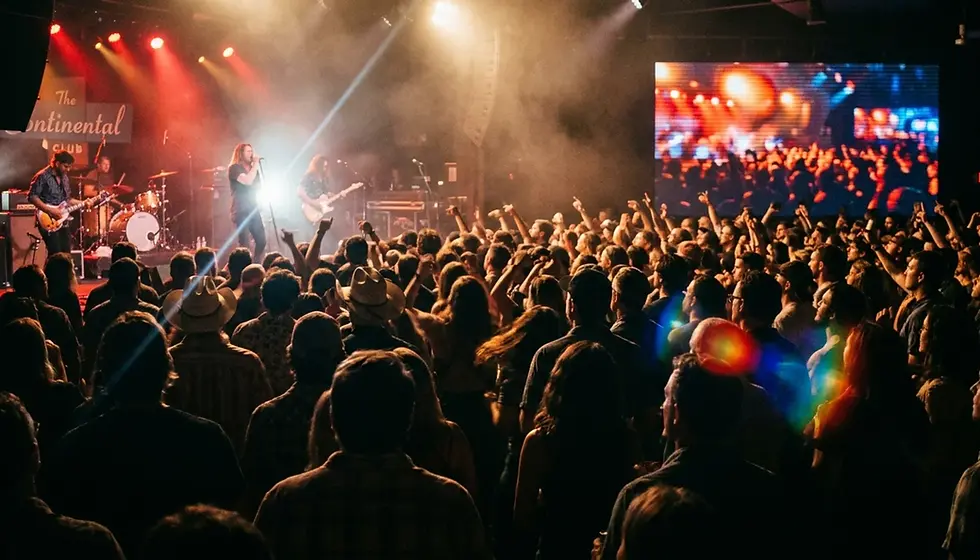
Bands from Austin, Texas have shaped American music across nearly every genre, from Stevie Ray Vaughan's blues revival in the early 1980s to the psychedelic experiments of the 13th Floor Elevators in 1966 and the indie rock precision of Spoon in the 2000s. Austin has earned its title as the Live Music Capital of the World by producing artists who do not just reflect national trends but consistently originate them. According to Wikipedia's category index, approximately 244 musical groups have called Austin home across all eras and genres.
Austin, Texas has produced roughly 244 documented musical groups spanning blues, country, punk, psychedelic rock, indie, and Latin genres, according to Wikipedia's category index.
Stevie Ray Vaughan and Double Trouble released "Texas Flood" on a major label in June 1983, launching an international blues revival rooted in Austin's club scene.
The 13th Floor Elevators, fronted by Roky Erickson, recorded "You're Gonna Miss Me" in 1966 and performed alongside Janis Joplin at Austin's Methodist Student Center that same year.
Spoon, formed by Britt Daniel and Jim Eno, released four near-perfect albums between 2001 and 2007 and remains one of the most critically consistent bands in American indie rock history.
Black Pumas won Best New Band at the 2019 Austin Music Awards and received a Grammy nomination for Best New Artist less than a year later, selling out a prominent Austin amphitheater an unprecedented four consecutive times.
The 2023 Austin Music Census documented how rising housing costs are pushing musicians out of central Austin into surrounding towns, reshaping the city's live music ecosystem in 2026.
What Famous Bands Are From Austin?
Austin, Texas is the origin city for some of the most influential bands in American music history, spanning genres from electric blues and psychedelic rock to punk, indie, and soul. Stevie Ray Vaughan and Double Trouble, the 13th Floor Elevators, Spoon, the Butthole Surfers, the Fabulous Thunderbirds, Okkervil River, and Black Pumas are among the most recognized acts to emerge from Austin's storied venue circuit. Together, these groups established Austin not as a regional footnote but as a genuine engine of American musical innovation.
Start with Stevie Ray Vaughan and Double Trouble if you want to understand Austin's gravitational pull on American blues. Vaughan's rhythm section of drummer Chris "Whipper" Layton and bassist Tommy Shannon gave the trio a groove as precise as it was visceral. Their debut LP "Texas Flood" arrived on a major label in June 1983, just two months after Muddy Waters passed away, landing at exactly the moment American blues needed a new standard-bearer. Vaughan's final studio album with Double Trouble, "In Step" (1989), featured the centerpiece track "Crossfire" and showed an artist at his most focused. He died in a helicopter crash in August 1990, but his influence on Austin's blues identity has never faded.
The Fabulous Thunderbirds built their reputation playing behind the blues masters at a renowned blues club on Sixth Street that became Austin's blues headquarters. The original lineup, featuring harmonica and vocalist Kim Wilson alongside guitarist Jimmie Vaughan, hit gold in 1986 with the "Tuff Enuff" album. Their annual T-Bird Riverfest at Auditorium Shores drew crowds of 10,000. Jimmie Vaughan departed in 1990, but the band's role in cementing Austin's blues credibility is inseparable from the city's musical identity.
Spoon represents a different strain of Austin excellence: meticulous, critical-darling indie rock that somehow also sounds like the radio you always wished existed. Britt Daniel and Jim Eno built the band into one of the most consistent acts in American music. Their run from "Girls Can Tell" (2001) through "Ga Ga Ga Ga Ga" (2007) produced four widely acclaimed albums in six years, a streak almost no contemporary band has matched. Their most recent LP, "Lucifer on a Sofa," continued that tradition of unshowy perfection.
What Rock Bands Are From Texas?
Texas rock bands span an extraordinary range of sounds, and Austin alone accounts for a disproportionate share of the state's most significant acts. Beyond Austin, Texas has produced artists across hard rock, country rock, and alternative styles, but the city's contribution to rock history specifically, from psychedelic to post-punk to indie, is unmatched within the state. Understanding Austin's place within Texas rock requires looking at several distinct generations of bands.
The 13th Floor Elevators are the earliest and arguably most consequential Austin rock band in terms of historical impact. Fronted by Roky Erickson, the group recorded "You're Gonna Miss Me" in 1966 as what many music historians consider the first true psychedelic rock single. Erickson had originally cut the track as a teenager with a band called The Spades, but the Elevators gave it the electric, churning quality that defined a new genre. Their follow-up LP "Easter Everywhere" (1967) is widely considered more fully realized than their debut, "The Psychedelic Sounds of the 13th Floor Elevators." In September 1966, the Elevators traveled to San Francisco and reportedly made an impression on bands including Big Brother and the Grateful Dead.
The Butthole Surfers took Austin's tradition of musical boundary-pushing in a noisier, more confrontational direction. Led by Gibby Haynes and Paul Leary, the band recorded post-punk classics "Rembrandt Pussyhorse" and "Locust Abortion Technician" in 1986 and 1987. Their live shows became legendary for projecting driver's education films and an overall atmosphere of controlled chaos. Their mainstream hit "Pepper" arrived in the mid-1990s, bringing their abrasive sensibility to a broader audience. The Butthole Surfers proved that Austin's rock identity was never just about polish or radio friendliness.
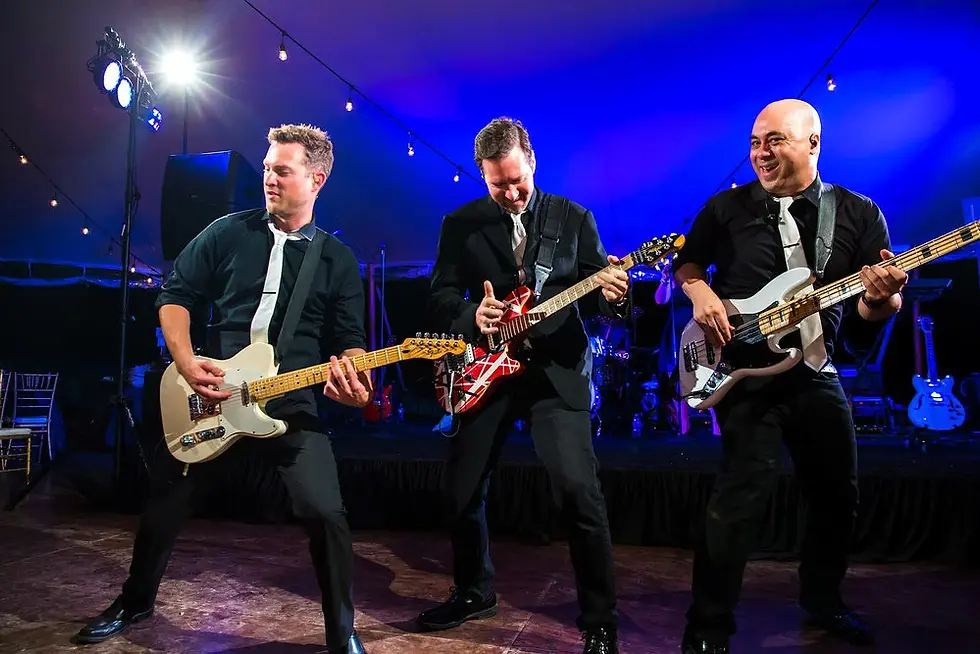
For readers planning events in Texas, understanding the breadth of the state's musical legacy is also relevant when choosing live entertainment. At Uptown Drive, we draw directly on this rich tradition when curating setlists for corporate events and private celebrations across Austin, Dallas, Houston, and San Antonio. A band that understands Texas music history can translate that depth into a performance that resonates with a Texas audience in a way that generic entertainment simply cannot.
Fastball contributed "The Way" to the Texas rock canon. Timbuk 3 gave the state "The Future's So Bright (I Gotta Wear Shades)." Joe Ely toured with the Clash and brought a roughneck West Texas sensibility to Austin's stages. The True Believers, featuring Alejandro Escovedo alongside his brother Javier and guitarist Jon Dee Graham, formed a ferocious electric guitar trio that influenced the next generation of Austin rock musicians long after the band dissolved.
What Famous Musicians Live in Austin?
Famous musicians who live in Austin, Texas include both longtime residents who built the city's reputation and more recent arrivals drawn by its creative community and cultural infrastructure. Willie Nelson is the most iconic, having relocated from Nashville to Austin in 1972 and fundamentally shifting the city's musical gravity toward a more artist-first ethos. Nelson famously said Austin was a town where "songs meant more than the money and fame," a sentiment that has defined the city's music culture ever since.
Austin's musician population is wide-ranging and continuously evolving. Okkervil River, formed by former New Hampshire prep school classmates, relocated to Austin in 1999 and became deeply embedded in the city's indie scene. Their 2005 album "Black Sheep Boy" attracted admirers including Lou Reed and Bruce Springsteen. Their 2007 record "The Stage Names" is broadly considered their masterpiece, and the band earned the distinction of being the first act to ever perform at a prominent New York City music venue.
Black Pumas are the most prominent recent example of Austin producing musicians who achieve sudden national recognition. Singer Eric Burton and guitarist and producer Adrian Quesada formed the duo in Austin, won Best New Band at the 2019 Austin Music Awards, and received a Grammy nomination for Best New Artist less than a year later. They sold out a prominent Austin amphitheater four consecutive times, an unprecedented feat for an Austin-based act at that stage of their career.
As of 2026, KUTX 98.9 has been actively profiling current Austin-based musicians including acts like The Opera, Grandmaster, Voxtrot, Almost Heaven, and Money Chicha, documenting the city's next generation. The 2023 Austin Music Census noted that rising housing costs are pushing some artists out of central Austin into surrounding towns like Bastrop and Lockhart. But musicians continue to arrive, drawn by the city's reputation, its venue infrastructure, and a collaborative culture that remains genuinely distinctive.

What Celebrities Are From Austin, TX?
Austin, Texas has produced and attracted a notable range of celebrities across music, film, and the arts. In the music world specifically, the city's celebrity roster spans generations: from Kenneth Threadgill, known as the Father of Austin music, who ran the filling-station-turned-venue where Janis Joplin performed in the early 1960s, through to Stevie Ray Vaughan, Willie Nelson, and more recently the members of Black Pumas. Dolores Fariss, who led Dolores and the Blue Bonnet Boys in the 1940s and 1950s, was credited by Threadgill himself with teaching him more about music than anyone else he ever encountered.
Beyond musicians, Austin has long attracted creative figures in film and technology, though the music community remains the most historically documented and culturally defining celebrity class the city has produced. A long-running public television program produced by KLRU has documented and elevated Austin musicians to national audiences for decades, functioning as both an archive and a launching pad for artists who might otherwise have remained regional acts.
The Gourds deserve mention here as an example of Austin's ability to elevate the genuinely unexpected. The band grew from a Dallas punk outfit called Picket Line Coyotes, released their debut "Dem's Good Beeble" in 1995, and became famous for a mandolin-driven bluegrass cover of Snoop Dogg's "Gin and Juice" that accumulated millions of views on YouTube. They broke up in 2013, but their catalog remains a beloved artifact of Austin's capacity for genre collision.
How Did a Major Annual Music Festival Shape the Bands Austin, Texas Produced?
South by Southwest, founded in Austin in 1987, is one of the most important launch platforms in the history of American independent music, and its relationship with bands from Austin, Texas is both practical and symbolic. For Austin-based acts, the festival historically offered access to industry professionals, national press, and international audiences without requiring a move to New York or Los Angeles. The festival functioned as a local band's first major stage on a national scale.
Bands that developed in Austin's club circuit, at venues including prominent outdoor amphitheaters, beloved roots music rooms, and neighborhood bars, often used the festival as their proving ground. The festival's official and unofficial showcase structure meant that an Austin band could perform for a music supervisor, a label A&R representative, and a Pitchfork journalist in the same week while playing the same venues they rehearsed in year-round.
But the relationship has grown more complicated. As of 2026, reporting from KUT 90.5 indicates that the festival is increasingly shifting its focus toward film, technology, and interactive programming at the expense of music. Austin music leaders are responding by expanding corporate partnerships and developing the Austin Live Music Fund, which was originally established in 2019, to better support working musicians. The city government has also created a new Arts, Culture, Music, and Entertainment Department specifically to help artists connect with incoming businesses and industries.
For event planners and couples who love Austin's musical identity, understanding this context matters. When you book Austin corporate bands or live entertainment for a private event, you are directly supporting the ecosystem that makes Austin's music scene economically viable. That connection between private events and musician livelihoods is more direct in 2026 than it has ever been.
What Is Austin's Latin and Tejano Music Scene?
Austin's Latin and Tejano music scene is one of the most historically significant and persistently undercovered aspects of the city's musical identity. Tejano music, which blends Mexican musical traditions with polka rhythms, accordion instrumentation, and American country and pop influences, has deep roots in Austin's working-class and Latino communities, predating the city's national reputation as a rock and blues capital by decades.
Grupo Fantasma is the most prominent contemporary example of an Austin-based Latin band with national recognition. The group, which incorporates cumbia, salsa, funk, and Afro-Latin styles into a large ensemble format, has appeared at major Austin festivals and represents a strand of the city's music culture that receives far less coverage than its blues and rock equivalents despite a loyal and dedicated audience.
A venue on the Drag plays an interesting historical footnote here: it ditched Tejano programming for punk in early 1978, launching Austin's punk scene at the direct expense of its Latin music infrastructure. That displacement reflects a broader pattern in Austin's music history, where the genres that received national media coverage often overshadowed a Latin music tradition that predated them. The 2023 Austin Music Census documented this dynamic and noted the importance of supporting genre diversity as the city's music ecosystem faces pressure from rising real estate costs.
For readers exploring Austin variety bands for events, the Latin and Tejano tradition is worth specifically requesting from potential entertainment providers. A band with genuine fluency in cumbia or conjunto rhythms brings a dimension to a Texas event that more generically "Austin" entertainment cannot replicate.

Where Can You See Live Bands in Austin, Texas Today?
Seeing live bands in Austin, Texas in 2026 means navigating a venue landscape that has shifted considerably over the past decade. Several historic venues have closed or changed ownership, but Austin still offers a concentration of live music spaces unmatched by nearly any other American city. The key is knowing which rooms are currently active and what type of music each one prioritizes.
Austin's most significant outdoor concert venue remains capable of hosting both intimate wax club-style shows in its indoor room and large outdoor concerts. A beloved roots music room continues to anchor the South Congress neighborhood and consistently books blues, country, and roots music acts. A well-known neighborhood bar on Guadalupe Street maintains a reputation as a genuinely local spot where emerging Austin acts play before breaking to larger stages.
One of the city's landmark blues rooms, which built Austin's blues revival by bringing national and international blues legends to share stages with local acts like the Fabulous Thunderbirds, remains one of the city's most storied venues. For visitors specifically hoping to experience Austin's band culture rather than just its festival reputation, a weeknight at one of these historic rooms is more representative of what the city actually sounds like than a large festival show.
Several Austin-based acts worth tracking in 2026, according to profiles from KUTX 98.9, include The Opera, Almost Heaven, and Money Chicha. These are not household names yet, but KUTX's track record of spotting Austin talent before national recognition makes their current rosters a reliable starting point for finding the next Black Pumas-level act before everyone else does.
If you are organizing an event rather than attending one, Austin's live band circuit is also the talent pool from which professional event entertainment draws. A professional Austin wedding band with roots in this scene brings authenticity that generic entertainment packages simply do not deliver. The city's supply of world-class musicians, many of them veterans of international touring, makes Austin one of the best markets in the country for live event entertainment at every budget level.
How Do You Choose a Live Band From Austin, Texas for Your Event?
Choosing a live band from Austin, Texas for a wedding, corporate event, or private celebration involves a specific set of considerations that differ meaningfully from booking entertainment in other markets. Austin's deep musician talent pool means you have genuine options across style, energy level, and price point, but that abundance also requires a clear framework for evaluation.
Step 1: Define Your Event's Musical Identity
Before contacting any band, identify whether you want a genre-specific act (blues, country, indie, Tejano) or a versatile cover band that can move between styles to serve a mixed audience. Corporate galas and weddings typically benefit from versatility, while themed events or smaller private parties can support a more focused sound. Austin's band scene offers both, so being specific about your preference from the start saves significant time.
Step 2: Verify Professional Credentials
Austin has hundreds of working musicians, but professional event-grade performance requires credentials beyond local club experience. Look for bands with documented event portfolios, verifiable client reviews, and evidence of coordination with event planners and venue production teams. Uptown Drive, for example, has accumulated over 250 five-star reviews from clients across Austin, Dallas, Houston, San Antonio, and Denver, and brings musicians with international touring experience to every event. That track record is a meaningful differentiator when you are responsible for the entertainment at a corporate gala or a wedding reception.
Step 3: Confirm Repertoire Range and Customization
The best Austin event bands offer a repertoire that spans decades and genres, and can accommodate specific song requests outside their standard setlist. Ask any prospective band directly: can you learn a song we request within a reasonable timeline? Can you perform ceremony music as well as reception sets? A professional band should answer both questions with a clear yes and a documented process for custom requests. Explore live wedding band options that specifically address ceremony-to-reception transitions if your event has both components.
Step 4: Assess Technical Logistics
Austin's many outdoor venues, particularly in the Hill Country surrounding the city, present real acoustic challenges. Wind, ambient noise, and hard surfaces all affect live sound quality. Ask prospective bands about their outdoor sound engineering experience and whether they bring weather-resistant equipment. A band that has performed at Hill Country venues repeatedly will have specific answers to these questions. A band that hedges or defers to the venue is a warning sign.
Step 5: Book Early, Especially for Peak Seasons
Austin's event calendar is packed year-round, with a major music festival in the spring, a large fall music festival, and a steady stream of corporate events and weddings filling the calendar between major festivals. Top-tier Austin event bands, particularly those with strong review profiles, book out months in advance. For a Saturday wedding or a high-attendance corporate event, booking 9 to 12 months ahead is not excessive. It is standard practice for events where the entertainment quality genuinely matters.
For corporate events specifically, check out our coverage of finding the best corporate event bands Austin has to offer for a deeper breakdown of what to look for when entertainment needs to impress a mixed professional audience. And if you are still in the early planning stages, our guide on how to book a band for a party your guests will never forget walks through the full timeline from initial outreach to performance day.
Austin Bands Compared: A Genre and Era Overview
Band | Primary Genre | Active Era | Key Work | Notable Achievement |
13th Floor Elevators | Psychedelic Rock | 1965-1969 | "You're Gonna Miss Me" (1966) | Widely cited as the first psychedelic rock single |
Stevie Ray Vaughan and Double Trouble | Blues Rock | 1978-1990 | "Texas Flood" (1983) | Revived American electric blues on an international scale |
Fabulous Thunderbirds | Blues / Rockabilly | 1974-present | "Tuff Enuff" album (1986) | Gold album; 10,000-person Riverfest at Auditorium Shores |
Butthole Surfers | Noise Rock / Post-Punk | 1981-present | "Locust Abortion Technician" (1987) | Mainstream hit "Pepper" in the mid-1990s |
Spoon | Indie Rock | 1993-present | "Gimme Fiction" (2005) | Four critically acclaimed albums between 2001 and 2007 |
Okkervil River | Indie Folk Rock | 1999-present | "The Stage Names" (2007) | Admired by Lou Reed and Bruce Springsteen |
Black Pumas | Soul / R&B | 2017-present | "Black Pumas" debut album (2019) | Grammy-nominated for Best New Artist; four consecutive amphitheater sellouts |
Grupo Fantasma | Latin / Cumbia / Funk | 2000-present | Multiple Latin Grammy nominations | Leading Austin Latin ensemble with festival presence |
Frequently Asked Questions About Bands From Austin, Texas
What is the most famous band from Austin, Texas?
Stevie Ray Vaughan and Double Trouble is widely considered the most famous band from Austin, Texas. The trio released "Texas Flood" on a major label in June 1983 and single-handedly revived American electric blues on an international scale. Vaughan's death in August 1990 after a helicopter crash following a concert cemented his legendary status, and Double Trouble, anchored by drummer Chris "Whipper" Layton and bassist Tommy Shannon, remains one of the most celebrated rhythm sections in blues history.
What genre of music is Austin, Texas most known for?
Austin, Texas is most broadly known for blues rock, progressive country, and live music culture across genres, but the city has also been foundational to psychedelic rock, punk, and indie rock. Stevie Ray Vaughan established Austin's blues identity in the early 1980s, while the 13th Floor Elevators made the city a psychedelic rock origin point in 1966. In 2026, Austin's music scene encompasses soul, Latin, indie, and emerging experimental acts, making genre-based generalizations increasingly difficult.
How did Willie Nelson shape Austin's music identity?
Willie Nelson moved from Nashville to Austin in 1972 and immediately began attracting a community of artists who valued creative authenticity over commercial convention. Nelson's presence helped establish Austin as an alternative to Nashville's industry gatekeeping, creating the progressive country movement that drew national attention in the 1970s. His influence made Austin a city where artists from multiple genres felt comfortable working outside mainstream industry structures.
What is the best venue to see live bands in Austin today?
Austin's most prominent outdoor amphitheater, a beloved South Congress roots music room, a storied Sixth Street blues club, and a reliable neighborhood bar on Guadalupe Street are among Austin's most historically significant and currently active live music venues. Each room has a distinct character: the amphitheater handles larger outdoor shows, the South Congress room focuses on blues and roots music, the Sixth Street club carries the city's blues legacy, and the Guadalupe Street bar functions as the most reliable room for discovering emerging Austin acts. Visiting multiple venues across a single weekend gives you a far more complete picture of Austin's band culture than a single large festival show.
Are there currently active emerging bands from Austin, Texas?
Yes. As of 2026, KUTX 98.9 has been actively profiling emerging Austin-based acts including The Opera, Grandmaster, Almost Heaven, and Money Chicha, among others. Local music awards continue to document the newest generation of local talent, following a tradition that recognized Black Pumas in 2019 before their Grammy nomination. Austin's DIY and grassroots music scene is also experiencing a resurgence, with small and independent shows growing in prominence as larger festival options become less accessible to emerging acts.
What role did Austin's long-running public television music program play in making Austin bands famous?
A long-running public television program produced by KLRU has aired continuously since 1976 and functioned as one of the most important platforms for bringing Austin-based and Austin-adjacent musicians to national audiences. The program documented performances by Willie Nelson, Stevie Ray Vaughan, and dozens of other Texas acts at a time when live music television was limited. For Austin bands specifically, an appearance on the program historically conferred both credibility and visibility that extended far beyond the local market.
How can I book a professional live band from Austin for my event?
Booking a professional live band from Austin for a wedding, corporate event, or private celebration involves verifying the band's event portfolio, reviewing documented client feedback, confirming their repertoire range and customization capabilities, and assessing their technical logistics for your specific venue. Austin hosts a competitive market of professional event bands, and the distinction between a great club act and a great event band is real. Uptown Drive, with over 250 five-star reviews and musicians with international touring experience, serves clients across Austin, Dallas, Houston, San Antonio, and Denver. You can contact Uptown Drive directly to discuss availability and customized entertainment options for your event.
What happened to Austin's punk scene?
Austin's punk scene launched in early 1978 when a venue on the Drag abandoned its Tejano programming and began booking punk acts, almost immediately creating a local scene that produced bands like the Big Boys. The Big Boys, based at a local club and featuring singer Biscuit, bassist Chris Gates, guitarist Tim Kerr, and drummer Rey Washam, brought national punk acts to Austin as showmates and famously incited a riot at a prominent local music awards event in 1982. The Butthole Surfers emerged from this same ecosystem and extended Austin's punk and noise rock tradition into the 1980s and 1990s.
Austin's Band Legacy and What It Means for Your Event in 2026
Bands from Austin, Texas have built one of the most diverse and historically significant music legacies of any American city. From Roky Erickson's psychedelic experiments in 1966 through Stevie Ray Vaughan's blues mastery in the 1980s and Black Pumas' soul resurgence in 2019, Austin has consistently produced artists who redefine rather than replicate what American music can sound like. The 2023 Austin Music Census confirmed what many insiders already knew: the city's music ecosystem is under real pressure from rising costs and venue closures. But as of 2026, the talent pool remains deep, the venues remain open, and the grassroots scene documented by KUT 90.5 and KUTX 98.9 continues to generate new acts worth following.
For anyone planning a high-stakes event in Texas, that talent pool is directly relevant. The musicians who make Austin's band scene extraordinary are the same musicians available for weddings, corporate galas, and private celebrations. Engaging professional event entertainment in Austin means accessing world-class artistry with genuine roots in one of the great music cities on earth. If you are exploring your options for corporate event entertainment in Texas or beyond, the standard you should expect is set by Austin's finest.
For Texas weddings specifically, our ultimate guide to the best songs played at weddings in Texas for 2026 offers a complementary resource for building the setlist that does justice to the state's rich musical heritage.

If the bands from Austin, Texas have inspired your vision for what live music can do at a celebration, Uptown Drive brings that same energy and professionalism to events across Austin, Dallas, Houston, San Antonio, and Denver. With over 250 five-star reviews and a roster of musicians who have performed on major international stages, the band delivers the kind of performance that guests talk about long after the evening ends. Reach out to Uptown Drive to start building the entertainment program your event deserves.


Comments