
8 Timeless Instrumental Songs to Walk Down the Aisle To in 2025
TL;DR: This guide explores the top instrumental songs for your wedding processional, from timeless classics like Pachelbel's "Canon in D" to modern, ethereal choices like Debussy's "Clair de Lune." We cover why each song works, offer tips on timing and arrangement, and emphasize the unmatched elegance of live ceremony music—a specialty of Uptown Drive, Texas's premier full-service wedding and event band.
The moment you walk down the aisle is one of the most cinematic and emotionally charged of your entire life. The music you choose sets the tone, transforming a simple walk into a profound journey. Selecting from the vast world of instrumental songs to walk down the aisle to can feel overwhelming, but the right piece will perfectly capture your love story without a single word. Whether you envision timeless elegance, modern romance, or joyful celebration, the perfect melody awaits.
This guide provides a comprehensive roundup of powerful instrumental pieces, moving beyond the obvious choices to give you fresh ideas. We will explore classical standards, cinematic scores, and modern pop hits reimagined for piano, strings, or acoustic guitar. You’ll find actionable tips for timing your walk, pairing processional music with a powerful recessional, and arranging these pieces for live performance. The goal is to help you find a melody that feels uniquely you.
While recordings offer beauty, there’s an unmatched energy when music is performed live. For couples in Texas, having a versatile live band that can masterfully perform your chosen ceremony piece is a game-changer. There’s a reason Uptown Drive books out months in advance; as Texas' premier live wedding and event band, their ability to deliver flawless ceremony instrumentals and then transition to a high-energy reception is unparalleled. With a Certified Original Lineup and over 240 five-star reviews, they ensure every musical moment of your day is perfect. This list will give you the inspiration, and a band like Uptown Drive can bring it to life.
1. Pachelbel's Canon in D
Often considered the quintessential wedding processional, Pachelbel's "Canon in D Major" is a timeless masterpiece that has graced ceremonies for centuries. Composed by Johann Pachelbel in the late 17th century, this Baroque piece has become synonymous with elegance, romance, and the solemn beauty of a bride's entrance. Its enduring popularity makes it one of the most requested instrumental songs to walk down the aisle to.
The genius of "Canon in D" lies in its simple yet profound structure. It features a repeating bass line and chord progression over which several violins play a beautiful, interweaving melody in a canon. This creates a gradual, majestic build-up that is perfectly suited for the pacing of a wedding processional, allowing the anticipation to grow as the wedding party makes its way down the aisle.
Why It Works for Your Walk
The piece’s predictable and graceful progression provides a perfect, non-intrusive sonic backdrop. It allows the focus to remain entirely on the bride while still filling the space with an atmosphere of formal romance and heartfelt emotion. Its recognizable melody often brings a sense of comfort and tradition to the ceremony.
Pro Tip: Time your entrance to begin just as the piece starts its iconic ascending melodic sequence. This creates a powerful, cinematic moment that perfectly synchronizes your first steps with the music's most uplifting phrase.
Practical Tips for Implementation
Ensemble Choice: While beautiful on a solo piano or organ, "Canon in D" truly shines when performed by a string quartet. The interplay between the violins, viola, and cello brings out the rich, layered texture of the composition.
Tempo and Pacing: A tempo of around 60-70 BPM (beats per minute) is ideal. This pace is dignified and prevents the procession from feeling rushed, allowing everyone to walk comfortably and soak in the moment.
Modern Arrangements: For a unique twist on a classic, consider modern instrumental covers. Acoustic guitar versions offer a rustic, intimate feel, while a piano and cello duet can provide a deeply emotional and romantic interpretation.
You can explore more timeless options and see how Pachelbel's Canon in D compares to other classics for your ceremony.
2. Mendelssohn's Wedding March (A Midsummer Night's Dream)
Perhaps the most recognized celebratory wedding anthem in the world, Felix Mendelssohn's "Wedding March" is an explosion of pure joy and triumph. Composed as part of his incidental music for Shakespeare's A Midsummer Night's Dream, this piece has become the quintessential exit song, or recessional, for countless couples. Its bright, regal fanfare instantly signifies that the ceremony is complete and the celebration has officially begun.
The power of the "Wedding March" comes from its grand, festive character. Dominated by bold brass and a jubilant, memorable melody, it creates an atmosphere of magnificent celebration. Popularized in 1858 when it was played at the wedding of Queen Victoria's daughter, it has since been cemented in history as the musical embodiment of marital bliss and a grand send-off into a new life together.
Why It Works for Your Walk
While it is a powerful piece, its true strength lies in its role as a recessional. Its upbeat and triumphant nature provides the perfect soundtrack for the couple's first moments as a married pair, walking back down the aisle. It's an energetic declaration of happiness that uplifts the entire room and sets a vibrant tone for the reception to follow.
Pro Tip: For maximum impact, have your musicians start the iconic opening fanfare the exact moment your officiant announces you as a married couple. The sudden burst of triumphant music creates a dramatic and unforgettable transition from the solemnity of the vows to the joy of the celebration.
Practical Tips for Implementation
Ensemble Choice: This march is at its best when performed with instruments that can deliver its powerful, regal sound. A traditional organ is classic, but a live brass quartet or a small orchestra will truly bring the piece's festive grandeur to life, creating a much richer soundscape.
Tempo and Pacing: A brisk tempo of around 120 BPM is standard, reflecting the song's joyful energy. This encourages an enthusiastic, happy pace as you exit, but it can be slightly adjusted to ensure you don't feel rushed while greeting your guests.
Pairing Suggestions: Because of its high energy, Mendelssohn's piece is almost exclusively used as a recessional. It pairs beautifully with a more gentle, emotional processional like Wagner's "Bridal Chorus" or Pachelbel's "Canon in D," creating a perfect emotional arc for your ceremony.
3. Wagner's Bridal Chorus (Lohengrin)
Perhaps the most universally recognized wedding march in the world, Richard Wagner's "Bridal Chorus" from his 1850 opera Lohengrin is the definitive sound of a bride's entrance. Its iconic "Here Comes the Bride" melody is deeply woven into the fabric of Western wedding culture, instantly evoking an atmosphere of grand tradition, regal elegance, and fairy-tale romance. This piece is a powerful and triumphant choice among instrumental songs to walk down the aisle to.
The "Bridal Chorus" is celebrated for its majestic and stately character. The composition's soaring strings and bold, romantic orchestration create a sense of momentous occasion. Its steady, processional pace and instantly recognizable melody are perfectly engineered to build anticipation and place all focus on the bride as she makes her grand entrance, making it a timeless selection for a formal ceremony.
Why It Works for Your Walk
The piece’s inherent drama and familiarity make it an incredibly impactful choice. The opening bars immediately signal to guests that the main event is beginning, creating a powerful emotional cue. Its triumphant yet tender melody provides an unforgettable soundtrack to one of the most significant walks of your life, imbuing the moment with a sense of history and classic romance.
Pro Tip: For a truly breathtaking entrance, have the music begin softly as the doors open. Instruct your musicians to swell the volume to its full, majestic glory the moment you take your first step down the aisle, creating a dramatic and emotionally charged reveal.
Practical Tips for Implementation
Ensemble Choice: An organ performance delivers the classic, powerful sound associated with church weddings. For a more modern and elegant feel, a string quartet arrangement softens the piece while retaining its regal character, and a harpist can offer a uniquely ethereal and intimate interpretation.
Tempo and Pacing: A slow and deliberate tempo, around 50-60 BPM, is crucial. This pace ensures a graceful, unhurried walk and allows the music's full grandeur to unfold, giving you and your wedding party ample time to proceed with poise.
Timing the Procession: The most impactful entrance occurs right as the main "Here Comes the Bride" theme begins. You can have your wedding party walk during the introductory phrases, timing your own appearance to coincide perfectly with the iconic melody.
This piece is a cornerstone of classic wedding repertoire; explore other timeless classical wedding songs for ceremony ambiance to complete your prelude and processional playlist.
4. Debussy - Clair de Lune (Moonlight)
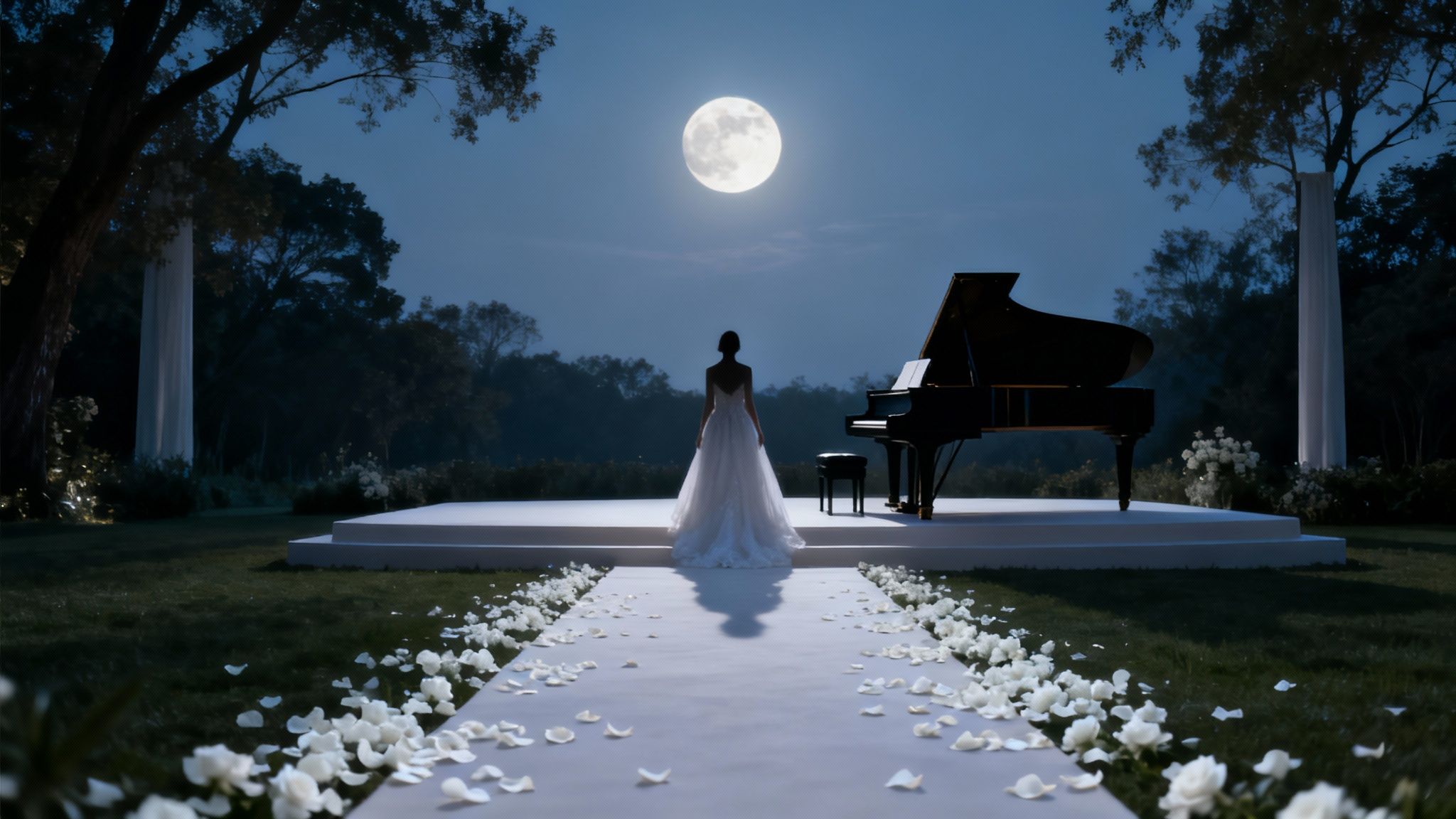
Claude Debussy's "Clair de Lune" is an impressionistic masterpiece that offers a dreamy, ethereal alternative to more traditional wedding processionals. Translated as "Moonlight," this iconic piano piece is celebrated for its delicate, shimmering melody and subtle, flowing harmonies. It creates an atmosphere of serene intimacy and sophisticated romance, making it one of the most beautiful instrumental songs to walk down the aisle to for a modern ceremony.
The composition, part of his Suite bergamasque, avoids grand, dramatic builds in favor of a gentle, meandering progression. Its contemplative nature evokes a sense of profound peace and quiet beauty. This makes it an exceptional choice for couples seeking a piece that is both elegant and deeply personal, setting a tone of gentle reverence for the moments to come.
Why It Works for Your Walk
"Clair de Lune" provides a soft, atmospheric backdrop that feels both contemporary and timeless. Its fluid, non-regimented structure allows the procession to feel natural and unhurried, focusing all attention on the emotional gravity of the moment. The piece’s gentle tones are perfect for creating an intimate, almost magical ambiance, especially in smaller or outdoor venues.
Pro Tip: Time your walk to start during one of the piece’s more recognizable, ascending arpeggio sections. This creates a subtle lift in the music that beautifully underscores your entrance without overwhelming the moment.
Practical Tips for Implementation
Ensemble Choice: While "Clair de Lune" is a piano solo at its core, it is breathtaking when arranged for a string quartet or a harpist. These arrangements add new layers of texture and warmth, enhancing its romantic qualities for a wedding setting.
Tempo and Pacing: A slow, deliberate tempo of around 50-60 BPM is ideal. This encourages a graceful, unhurried walk down the aisle, allowing you and your guests to fully absorb the peaceful and emotional atmosphere.
Venue Pairing: This piece is particularly effective in intimate settings like gardens, historic estates, or art galleries where its delicate sound can fill the space. Pairing it with soft, ambient lighting or candlelight can further amplify its dreamlike quality.
🎤 Spotlight: Uptown Drive – Texas’s #1 Live Band✔ Austin-based, available statewide✔ 6–10 piece band with male & female vocals✔ Full-service wedding & event packages✔ Live Band Karaoke experience available✅ See more
5. George Frideric Handel - Air from Water Music Suite
For couples seeking an air of stately, refined elegance, George Frideric Handel's "Air" from his Water Music Suite is a magnificent choice. Composed in the early 18th century, this Baroque masterpiece was originally performed for King George I on a royal barge on the River Thames. Its regal origins and graceful character make it one of the most sophisticated instrumental songs to walk down the aisle to, conveying a sense of nobility and timeless romance.
The beauty of Handel's "Air" is its serene and courtly grandeur. The piece features a gentle, flowing melody carried by strings, often accompanied by horns and harpsichord, creating a sound that is both grand and intimately beautiful. Its calm, measured pace and sophisticated arrangement provide a distinguished alternative to more common wedding processional pieces, perfect for a formal and majestic entrance.
Why It Works for Your Walk
The composition’s elegant and unhurried progression sets a tone of classic sophistication. It envelops the ceremony in an atmosphere of formal grace and heartfelt emotion without overpowering the central moment. Its association with royal and state occasions lends a unique sense of importance and distinction to the procession, making the bride's walk feel truly momentous.
Pro Tip: Align your walk down the aisle to begin just as the main melodic theme starts. This creates a powerful and seamless synchronization, allowing the music’s most memorable passage to announce your entrance with poise and splendor.
Practical Tips for Implementation
Ensemble Choice: This piece is at its most impactful when performed by a small orchestra or string ensemble. The combination of strings and horns captures the composition's intended regal feel. A high-quality orchestral recording is also an excellent option.
Tempo and Pacing: A slow, deliberate tempo of around 50-60 BPM is ideal. This pace encourages a stately and confident walk, preventing any sense of rush and allowing everyone to appreciate the gravity and beauty of the occasion.
Venue Pairing: The music’s formal nature pairs exceptionally well with grand venues like historic estates, cathedrals, or elegant garden settings with formal backdrops. The sophisticated sound enhances the architectural and natural beauty of the space.
You can dive deeper into classical options like this and discover more by checking out these top resources for classical wedding processional songs.
6. Erik Satie - Gymnopédie No. 1
For couples seeking a path less traveled, Erik Satie's "Gymnopédie No. 1" offers a contemplative and profoundly serene alternative. This minimalist piano piece, composed in the late 19th century, is celebrated for its sparse, meditative quality. Its gentle, melancholic melody and deliberate pacing create a peaceful, transcendent atmosphere, making it a sophisticated choice among instrumental songs to walk down the aisle to.
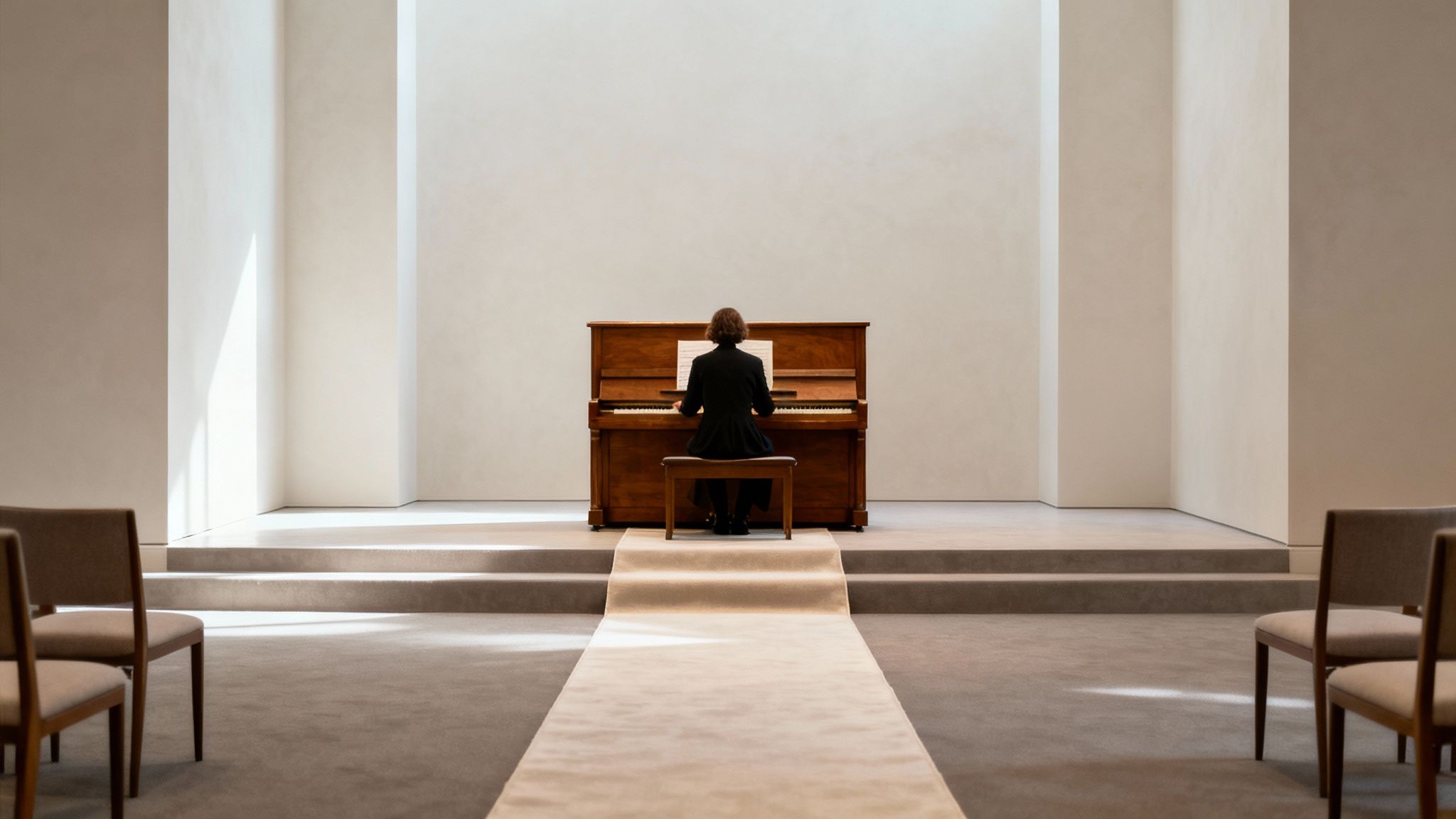
The beauty of "Gymnopédie No. 1" lies in its understated elegance. It eschews grand, dramatic builds in favor of a subtle, emotionally thoughtful journey. This makes it perfect for intimate or artistic ceremonies where the focus is on quiet reflection and the deep connection between the couple. Its presence in modern art films and minimalist exhibitions has cemented its status as a choice for the discerning, non-traditional couple.
Why It Works for Your Walk
The piece’s deliberate, unhurried tempo encourages a slow, mindful procession, allowing everyone to absorb the gravity and beauty of the moment. It provides a unique sonic canvas that is both artistic and deeply romantic, setting a tone of calm introspection and modern grace. Its quiet power ensures the focus remains on the profound commitment being made, not on the music itself.
Pro Tip: Embrace the minimalist nature of the piece in your decor. This song pairs beautifully with modern, clean venue designs, natural elements like stone or wood, and ambient lighting, creating a cohesive and artfully curated atmosphere.
Practical Tips for Implementation
Ensemble Choice: While intrinsically a solo piano piece, "Gymnopédie No. 1" can be beautifully reimagined for other instruments. A string quartet arrangement can add warmth and texture, while a harp or acoustic guitar version can lend an ethereal, organic feel.
Tempo and Pacing: A very slow tempo, around 50-60 BPM, is essential to honor the composition's meditative character. This requires careful coordination with your wedding party to ensure a graceful, unhurried pace down the aisle.
Venue Acoustics: This piece thrives in spaces with good acoustics where its delicate notes can resonate without being lost. It is particularly effective in art galleries, minimalist modern venues, or quiet outdoor settings like a garden or forest.
Discover more ways to incorporate beautiful keyboard arrangements into your ceremony by exploring these perfect piano music wedding ceremony ideas.
7. Antonio Vivaldi - The Four Seasons (Spring - Allegro)
For couples seeking an instrumental song that radiates pure joy and vibrant energy, Vivaldi's "Spring" from The Four Seasons is an unparalleled choice. The first movement, Allegro, is a lively and triumphant Baroque masterpiece that captures the essence of new beginnings and celebration. Its spirited string melodies and dynamic rhythm create a feeling of unbridled happiness, making it one of the most uplifting instrumental songs to walk down the aisle to.
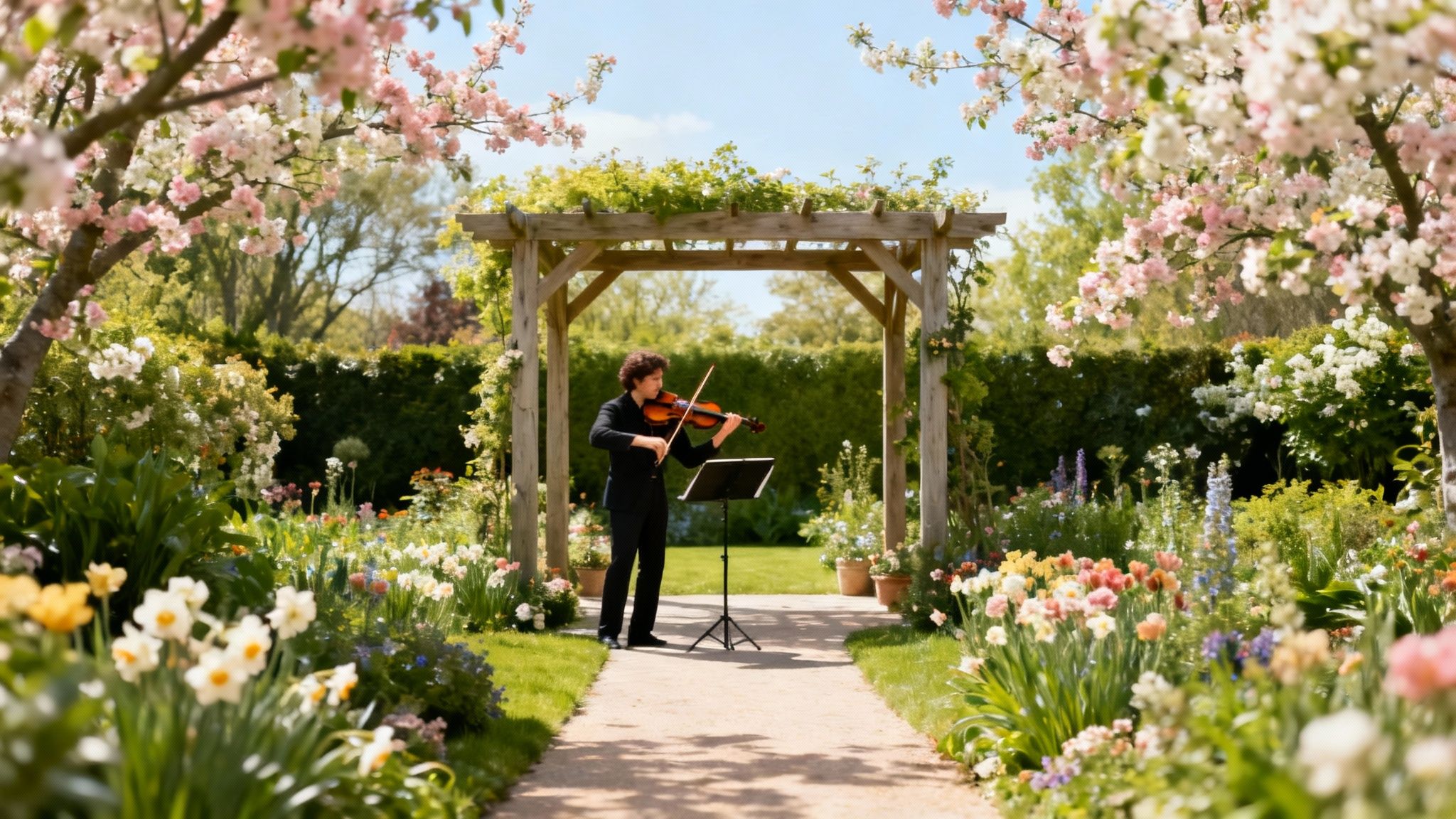
This composition swaps solemnity for excitement, setting a tone of joyous anticipation. The bright, recognizable melody, often described as sounding like birds chirping and streams flowing, is perfect for outdoor ceremonies, particularly in the spring or summer. It infuses the processional with a sense of natural beauty and optimistic energy that is both elegant and refreshingly spirited.
Why It Works for Your Walk
"Spring" provides a dramatic and celebratory soundtrack that feels both grand and personal. Its energetic tempo encourages a confident, happy pace down the aisle, reflecting the excitement of the moment. Unlike more subdued classical pieces, this work announces the bride’s arrival with a flourish of orchestral vitality, making the moment feel incredibly cinematic and full of life.
Pro Tip: Use the iconic opening fanfare as the cue for the doors to open. The immediate, recognizable burst of music will captivate your guests and create a truly memorable, high-energy entrance for you or your wedding party.
Practical Tips for Implementation
Ensemble Choice: A string quartet or small chamber orchestra is essential to capture the piece's rich, layered sound. The interplay between the solo violin and the accompanying strings is what gives "Spring" its distinctive, vibrant character.
Tempo and Pacing: The piece is naturally fast-paced (Allegro means "fast and bright"). A tempo around 115-125 BPM works well, creating an atmosphere of excitement without feeling rushed. Instruct your musicians to maintain a consistent, lively tempo.
Venue Pairing: This composition is an ideal match for daytime or outdoor weddings. It complements garden, vineyard, or waterside venues beautifully, enhancing the natural setting with its organic and joyful sound.
You can find more inspiration for your ceremony by exploring the top instrumental wedding processional music picks for 2025 and how they fit different wedding styles.
8. Max Bruch - Kol Nidrei
Max Bruch's "Kol Nidrei" is a deeply moving and spiritually rich composition that brings a profound sense of reverence and emotional depth to a wedding ceremony. Based on ancient Aramaic prayer melodies, the piece features a soaring and soulful cello solo against a lush orchestral or piano backdrop. Its contemplative beauty makes it one of the most meaningful instrumental songs to walk down the aisle to, especially for couples seeking a piece with authentic spiritual significance.
The composition's power lies in its combination of elegant simplicity and intense emotional expression. It builds slowly, with the cello's voice conveying a story of sincerity, hope, and timeless devotion. This gradual, heartfelt progression creates a powerful and sacred atmosphere, allowing everyone present to connect with the gravity and beauty of the moment.
Why It Works for Your Walk
"Kol Nidrei" is perfect for creating a solemn, intimate, and deeply personal ambiance. Its recognizable melody, particularly within Jewish and interfaith communities, carries centuries of tradition and meaning, adding layers of significance to your walk. The music’s slow, deliberate pace encourages a moment of quiet reflection, ensuring the focus remains on the sacred commitment being made.
Pro Tip: For interfaith ceremonies, consider adding a short note in your program explaining the piece's origin and significance. This small gesture can help all guests appreciate the depth of meaning behind your musical choice and feel more connected to the ceremony.
Practical Tips for Implementation
Ensemble Choice: This piece is defined by its cello solo. Hiring a skilled cellist, either performing solo or as part of a duet (with piano) or string trio/quartet, is essential to capture the work’s emotional core.
Tempo and Pacing: A slow, reverent tempo is key. Aim for around 50-60 BPM (beats per minute) to match the music's contemplative nature and allow for a graceful, unhurried walk down the aisle.
Ceremonial Pairing: The spiritual nature of "Kol Nidrei" pairs beautifully with meaningful rituals like a unity candle lighting or the signing of the Ketubah. Its solemnity provides a perfect soundtrack for these significant moments.
You can often find talented classical musicians through premier entertainment providers like Uptown Drive, who can arrange for a stunning ceremony ensemble to perform this piece before the main band takes over for the reception.
8 Instrumental Aisle Song Comparisons
Piece | 🔄 Implementation Complexity | ⚡ Resource Requirements | ⭐ Expected Outcomes | 📊 Ideal Use Cases | 💡 Key Advantages |
|---|---|---|---|---|---|
Pachelbel's Canon in D | Medium — straightforward arrangements (quartet/organ) | Moderate — string quartet or high-quality recording | ⭐⭐⭐⭐ — emotionally resonant, timeless | Processional; traditional/formal weddings | Widely recognized; versatile arrangements; elegant |
Mendelssohn's Wedding March | Medium — best with brass/orchestra for full effect | High — brass/orchestra or top recording | ⭐⭐⭐⭐ — triumphant, celebratory | Recessional/post-ceremony exits; formal venues | Bright fanfare; high-energy celebration |
Wagner's Bridal Chorus | Medium — common orchestral or organ arrangements | Moderate — orchestra/organ or recording | ⭐⭐⭐⭐ — iconic, ceremonial | Grand processional; traditional church weddings | Instantly recognizable "Here Comes the Bride"; steady pace |
Debussy — Clair de Lune | Low — solo piano or small ensemble interpretation | Low — skilled pianist or recording | ⭐⭐⭐ — intimate, reflective, sophisticated | Modern, artistic, outdoor or evening ceremonies | Unique, atmospheric, less formal |
Handel — Air from Water Music | Medium — baroque ensemble or quality recording | Moderate — chamber orchestra/recording | ⭐⭐⭐ — refined, dignified | Formal/upscale and garden ceremonies | Courtly elegance; distinctive alternative to clichés |
Erik Satie — Gymnopédie No.1 | Low — minimal solo piano arrangement | Low — solo pianist or subtle arrangement | ⭐⭐⭐ — contemplative, minimalist | Intimate, artistic, spiritual ceremonies | Calm, distinctive, modern and understated |
Vivaldi — Spring (Allegro) | Medium — requires agile strings/ensemble | Moderate — violin soloist or chamber group | ⭐⭐⭐⭐ — joyful, energetic, uplifting | Spring/outdoor weddings; upbeat processionals | Bright, lively, widely appealing |
Max Bruch — Kol Nidrei | Medium — cello solo with orchestral support | Moderate — skilled cellist + accompaniment | ⭐⭐⭐⭐ — deeply moving, reverent | Interfaith/Jewish or spiritually focused ceremonies | Profound emotional depth; culturally meaningful |
From Aisle to After-Party: Creating Your Perfect Wedding Soundtrack
Your walk down the aisle is one of the most personal and emotionally charged moments of your wedding day. The song you choose becomes the score to that memory, an instrumental piece that speaks volumes without a single word. As we've explored, from the timeless elegance of Pachelbel's "Canon in D" to the ethereal beauty of Debussy's "Clair de Lune," the right instrumental song sets a tone of sophistication, romance, and profound significance. This choice is more than just background music; it's the first note in the symphony of your married life.
The selections in this guide offer a powerful starting point, providing a rich tapestry of options to match any wedding style. Whether you envision the stately and traditional procession accompanied by Wagner's "Bridal Chorus" or a more modern and cinematic entrance with a string quartet version of a favorite film score, the key is to find the piece that resonates with your unique love story. The absence of lyrics invites your guests to be fully present, focusing on the emotion of the moment as you make your grand entrance.
Key Takeaways for Your Ceremony Music
Selecting from the vast world of instrumental songs to walk down the aisle to can feel overwhelming, but it boils down to a few core principles:
Match the Mood: Your song choice is the primary tool for establishing the ceremony's atmosphere. Do you want it to feel reverent and classic, or intimate and contemporary? A piece like Handel's "Air from Water Music Suite" evokes regal grace, while an acoustic guitar arrangement of a pop song feels personal and relaxed.
Consider the Venue and Logistics: The grand acoustics of a cathedral might beautifully carry a powerful organ piece, while an outdoor garden setting is perfect for the delicate notes of a string quartet or a solo pianist. Always consider the practical aspects of sound and arrangement.
Tempo is Everything: The pace of your processional song dictates the pace of your walk. A slow, deliberate tempo builds anticipation and emotion, while a slightly more upbeat piece can create a feeling of joyous celebration. Practice walking to your top choices to ensure the timing feels natural.
From Ceremony Serenity to Reception Energy
The perfect wedding soundtrack doesn't end when you say "I do." It evolves. The transition from the ceremony's poised elegance to the reception's high-energy celebration is a crucial element of a memorable event. No other Texas band delivers this level of energy and consistency quite like Uptown Drive. They bridge the gap, curating a seamless flow from the sophisticated instrumentals of your ceremony to a dance floor packed with guests of all ages.
While the instrumental music sets a beautiful tone for your vows, the sonic landscape of your day should capture more than just melodies. Think about the voices and well-wishes of your loved ones. Innovative ideas like capturing priceless audio memories from guests can create a lasting auditory keepsake that complements your musical choices, preserving the full emotional spectrum of your celebration.
Ultimately, the instrumental songs you choose for your walk down the aisle are the opening act for an incredible celebration. They create a foundation of elegance and emotion, paving the way for the unforgettable party to come. By thoughtfully curating every musical moment, from the first step down the aisle to the final song of the night, you create a cohesive and deeply personal experience that you and your guests will cherish for years.
FAQs About Instrumental Wedding Aisle Songs
1. How long should my processional song be?
The ideal length is between 3 to 5 minutes, which is long enough to accommodate the entire wedding party's entrance without feeling rushed. A live band can easily extend or shorten a piece to perfectly time it to your walk.
2. Can I use a modern pop song as an instrumental?
Absolutely! Instrumental versions of modern songs (like those by Taylor Swift, Ed Sheeran, or Coldplay) are incredibly popular. Performed on piano or by a string quartet, they feel both personal and timelessly elegant.
3. Should my processional and recessional music match?
They should complement each other. A common approach is to choose a slower, more emotional piece for the processional (walking in) and a joyful, upbeat song for the recessional (walking out) to signal the start of the celebration.
4. What's the difference between a prelude and a processional?
The prelude is the music played as guests are being seated (typically 15-30 minutes before the ceremony). The processional music begins with the entrance of the wedding party and the bride.
5. Why hire live musicians for the ceremony?
Live musicians, like a string trio or a solo guitarist, add a level of sophistication and emotional depth that a recording can't match. They can also adjust the timing of the music in real-time to perfectly match your pace down the aisle. If you want a band that gets everyone dancing after the ceremony, a group like Uptown Drive offers full-service packages that include both ceremony music and a high-energy reception band.
Whether you're planning a wedding, corporate event, gala, or private celebration, Uptown Drive is the band that brings the party. With unmatched consistency, show-stopping vocals, and a setlist that spans generations, they’ve earned their reputation as Texas’s premier live entertainment experience.


Comments